











For nearly two centuries, the geological and climate sciences have been dominated by a singular, rigid doctrine: Uniformitarianism. Championed by Charles Lyell and codified into the bedrock of modern academia, this paradigm asserts that the Earth is shaped only by slow, incremental, and gentle processes. We are taught that canyons are carved by the patient drip of a stream over eons, and that mountains rise with a glacial subtlety that defies human observation.
However, a growing chorus of researchers, led by figures like Randall Carlson and supported by the physical evidence etched into our planet’s crust, argues that this narrative is a fundamental distortion. The reality, they contend, is one of "Catastrophism"—a history defined by violent, rapid, and planetary-scale events that the establishment has spent generations attempting to erase.
The Landscape Speaks Louder Than Textbooks
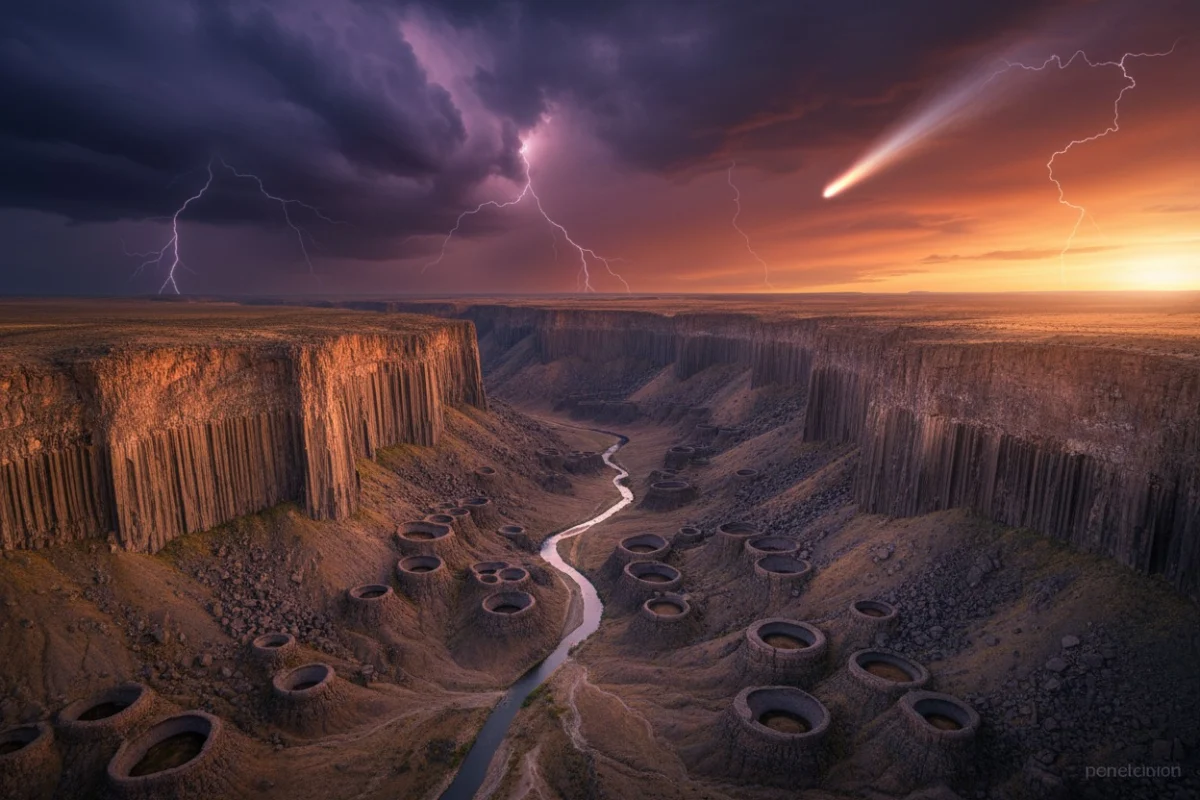
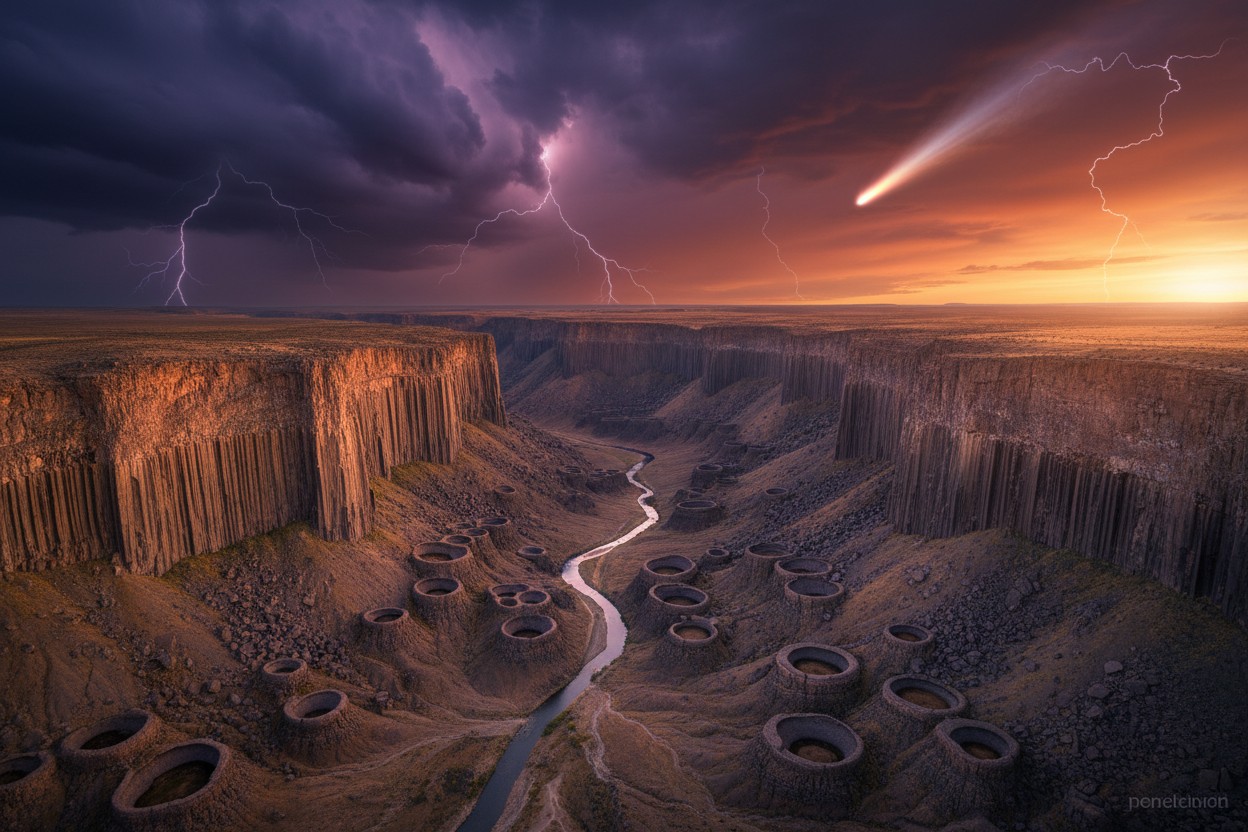
In a recent interview on Decentralize.TV, researcher Randall Carlson posited that the Earth does not conform to the slow-motion narrative of the ivory tower. Instead, the Earth "keeps receipts." From the massive, basalt-carved potholes of the Pacific Northwest to valleys that vastly dwarf the modest creeks currently winding through them, the landscape tells a story of sudden, overwhelming power.
The history of geology is littered with those who dared to challenge the uniformitarian status quo. The most prominent example is J Harlen Bretz, the geologist who identified the channeled scablands of Washington State as the product of a colossal, singular flood. His theory was met with professional vitriol; he was ridiculed and ostracized by an establishment that believed such heresy "must be gently but firmly stamped out." Decades later, when NASA satellites mapped Martian surface features, they found landforms identical to those Bretz described. The establishment’s rejection was not a failure of evidence, but a failure of institutional will.
Chronology of a Planet in Flux
To understand the scope of Earth’s violent history, one must look at the transition from the Pleistocene to the Holocene, particularly the events surrounding the Younger Dryas period approximately 12,900 years ago.
- The Glacial Melt: Geological evidence indicates that at the end of the last ice age, massive ice sheets—miles thick—vanished in a geological blink of an eye. Standard models struggle to account for the energy required to melt this volume of ice through slow orbital shifts.
- The Bonneville and Missoula Floods: Research suggests that massive ice dams failed, releasing water volumes exceeding the flow of every river on Earth combined. The Bonneville flood alone dropped the level of Lake Bonneville by 350 feet, carving the channel now occupied by the Snake River.
- The Younger Dryas Impact: Evidence is mounting for a cosmic trigger. The discovery of zircon crystals in Libyan desert glass—melted at temperatures exceeding volcanic heat—points to a high-energy airburst or impact. This event likely destabilized the climate, causing an abrupt return to glacial conditions followed by a chaotic thaw.
- Contemporary Anomalies: Moving into the modern era, observers point to the anomalous behavior of celestial objects like 3I-Atlas, which displayed trajectory characteristics that defy standard cometary classification, and a documented history of severe solar flares, such as the X1.9-class event in January 2026, which demonstrate the planet’s susceptibility to cosmic energy influx.
Supporting Data: The Case Against Uniformity
The "underfit river" phenomenon remains one of the most damning pieces of evidence against gradualist geology. Across the globe, small, meandering streams are found in valleys far too massive to have been carved by the water they currently carry. These valleys are "fingerprints" of past mega-floods.
Furthermore, ice core data from Greenland provides a stark rebuttal to the idea of a stable, slowly changing climate. These cores reveal that in the past, temperatures have spiked by 2 to 3 degrees Celsius within a span of just three to five years. These shifts occurred long before industrial CO2 emissions, yet they remain largely omitted from the mainstream climate models promoted by organizations like the IPCC.
Data regarding solar variability and cosmic impacts are often marginalized in favor of models that focus exclusively on carbon emissions. The exclusion of solar activity from climate modeling—despite clear evidence of its role in atmospheric energy balance—represents a significant point of contention for dissenting scientists.
Official Responses and the Ideological Divide
The scientific establishment’s insistence on human-centric climate models is not merely an academic preference; it is a policy-shaping instrument. Since the inception of the Intergovernmental Panel on Climate Change (IPCC) in 1988, critics have argued that the organization has systematically cherry-picked data to prioritize human activity as the sole driver of climate change.
When asked about the role of natural, catastrophic events—such as volcanism or solar cycles—representatives of major climate agencies often categorize these as "noise" or "non-factors" in the context of current global warming. This rejection is often framed as a necessity for political clarity. As UN Secretary-General Antonio Guterres noted in 2023, the language of "global boiling" is used to underscore the urgency of the human-caused climate crisis.
Critics argue that this branding serves a specific purpose: a comet, a solar flare, or a supervolcano cannot be regulated, taxed, or managed via global governance. By framing the climate solely as an issue of human carbon output, authorities can justify centralized control over energy, agriculture, and industry.
Implications for the Future of Civilization
The suppression of catastrophism has profound implications for our survival. If we are convinced that the Earth is a stable, benign system governed by slow change, we are ill-equipped to handle the reality of sudden, inevitable planetary shifts.
The Lessons of History
Researchers like Graham Hancock suggest that human history is not a linear climb from primitive survival to modernity, but rather a cycle of rise and collapse. If, as the Younger Dryas impact theory suggests, an advanced civilization was wiped out by cosmic events, then our current scientific arrogance may be our greatest vulnerability.
Intellectual Sovereignty
The movement to reclaim this history is fundamentally a movement for intellectual sovereignty. By decentralizing education and bypassing traditional gatekeepers, proponents of catastrophism aim to build a knowledge base rooted in observable reality rather than ideological conformity.
The emergence of uncensored research engines and decentralized media platforms represents a shift in how information is validated. The goal is to strip away the "information monopoly" that keeps the public focused on controllable variables while ignoring the cosmic reality of our planet.
Conclusion: Reading the Receipts
The Earth’s history is written in stone, ice, and glass. It is a record of violent transitions, massive floods, and solar energy surges that dwarf any human activity. To ignore this is to choose a comforting fiction over a challenging reality.
As the scientific and political establishments continue to push for models that prioritize administrative control, the physical evidence continues to mount. Whether it is the channeled scablands, the underfit rivers, or the mysterious glass of the desert, the truth remains waiting for those willing to look. We are living on a planet that has survived—and will survive—catastrophic change. The question is not whether the next event will happen, but whether we will be awake enough to read the receipts when it does.