











ALTADENA, CA — In a landmark move to address the escalating mental health crisis among American youth, Active Minds, the nation’s premier nonprofit dedicated to student-led mental health advocacy, has announced a transformative $5 million partnership with Google.org. This national expansion, unveiled on June 12, 2026, aims to equip 100,000 young people with the essential tools to navigate an increasingly complex digital landscape while fostering a culture of peer-to-peer support and psychological resilience.
The initiative marks a significant escalation in the fight against the "silent epidemic" of youth mental health struggles, specifically targeting 154 high schools across the United States. By integrating digital wellbeing with traditional mental health literacy, the program seeks to bridge the gap between technological advancement and human emotional needs.
Main Facts: A Strategic Investment in the Next Generation
The core of this partnership lies in a $5 million grant from Google.org, the philanthropic arm of the global tech giant. This funding is earmarked for the "100,000 by 2028" campaign, an ambitious roadmap designed by Active Minds to mobilize a movement of young advocates. The initiative focuses on three primary pillars:
- Digital Safety and AI Literacy: Recognizing that technology and Artificial Intelligence (AI) are now inextricable from the lives of young people, the program provides foundational skills to help students use these tools responsibly. This includes understanding the psychological impacts of social media algorithms and the ethical implications of AI-driven interactions.
- National Expansion of Peer Networks: The funding allows Active Minds to establish and support student-led chapters in 154 high schools, prioritizing communities that have historically lacked access to such resources.
- The Active Minds Program Fund: A significant portion of the grant will go toward this fund, which ensures that under-resourced schools, rural communities, and communities of color can implement high-quality mental health programming without financial barriers.
The program is designed not just to provide resources, but to empower youth as co-creators of their own safety solutions. By fostering "personal agency," Active Minds and Google.org are betting on the idea that the most effective mental health interventions are those led by peers rather than dictated by adults.
Chronology: From Crisis to Community Resilience
The timeline of this initiative is rooted in both long-term organizational growth and immediate regional needs. Active Minds was founded over two decades ago by Alison Malmon following the tragic loss of her brother to suicide. Since then, it has grown into a national powerhouse of youth advocacy.
The specific impetus for the current expansion was catalyzed by the events of 2025. In that year, the devastating Eaton Fire swept through parts of California, leaving communities like Pasadena and Altadena in a state of physical and emotional upheaval. The fire served as a stark reminder of how environmental stressors can exacerbate existing mental health vulnerabilities in youth.
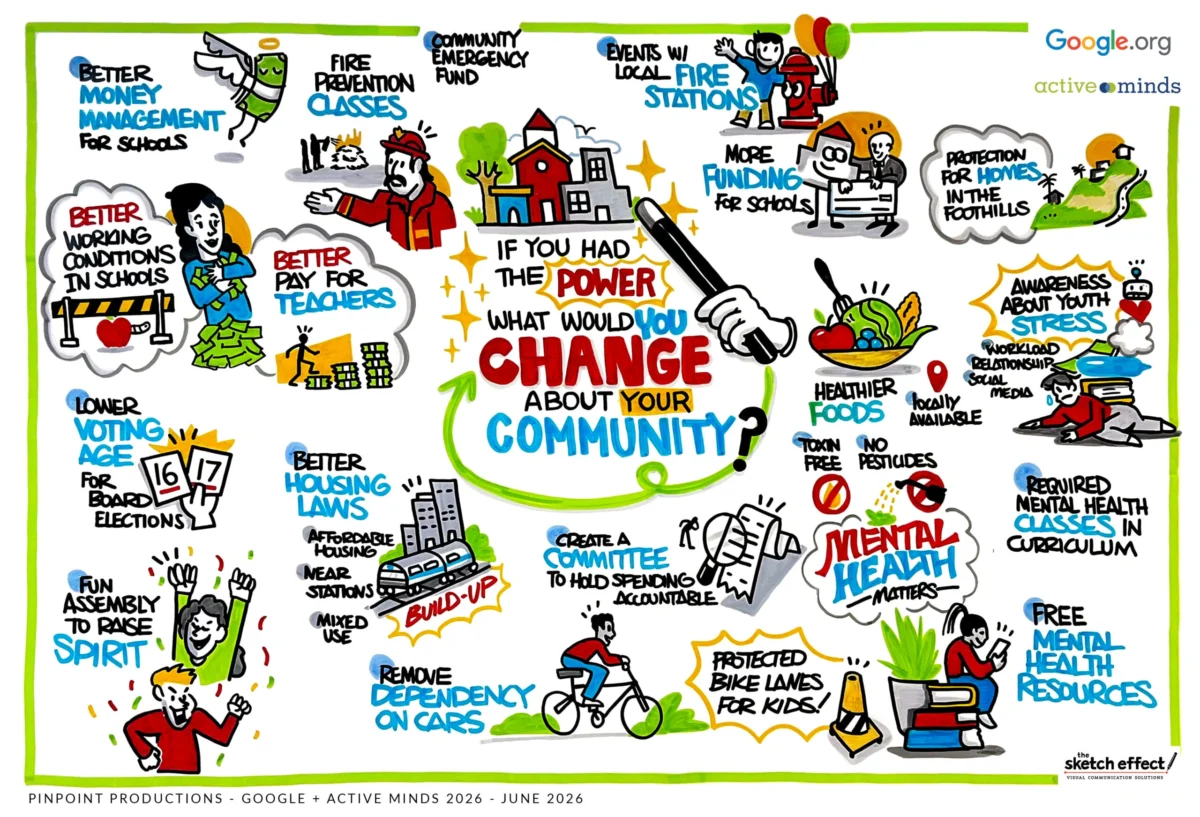
On June 12, 2026, the official launch took place in Altadena, California. The event was not a standard corporate press conference but an interactive workshop. High school students from the Pasadena Unified School District (PUSD) met with community leaders and representatives from Google.org to brainstorm community needs. During these sessions, a local artist created a live mural, translating the students’ ideas—ranging from fire safety and housing to healthier food and digital boundaries—into a visual representation of their collective vision.
This localized launch serves as a reproducible blueprint. The goal is to take the lessons learned in the wake of the Eaton Fire and apply them to other communities facing unique localized stressors, whether they be economic, environmental, or social.
Supporting Data: The Digital Divide and the Mental Health Crisis
The necessity for this $5 million investment is backed by sobering data regarding Gen Z and Gen Alpha. According to recent psychological studies, the rapid integration of AI and ubiquitous connectivity has created a "double-edged sword" for youth. While technology offers unprecedented connection, it also introduces new forms of anxiety, cyberbullying, and "algorithmic pressure."
Active Minds’ own research indicates that nearly 67% of young people turn to their peers first when facing a mental health challenge. This "peer-first" reality is the cornerstone of the Active Minds model. By training 100,000 youth, the organization is effectively creating a national safety net.
Furthermore, the "Active Minds Program Fund" addresses a critical gap in equity. Data from the Department of Education suggests that students in under-resourced and rural districts are 40% less likely to have access to a dedicated school psychologist or mental health curriculum. The Google.org-funded expansion specifically targets these "mental health deserts," ensuring that ZIP codes do not determine a child’s access to wellbeing resources.

Official Responses: Leadership on the Front Lines
The announcement drew praise from political, non-profit, and corporate leaders, all of whom emphasized the proactive nature of the initiative.
Alison Malmon, Founder and Executive Director of Active Minds, highlighted the intersectionality of the modern youth experience. "Youth and young adults are navigating an increasingly complex world where mental health, technology, and connection are deeply intertwined," Malmon stated. "This support from Google.org allows us to significantly expand our work, ensuring that more young people have access to the stories, resources, and peer connections that help them feel seen and supported."
Assemblymember John Harabedian (D-Pasadena), who has been a vocal advocate for community recovery post-Eaton Fire, stressed the importance of student agency. "The youth of Pasadena Unified have shown immense resilience, but we cannot overlook the compounding pressures they face," Harabedian said. "This program empowers them to play an active, vital role in building community resilience. I am proud to see the future leaders of California at the forefront of this movement, using their voices to inform the policies that govern our state."
Representing the tech sector’s responsibility, Dr. Megan Jones Bell, Senior Director of Clinical at Google, framed the partnership as a shift in the industry paradigm. "At Google, we believe that child safety and digital wellbeing warrant unique, proactive protections," Bell remarked. "By supporting Active Minds to put youth at the center of this movement, we are championing student-led leadership that shifts the paradigm toward proactive empowerment. This launch gives the next generation the tools they need to navigate and shape a healthy digital future."
Implications: Shaping the Future of Digital Citizenship
The implications of this partnership extend far beyond the walls of the 154 high schools initially targeted. This initiative represents a new model of corporate social responsibility (CSR) where tech companies are not just "fixing" problems their platforms might contribute to, but are actively funding the social infrastructure required to handle a digital life.
1. Redefining Digital Wellbeing
Traditionally, digital wellbeing has been defined by "screen time" limits and parental controls. The Active Minds/Google.org partnership redefines it as a set of emotional and social competencies. It moves the conversation from "how much" time is spent online to "how" that time affects one’s sense of self and community.
2. Youth as Policy Influencers
By bridging the gap between student voices and decision-makers, the program creates a pipeline for youth to influence state and national policy. As Assemblymember Harabedian noted, the ideas generated in these workshops are intended to inform the legislative process, ensuring that laws governing the digital world are grounded in the lived experiences of those who inhabit it most.
3. Scaling the "Peer-to-Peer" Model
If successful, this $5 million expansion could serve as a case study for global interventions. If 100,000 trained youth can demonstrably lower the rates of crisis and improve community resilience, it may lead to a fundamental shift in how school districts nationwide allocate their budgets—prioritizing student-led advocacy alongside traditional counseling.
4. The AI Frontier
As AI becomes a primary interface for information and social interaction, the "foundational digital safety skills" taught through this program will be vital. Teaching students to discern AI-generated content and understand the emotional limitations of AI "companionship" will be a critical component of 21st-century literacy.
Conclusion
The partnership between Active Minds and Google.org is more than a financial transaction; it is a strategic alignment aimed at the heart of the modern youth experience. By combining the grassroots, peer-led expertise of Active Minds with the scale and technological insight of Google, the initiative seeks to create a future where mental health is not a secondary concern but a foundational element of digital citizenship.
As the program rolls out across 154 schools, the eyes of educators, policymakers, and tech leaders will be on the 100,000 young advocates who are now tasked with leading the way. In the words of the students in Altadena, this is about "the power to change the community"—one conversation, one digital interaction, and one peer at a time.