











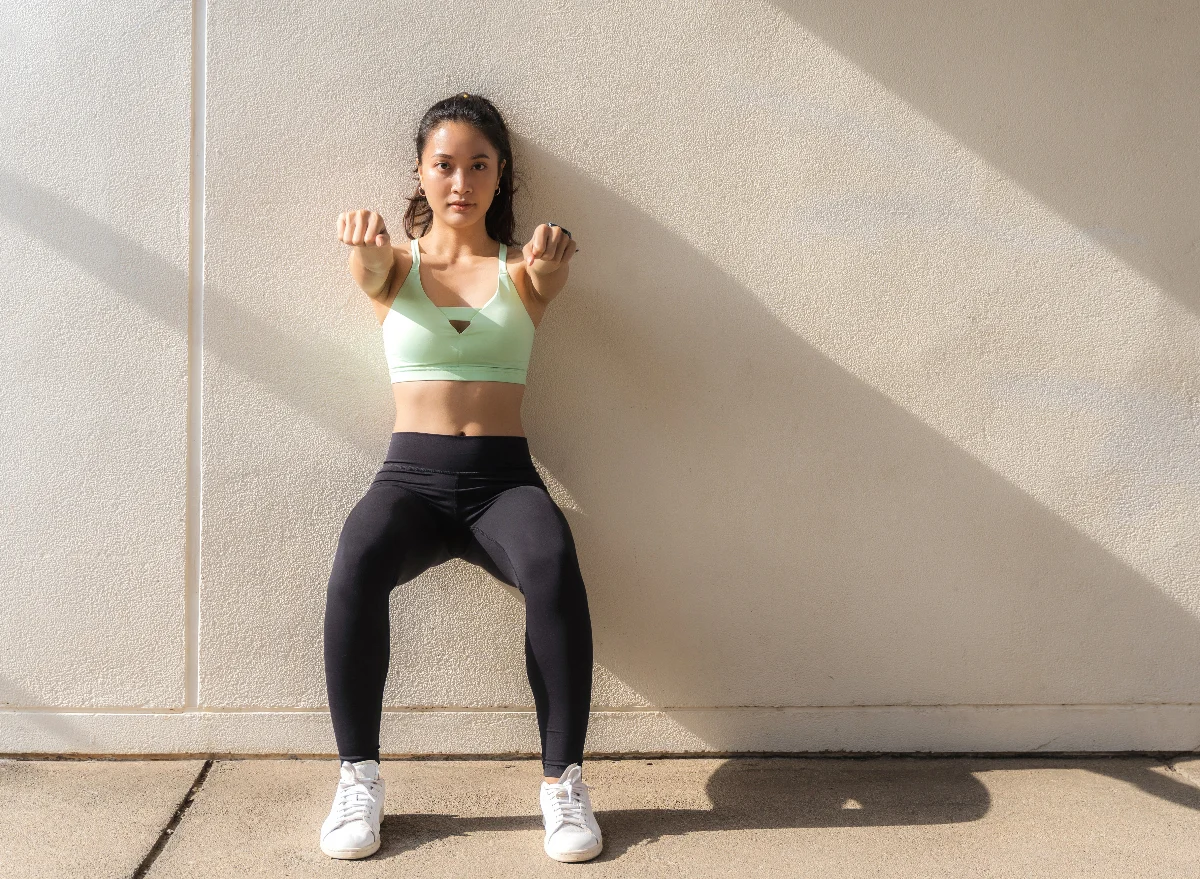
In the landscape of modern fitness, we are often inundated with complex routines, expensive equipment, and high-impact training modalities. Yet, some of the most profound indicators of physical health—and the most effective tools for maintaining it—are remarkably simple. Among these, the "wall sit" stands out as a powerful, low-impact, and highly accessible exercise.
As we age, the preservation of functional mobility is paramount. Whether you are an avid golfer, a dedicated walker, or simply focused on maintaining your independence, the strength of your legs serves as the foundation for your quality of life. Jaqueline Gavino, MPH, CHES®, and Director of Fitness at Pritikin, emphasizes that leg strength is not merely about aesthetics; it is a critical buffer against the natural decline of muscle mass and the rising risk of falls as we cross the 60-year threshold.
The Core Facts: Understanding the Wall Sit
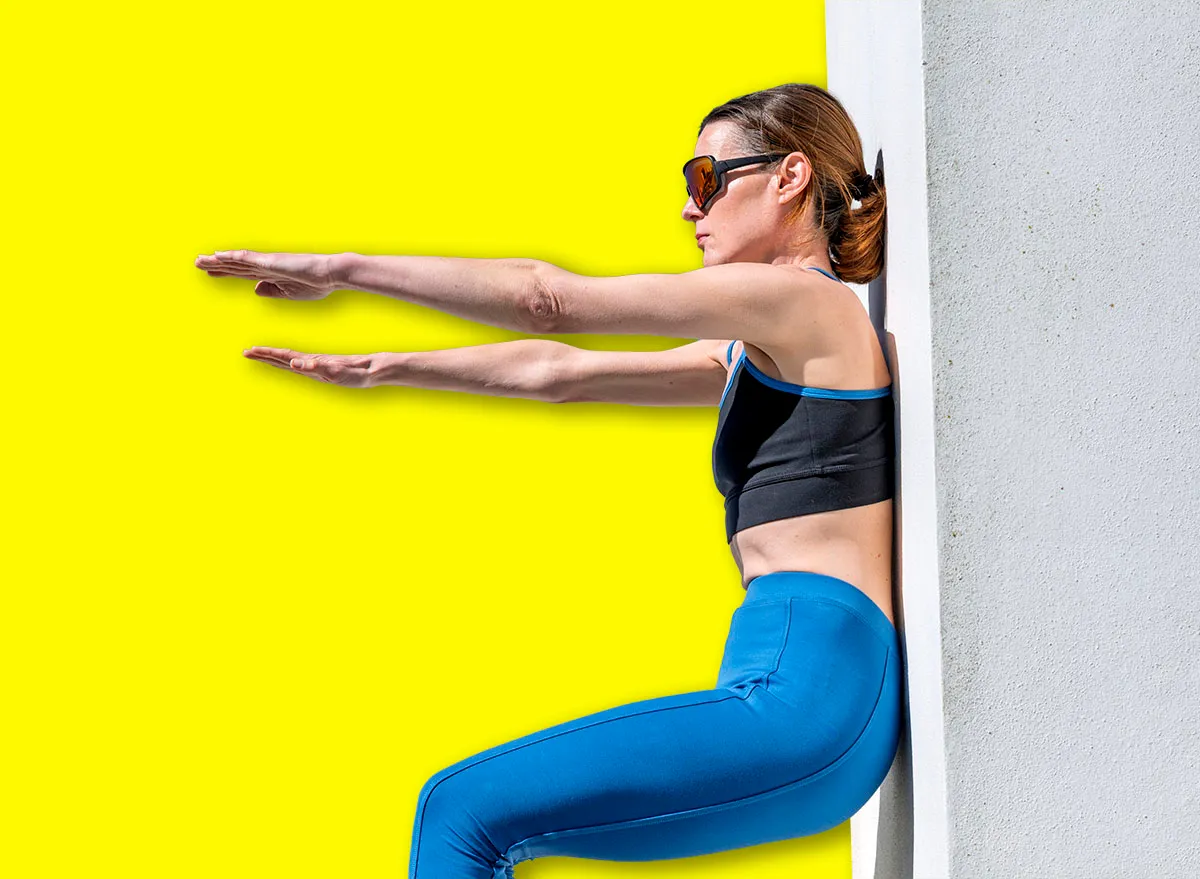
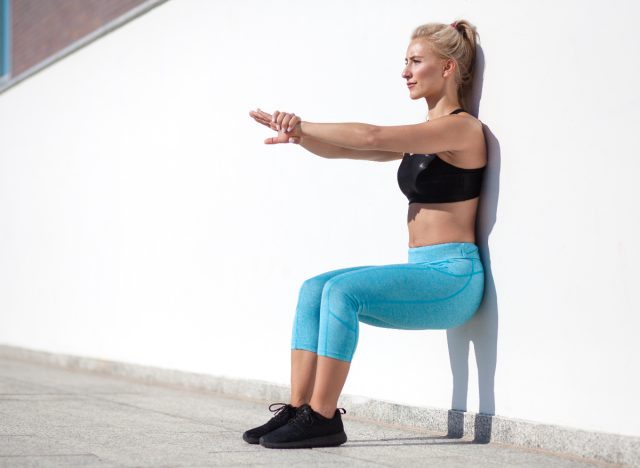
A wall sit—or wall squat—is an isometric exercise that requires you to press your back against a flat surface while bending your knees to a 90-degree angle, holding that "seated" position against gravity. Unlike dynamic movements like lunges or standard squats, which involve changing joint angles, the wall sit forces your muscles to contract and sustain force without movement.
This sustained tension is the "secret sauce" that makes the wall sit a unique diagnostic tool for physical longevity. It tests not just raw power, but endurance and neuromuscular control. According to experts, if an individual over the age of 60 can hold this position for a significant duration, they are demonstrating "top-tier" lower-body strength, signaling a level of fitness that correlates strongly with healthy aging.
Chronology of Muscle Loss: The Silent Decline
To understand why the wall sit is so critical, one must look at the physiological timeline of the human body. Research indicates that the natural, age-related loss of muscle mass—known as sarcopenia—can begin as early as your 30s. This process often goes unnoticed until it begins to impact functional performance.
By the time an individual reaches their 60s, the decline in lower-limb strength often accelerates, dropping by approximately 10% to 15% per decade. This is not just a statistical decline; it is a functional one. As muscle fibers shrink or become less efficient, simple activities like rising from a chair, navigating a flight of stairs, or even maintaining balance while standing in a grocery line become more taxing.
The wall sit serves as a "chronological mirror." By performing a timed hold, older adults can gauge exactly where their muscular endurance sits, providing a tangible benchmark to track progress or identify the need for targeted strength training before minor weaknesses evolve into mobility limitations.
Supporting Data: The Science of Isometrics
The efficacy of the wall sit is supported by a growing body of robust clinical research.
Cardiovascular Benefits
A groundbreaking 2023 meta-analysis published in the British Journal of Sports Medicine analyzed 270 randomized controlled trials involving nearly 16,000 participants. The findings were staggering: isometric exercise, such as the wall sit, proved more effective at reducing resting blood pressure than aerobic training, HIIT, or traditional dynamic resistance training. Among all modalities tested, the wall sit emerged as the single most effective individual exercise for lowering systolic blood pressure.
Functional Capacity
Beyond blood pressure, the wall sit is a direct indicator of functional independence. A study published in Aging Clinical and Experimental Research identified quadriceps strength as the primary predictor of how long older adults can sustain multi-joint functional tasks, such as the "sit-to-stand" motion. Because older adults often operate closer to their "maximal voluntary contraction" capacity than younger individuals during daily tasks, even small gains in strength—gained through consistent wall sits—can lead to disproportionately large improvements in daily ease of movement.
Furthermore, a cross-sectional study in PLOS ONE confirmed that quadriceps strength is the strongest correlate of independence in activities of daily living. When you strengthen these muscles, you are essentially "future-proofing" your ability to live without assistance.
Expert Perspectives: Advice from Jaqueline Gavino
Jaqueline Gavino, who has spent years guiding older adults toward better health, notes that while the exercise is highly effective, safety remains the priority.
"The wall sit is a closed-chain, low-impact movement," Gavino explains. "It places minimal shear force on the knee joints, making it a safer alternative for those who might find deep, weighted squats uncomfortable or risky."
However, she adds a necessary caveat: "While it is generally safe for the vast majority of the 60-plus population, those suffering from severe knee osteoarthritis, individuals who have recently undergone joint replacement surgery, or those with uncontrolled hypertension should consult with their physician before incorporating this into their routine."
Gavino stresses that the goal is not to "max out" in a way that causes injury, but to utilize the principle of progressive overload. "Start small," she advises. "Aim for 20 to 30 seconds two to three times a week. As your body adapts, gradually increase your hold time. You aren’t looking for a quick fix; you are looking for a sustainable, repeatable, and effective habit."

Implications for Daily Living
Why does holding a wall sit matter when you’re out of the gym? Because the neuromuscular pathways activated during a wall sit are the exact ones you use to navigate the world.
A 2026 study published in the International Journal of Environmental Research and Public Health highlighted that isometric lower-limb training leads to measurable improvements in the 6-Minute Walk Test and the 5-Times Sit-to-Stand test. These are not just "gym numbers"; they are markers of your ability to travel, attend events, and maintain a social, active lifestyle. When your quadriceps are conditioned through wall sits, your gait becomes steadier, your balance improves, and your fatigue threshold increases. You aren’t just getting stronger; you are reclaiming your mobility.
Setting Your Benchmarks: What Is "Top-Tier"?
If you are wondering how you stack up, it is helpful to understand the averages. For adults over 60, typical performance—the "middle of the pack"—falls between 20 and 40 seconds.
However, the "gold standard" for those looking to ensure long-term functional reserve is to aim for a hold of 60 to 90 seconds. To qualify this as a proper test, Gavino notes the requirements for "proper form":
- The Angle: Knees must be at a 90-degree angle.
- The Contact: Your back must remain flat against the wall.
- The Support: No using your hands to push off your thighs or leaning on nearby furniture for support.
If you can hold this position for over a minute, you are in a strong position. If you are currently under 20 seconds, do not be discouraged. The beauty of isometric training is how quickly the body responds. Consistency is the primary variable.
Integrating the Wall Sit into Your Routine
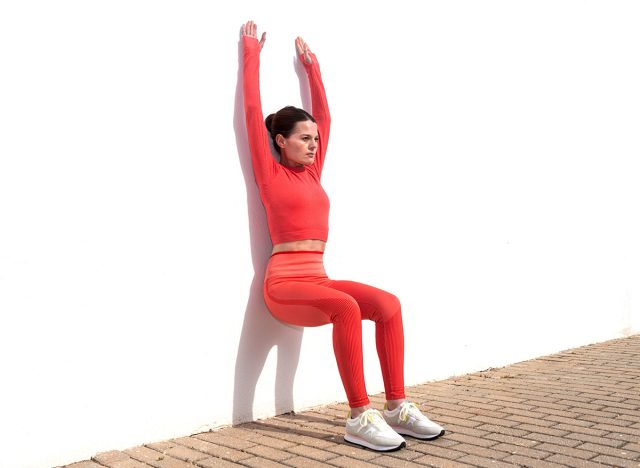
To begin your journey, consider these steps:
- Preparation: Find a sturdy wall. Wear comfortable shoes to prevent your feet from sliding.
- Execution: Slide your back down the wall until your thighs are parallel to the floor (or as close as you can comfortably get). Ensure your feet are shoulder-width apart.
- Frequency: Start with three sessions per week.
- Tracking: Use a stopwatch. Record your time in a journal to see your progress over weeks and months.
- Listen to Your Body: A burning sensation in the quads is normal; sharp, stabbing pain in the joints is not. If you feel joint pain, stop immediately and adjust your angle or seek advice from a physical therapist.
Conclusion: The Power of Stillness
In a culture that often equates "hard work" with constant movement, the wall sit serves as a poignant reminder that there is immense power in stillness. By holding our bodies against gravity, we are training our muscles to support us in every step we take outside the home. For the population over 60, this isn’t just an exercise—it is a proactive strategy for maintaining independence, reducing health risks, and ensuring that your later years are defined by strength rather than limitations.
The wall is there, waiting. All you have to do is sit.