










18 June, 2026
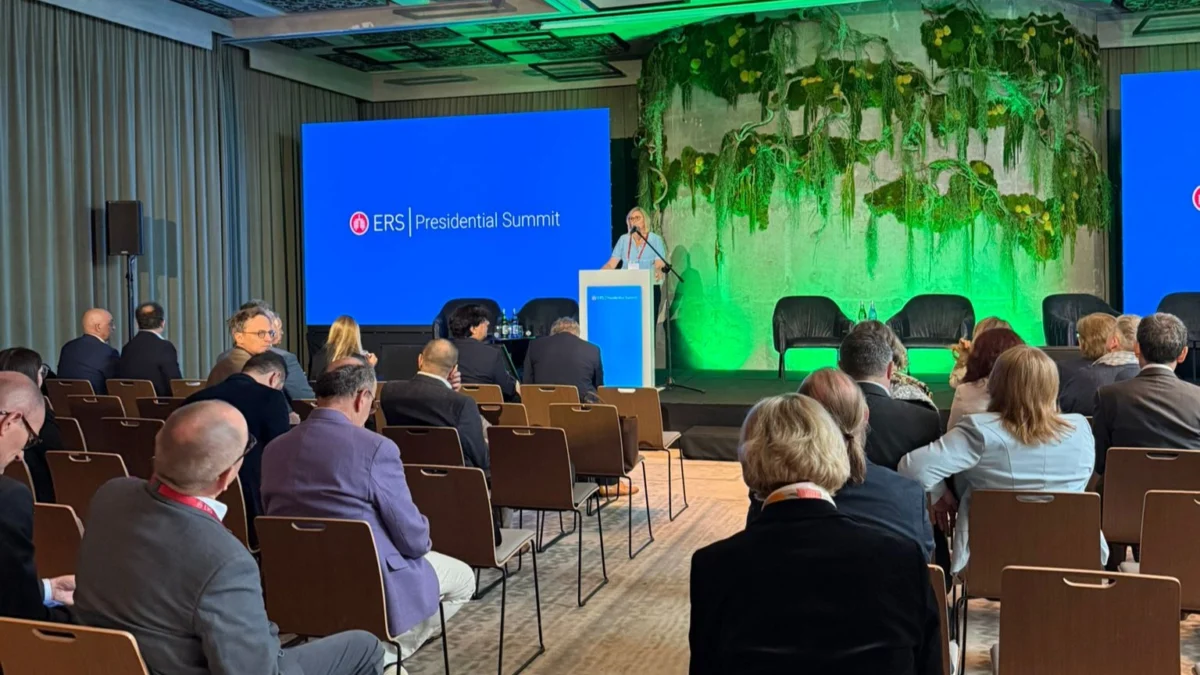
The landscape of respiratory medicine underwent a significant shift this week in Warsaw, Poland, as global medical leaders, policymakers, and patient advocates converged for the European Respiratory Society (ERS) Presidential Summit 2026. Under the theme, “New frontiers of respiratory health: the present and future of early detection,” the two-day summit served as a critical platform to bridge the gap between emerging biotechnological innovations and the practical, systematic implementation of screening protocols.
Led by current ERS President Prof. Joanna Chorostowska-Wynimko, the summit aimed to move beyond theoretical research, focusing instead on the actionable strategies required to reduce the global burden of respiratory disease through earlier intervention.
The Strategic Imperative: Bridging Policy and Practice
The core philosophy of the 2026 Summit was that early detection is no longer merely a clinical ideal but a socio-economic necessity. With respiratory diseases accounting for a staggering percentage of morbidity worldwide, the ERS brought together a diverse group of stakeholders—ranging from clinicians to EU health policy architects—to foster a collaborative ecosystem.
The event highlighted that for early detection to succeed, it must be integrated into the existing fabric of public health infrastructure. This requires not just better diagnostic tools, but a paradigm shift in how healthcare systems prioritize lung health, moving from reactive treatment to proactive screening.
Chronology of the Summit: A Two-Day Deep Dive
Day One: Screening, Surveillance, and Systemic Integration
The opening sessions focused on the immediate, tangible successes in the field. Prof. Torsten Blum inaugurated the proceedings by dissecting the current state of lung cancer screening. A primary focal point was the SOLACE project, an EU4Health initiative that has been instrumental in the rollout of low-dose CT (LDCT) lung cancer screening across European member states.
The discussion emphasized that international standardization is the bedrock of progress. Participants celebrated the milestone of lung cancer screening gaining official recognition from the International Agency for Research on Cancer (IARC), a move that provides the scientific and political legitimacy necessary to secure national funding.
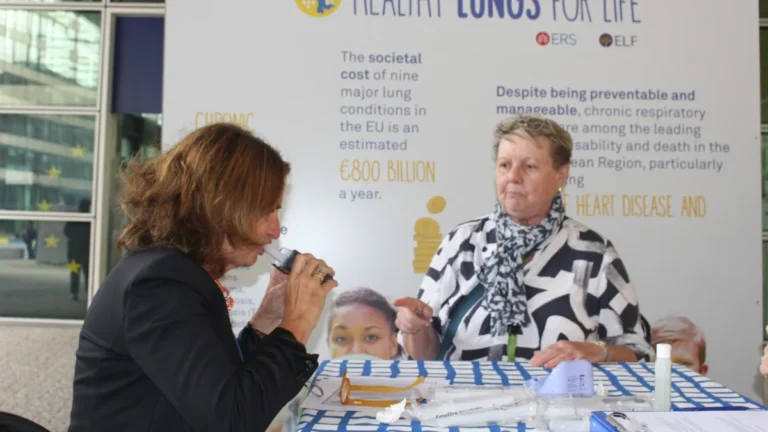
Following this, Prof. Ildiko Horvath, ERS Secretary General, turned the focus toward general respiratory health checks. She underscored the inextricable link between lung function and cardiovascular health, proposing that spirometry—the gold standard for measuring lung capacity—should be treated as a "window of opportunity" for detecting asymptomatic chronic respiratory conditions before they progress to irreversible states.
Day Two: The Frontier of AI and Biotechnology
The second day shifted toward the horizon of technological disruption. Prof. Przemyslaw Biecek of the Warsaw University of Technology led a session on the transformative potential of Artificial Intelligence (AI).
The discussion centered on Sybil, a sophisticated deep-learning model capable of predicting long-term lung cancer risk from a single low-dose chest CT scan. However, the discourse avoided the common pitfalls of technological hyperbole. Instead, the consensus was clear: AI is not a replacement for the clinician. The session concluded with the "augmented expertise" model, where AI acts as a decision-support tool, enabling radiologists to identify high-risk markers that might otherwise be missed by the human eye alone.
The summit concluded with ERS President-Elect Dr. Marc Miravitlles, who addressed the role of biotechnology. By detailing the EU Life Sciences Strategy and the proposed Biotech Act, Dr. Miravitlles outlined how future medical therapies could be tailored to the early-stage genetic and biological markers of respiratory disease, potentially altering the course of chronic illnesses before significant damage occurs.
Supporting Data and Evidence-Based Perspectives
The summit was characterized by a heavy reliance on data to drive policy recommendations. Several key evidence-based conclusions emerged:
- The Power of LDCT: Current data from pilot programs suggests that systematic low-dose CT screening reduces lung cancer mortality by identifying malignancies at early, curable stages.
- The AI-Human Synergy: Case studies presented regarding the Sybil model indicated that human-AI collaboration significantly reduces the rate of false negatives in pulmonary imaging.
- Respiratory-Cardiovascular Synergy: Evidence presented by Prof. Horvath highlighted that patients with early-detected COPD often exhibit early markers of heart failure, suggesting that integrated screening programs could yield high returns on investment for national health budgets.
- Biotech Scalability: The presentation on the Biotech Act underscored that, currently, only 15% of innovative respiratory treatments reach the clinical pipeline in their first year of discovery; policy acceleration is needed to increase this throughput.
Official Responses and Stakeholder Consensus
The atmosphere in Warsaw was one of unified urgency. Prof. Joanna Chorostowska-Wynimko noted in her closing address: "We have the tools, we have the models, and we have the diagnostic power. The challenge now lies in the political will to standardize these protocols across borders."
Patient representative groups echoed this sentiment, arguing that early detection protocols must be patient-centric. They highlighted that the burden of screening—the travel, the anxiety, and the cost—must be minimized through decentralized screening centers and improved public health communication.
The European Union representatives present indicated that the lessons learned from the SOLACE project and the ongoing pilot studies would be incorporated into the next iteration of EU health guidelines, signaling a strong move toward harmonizing respiratory care across the continent.
Implications: The Path Forward
The 2026 ERS Presidential Summit did not conclude with empty promises; it set a definitive agenda for the next two years. The most significant implication is the formal launch of the Healthy Lungs for Life campaign in Poland, which will serve as a pilot for a broader nine-country initiative.
The Role of ‘Healthy Lungs for Life’
This campaign represents the practical arm of the summit’s academic discussions. Over the coming 24 months, the initiative will:
- Champion Air Quality: Actively lobby for cleaner urban air, acknowledging that environmental health is the primary determinant of respiratory outcomes.
- Public Engagement: Launch mass-media awareness campaigns to destigmatize lung health checks.
- Policy Advocacy: Provide health ministries with the data-driven framework needed to integrate respiratory screening into routine annual check-ups.
Transforming the Clinical Pipeline
The implications for the medical profession are profound. Clinicians will need to adapt to a landscape where AI proficiency is as essential as stethoscope mastery. Furthermore, the focus on biotechnology suggests that the next generation of respiratory medicine will be increasingly personalized, moving away from "one-size-fits-all" inhalers toward targeted, early-stage biological interventions.
Conclusion: A New Era of Respiratory Vigilance
The Warsaw Summit was a testament to the fact that early detection is the most powerful tool in the respiratory clinician’s arsenal. By addressing the synergy between human clinical intuition and AI precision, and by framing lung health as a cornerstone of cardiovascular and general wellbeing, the ERS has laid the groundwork for a massive reduction in the respiratory disease burden.
As the delegates departed Warsaw, the overarching message was clear: the future of respiratory health is not found in the discovery of a single "magic bullet" drug, but in the systematic, technological, and policy-driven identification of disease at its earliest, most manageable inception. The progress made this June marks a pivotal shift—one that promises to save countless lives by ensuring that when it comes to respiratory health, we are no longer looking back at the damage, but looking forward to the cure.