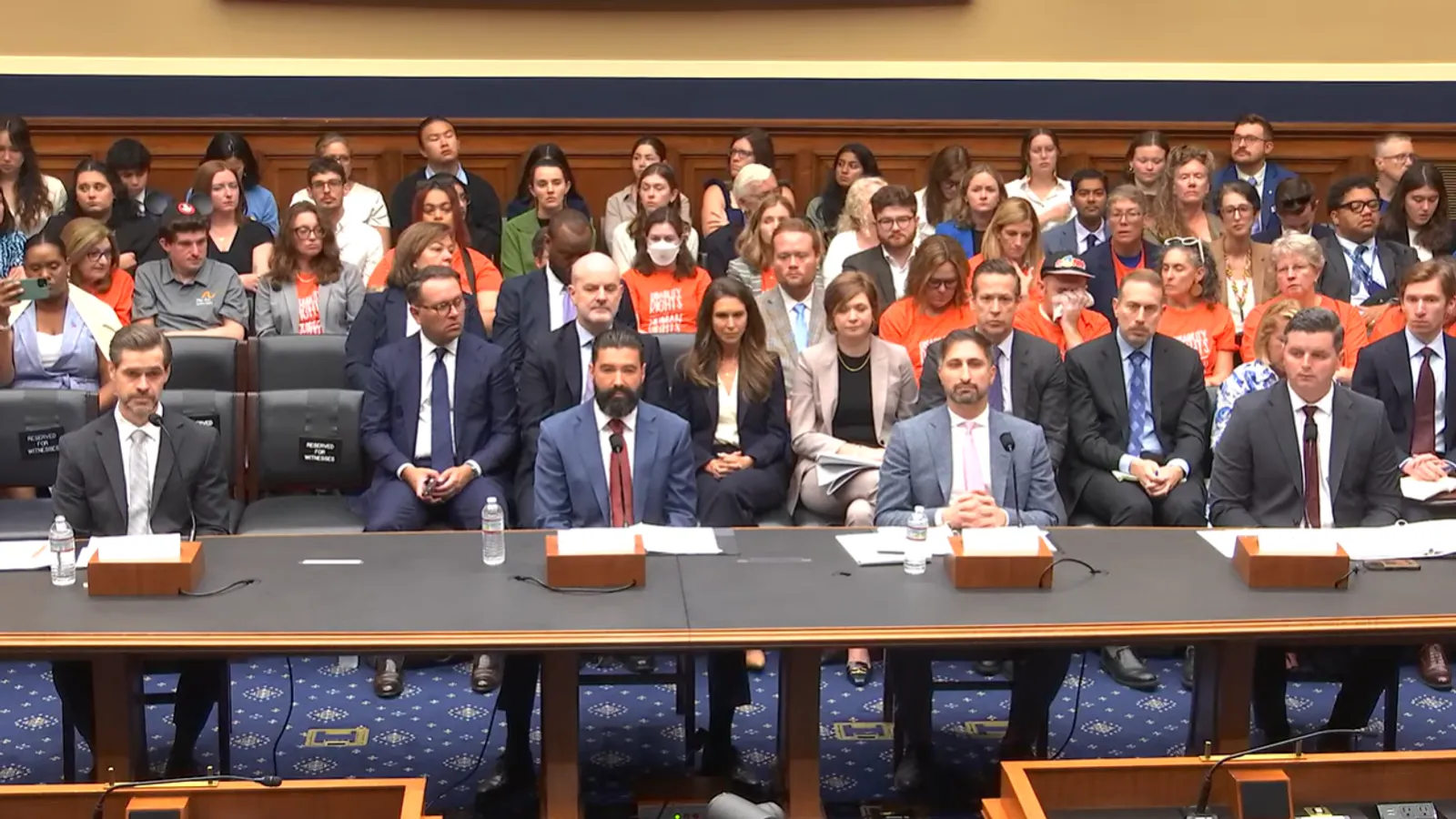
The intersection of healthcare policy and partisan politics has reached a boiling point as the Trump administration’s aggressive push to root out Medicaid fraud faces mounting accusations of political weaponization. A high-stakes hearing before the House Energy and Commerce oversight subcommittee this past Thursday served as the latest flashpoint, exposing a deep, ideological chasm between Republican regulators and Democratic state officials.
At the heart of the conflict is a series of unprecedented funding deferrals imposed by the Centers for Medicare & Medicaid Services (CMS) on blue-state Medicaid programs. While the administration, led by CMS Administrator Dr. Mehmet Oz, frames these actions as a necessary crusade to safeguard taxpayer dollars, Democratic lawmakers and state administrators view the policy as a calculated assault on programs that serve the nation’s most vulnerable populations.
The Architecture of a Crackdown: Main Facts and Context
For decades, the relationship between federal regulators at the CMS and state-level Medicaid directors was defined by collaboration. The system was designed as a partnership: the federal government provides oversight and funding, while states manage the day-to-day administration of services for seniors, the disabled, and low-income families.
That dynamic has shifted dramatically under the current administration. Emboldened by a March executive order from President Donald Trump that established a dedicated fraud-fighting task force, the CMS has launched a wide-ranging campaign to root out waste, fraud, and abuse. This effort includes mandatory credential re-checks for providers and a stern warning to state attorneys general that failure to meet federal standards could result in the decertification of Medicaid Fraud Control Units (MFCUs).
The administration’s rhetoric has been uncompromising. Republicans argue that the safety-net program is riddled with systemic leaks, necessitating aggressive intervention. However, the application of this "zero-tolerance" policy has been exclusively felt by blue states, leading to what critics describe as an "attack first, verify later" approach.
Chronology of Escalation: From Oversight to Deferral
The tension has built over several months, marked by a series of administrative maneuvers that have blindsided state officials:
- March 2026: President Trump signs an executive order formalizing a task force to combat Medicaid fraud, signaling the start of a more confrontational era of federal oversight.
- Spring 2026: The CMS mandates that all 50 states re-credential providers deemed "high-risk." Shortly thereafter, federal regulators issue warnings to state attorneys general regarding MFCU compliance.
- May 2026: The CMS triggers the largest deferral of federal Medicaid funds in agency history, withholding $1.3 billion from California.
- June 2026: Hawaii’s Medicaid Fraud Control Unit is officially decertified.
- Ongoing: Minnesota faces a $350 million payment pause, with the CMS threatening to withhold an additional $2 billion annually.
- Thursday’s Hearing: The House Energy and Commerce subcommittee holds a contentious hearing where state directors from California, Minnesota, and New York testify to the operational chaos caused by the federal government’s actions.
Supporting Data: The Disputed Numbers
The administration’s case for aggressive action rests on the assumption that Medicaid programs are bleeding billions in fraudulent payments. While state-level units reported some $2 billion in total recoveries last year, the federal government insists that the scope of the problem is far larger.
However, the empirical basis for the administration’s actions has come under fire. A glaring example occurred when the CMS sent a warning letter to New York, claiming that nearly 75% of the state’s Medicaid population—approximately 5 million people—were utilizing personal care services, a sector they alleged was rife with fraud.
New York’s Medicaid director, Amir Bassiri, quickly debunked the claim, noting that the actual number of beneficiaries using those services was 450,000—roughly 5% of the state’s total Medicaid enrollment. The CMS later admitted the error, but the damage to the administration’s credibility was done. Critics point to this incident as evidence that the "fraud-fighting" narrative is being used as a rhetorical smokescreen to justify cuts to social safety nets.
State-Level Integrity Efforts
Despite the federal narrative, states argue they are already proactive in policing their own programs. Testimonies from the hearing revealed substantial efforts already underway:
- Minnesota: Has conducted over 3,000 investigations and recovered $50 million since 2020. The state has expanded prepayment reviews to stop fraudulent claims before they are processed.
- California: Has suspended roughly 5,000 providers in the last five years and recovered more than $1 billion in fraudulent payments over the last three years.
- New York: Conducted over 2,500 audits and investigations in 2024 alone, generating $4.5 billion in cost savings and recoveries.
Official Responses: Partisan Divergence
The partisan divide was fully on display during Thursday’s hearing. Energy and Commerce Chair Rep. Brett Guthrie (R-Ky.) defended the administration, dismissing claims of bias. "It’s not the administration… punishing blue states because they’re blue states," Guthrie argued. "What it is, is this administration making the decision that we have rampant fraud."
Conversely, Rep. Frank Pallone (D-N.J.) characterized the leadership of the CMS under Dr. Oz as an act of bad faith. "It is becoming increasingly clear that under Dr. Oz, CMS does not intend to work with states in good faith," Pallone stated, noting that the administration has yet to provide specific evidence of the "widespread fraud" they claim necessitates such drastic funding freezes.
Rep. Diana DeGette (D-Colo.) was even more pointed in her assessment, describing the administration’s mention of Florida—the only red state mentioned in the context of an inquiry—as a "fig leaf" designed to provide the illusion of partisan neutrality. "CMS, in my view, is going out of its way to blindside blue states while pampering red ones," she said.
The Human Cost: Implications for Beneficiaries
Beyond the spreadsheets and political theater, the Medicaid directors warned of severe real-world consequences. The deferral of payments is not merely an accounting issue; it represents a direct threat to the continuity of care for millions of low-income Americans, the elderly, and the disabled.
John Connolly, Minnesota’s Medicaid director, provided a sobering reality check during his testimony. "These decisions affect Minnesotans with significant needs—people for whom a missed appointment, a gap in treatment, or an interrupted support service can quickly become a crisis," he warned.
The lack of transparency from the CMS has exacerbated the issue. States report being "blind-sided" by deferrals and left in the dark regarding the specific corrective actions required to restore funding. This uncertainty creates a "structural risk" that threatens the stability of state healthcare systems already grappling with budget deficits and inflationary pressures on provider payments.
Conclusion: A System at a Crossroads
The conflict between the Trump administration and blue-state Medicaid directors is about more than just auditing standards. It reflects a fundamental disagreement over the role of the federal government in the administration of state-managed safety-net programs.
While the CMS maintains that its aggressive posture is necessary to preserve the long-term viability of Medicaid, state officials argue that the strategy is causing irreparable harm to the very people the program is intended to serve. As the standoff continues, the "war on fraud" risks becoming a war of attrition, with the primary casualties being the 75 million Americans who rely on Medicaid for their health and well-being.
For now, the divide remains unbridged. As long as federal regulators prioritize punitive measures over collaborative oversight, the battle over Medicaid’s future will remain one of the most contentious fronts in the broader American healthcare debate.