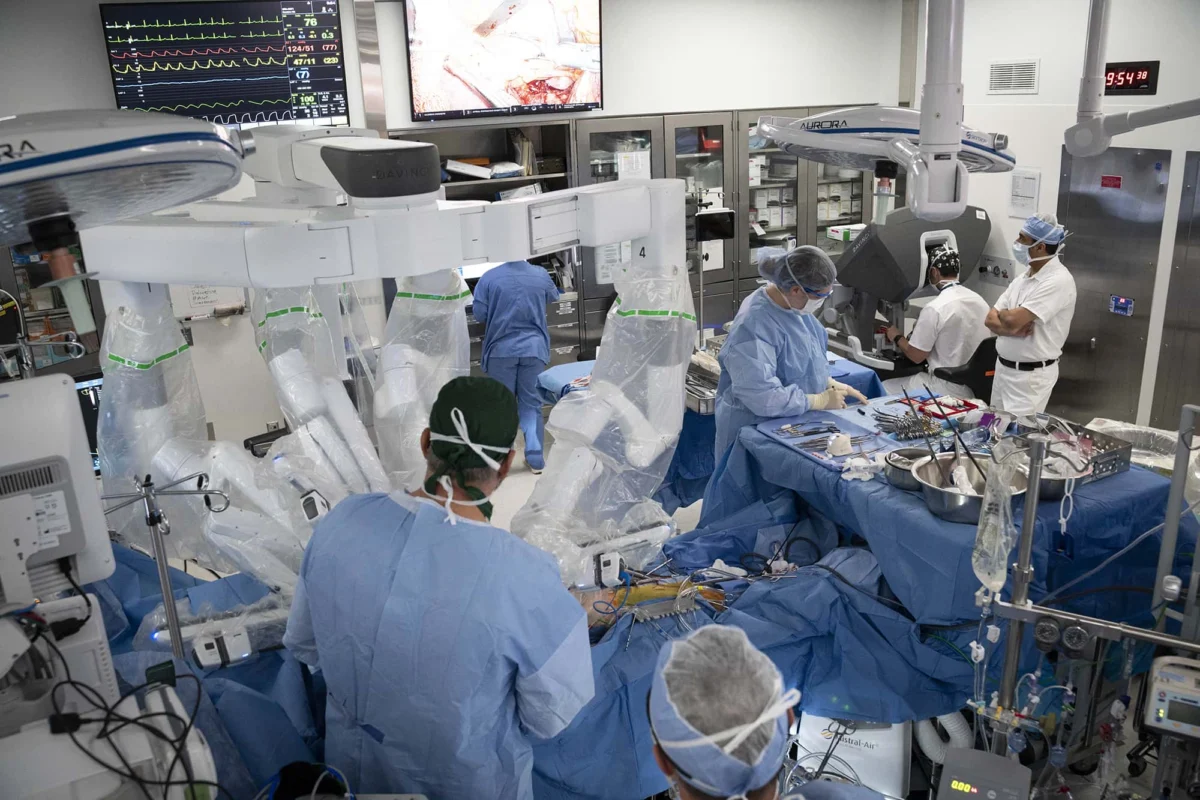
In a landmark achievement for medical science and surgical innovation, surgeons at the Cleveland Clinic have successfully completed the first robotic-assisted lung transplant in the United States. This procedure, performed in May 2026, represents a paradigm shift in thoracic surgery, moving away from traditional, highly invasive methods toward a precision-based, minimally invasive future. By utilizing advanced robotic instrumentation, the surgical team bypassed the need to divide the breastbone or ribs, effectively reducing the physiological trauma typically associated with major organ transplantation.
This milestone not only reinforces the Cleveland Clinic’s reputation as a global leader in transplantation but also opens a new chapter in how clinicians approach end-stage lung disease. As the procedure gains momentum, it promises to significantly improve recovery trajectories for patients facing the daunting prospect of a transplant.
Main Facts: Redefining Surgical Access
For decades, the standard procedure for a lung transplant has remained largely unchanged: a "clamshell" incision or a large thoracotomy, both of which require the surgeon to divide the sternum or spread the ribs to gain access to the thoracic cavity. While effective, these methods are inherently traumatic, often resulting in significant postoperative pain, lengthy hospital stays, and a prolonged recovery period that can be particularly challenging for elderly patients or those with comorbid conditions.
The robotic-assisted approach changes this narrative entirely. By utilizing small, keyhole-sized incisions, surgeons can navigate the thoracic cavity using miniaturized, high-precision robotic instruments. Enhanced by 3D visualization, which provides a high-definition, magnified view of the surgical field, the team can perform the intricate tasks of bronchial, vascular, and atrial anastomoses—the connections of the airways and blood vessels—with unprecedented accuracy.
The inaugural U.S. procedure was performed on a patient in his 70s suffering from pulmonary fibrosis. This progressive, life-limiting disease causes severe scarring of the lung tissue, leaving patients gasping for air. The success of the surgery—and the patient’s subsequent smooth recovery and discharge—serves as a proof-of-concept for the viability of this technique in complex, high-risk cases.
Chronology: A Global Path to Innovation
The path to this U.S. milestone was paved by years of institutional research and international collaboration. The timeline of this achievement highlights the methodical nature of surgical advancement:
- 1990: The Cleveland Clinic establishes its dedicated Lung Transplant Program, setting the foundation for decades of clinical excellence.
- 2015–2024: The widespread adoption of robotic-assisted surgery across other specialties, including urology and gynecology, sets the stage for thoracic integration.
- 2025: Cleveland Clinic achieves a high-volume benchmark, performing 146 lung transplants within a single year, solidifying its status as a national leader.
- 2025: A surgical team at Cleveland Clinic Abu Dhabi performs the enterprise’s first-ever robotic lung transplant, marking a historical first for the Gulf region and providing the data necessary to refine the technique for the U.S. market.
- May 2026: The Cleveland Clinic performs the first robotic-assisted lung transplant in the United States, led by Dr. Gregory Jones and Dr. Kenneth McCurry.
- Post-May 2026: The patient is successfully discharged, signaling the potential for this technique to become an elective standard for qualifying candidates.
Supporting Data: The Power of the Program
The feasibility of this robotic approach is not merely a product of technology, but of deep-seated institutional expertise. The Cleveland Clinic has performed over 2,500 lung transplants since its program’s inception. This vast repository of data and experience allowed the surgical team to identify the precise criteria for robotic candidacy.
Key Performance Metrics:
- Volume: 146 lung transplants performed in 2025 alone.
- Expertise: The institution is a destination center for "complex" patients—individuals who have been denied transplantation at other hospitals due to surgical risks or advanced age.
- Collaborative Success: The program’s success with robotic kidney and liver transplants provided a blueprint for the thoracic team, proving that robotic platforms can handle the vascular demands of organ replacement.
The data suggests that as surgical teams become more proficient with robotic consoles, the time-under-anesthesia may decrease, and the risk of complications such as sternal dehiscence (the separation of the breastbone) or chronic chest wall pain is significantly mitigated.
Official Responses: Insights from the Surgical Leaders
The medical community has closely watched this development, and the surgeons at the forefront of the procedure are optimistic about the implications.
Dr. Gregory Jones, Thoracic Surgeon at the Heart Vascular and Thoracic Institute:
"This milestone reflects an important step forward in how we approach lung transplantation. It builds on our extensive experience with both robotic surgery and transplant care. By utilizing these tools, we are adding a critical, less invasive option to our toolkit for patients who may not tolerate the physical toll of traditional open-chest surgery."
Dr. Kenneth McCurry, Surgical Director of Lung Transplantation:
"This achievement reflects the collaboration and innovation across our transplant and surgical teams. As these technologies continue to evolve, they will play an increasingly important role in improving patient outcomes and advancing the future of transplantation. We are proving that the future of surgery is not about how large the incision is, but how precise the surgeon can be."
The institutional support from the Cleveland Clinic leadership has been vital. By fostering an environment where surgeons can iterate on complex procedures using global insights—leveraging the success of their Abu Dhabi colleagues—the organization has successfully bridged the gap between experimental innovation and clinical standard-of-care.
Implications: The Future of Transplantation
The success of this robotic lung transplant carries profound implications for the medical field.
1. Patient Selection and Access
Currently, many elderly patients or those with frail musculoskeletal structures are deemed "not candidates" for lung transplants because they cannot survive the trauma of a traditional thoracotomy. Minimally invasive robotic techniques could expand the eligibility pool, offering life-saving interventions to patients who were previously considered too high-risk.
2. Postoperative Quality of Life
The primary complaint following a traditional lung transplant is the recovery period, often marred by intense pain from the sternotomy or rib spreading. Robotic surgery promises a faster return to baseline activity. By preserving the integrity of the chest wall, patients may experience less need for heavy pain medication and a shorter duration of ventilator dependence, which is crucial for preventing hospital-acquired complications.
3. Training and Global Standards
The successful execution of this surgery in both Abu Dhabi and Cleveland signals a new requirement for the next generation of thoracic surgeons. As robotic platforms become more sophisticated, medical schools and residency programs will likely need to integrate more intensive training in haptic feedback, 3D visualization, and console-based dexterity.
4. A Template for Other Organs
While the lungs are particularly complex due to their constant movement and the necessity of maintaining a sterile, sealed environment, the success here provides a roadmap for other thoracic procedures. The Cleveland Clinic’s "enterprise" model of sharing best practices across international borders ensures that these advancements are not trapped in a vacuum but are disseminated rapidly to improve patient care globally.
Final Takeaways
The transition to robotic-assisted lung transplantation is more than just a technological upgrade; it is a fundamental shift in the surgical philosophy of care. By prioritizing the patient’s physical recovery through reduced surgical trauma, the Cleveland Clinic has set a new benchmark. As the technology matures, it is expected that this approach will move from the "pioneering" phase to a standard practice, offering a brighter, more mobile future for those struggling with the limitations of end-stage lung disease.