









In the ongoing quest to combat the world’s leading cause of death—cardiovascular disease—researchers at UT Southwestern Medical Center have uncovered a sophisticated biological mechanism that could change the future of cholesterol management. By identifying a protein that functions as a master regulator of liver-derived lipid particles, scientists have opened a new frontier in metabolic medicine, one that moves beyond traditional drug therapies to address cholesterol at its genetic source.
The study, published in the prestigious American Heart Association journal Circulation, centers on the protein HELZ2. Researchers have determined that HELZ2 acts as a gatekeeper for the production of apolipoprotein B (APOB)—a gene essential for creating the lipoproteins that shuttle cholesterol and fats throughout the body. By manipulating this protein, scientists believe they have found a potential "molecular dial" that could allow for more precise control over cholesterol levels and liver health.
The Mechanics of Discovery: A Chronology of Research
The path to this discovery was neither direct nor simple. It began within the sophisticated laboratories of UT Southwestern’s Center for the Genetics of Host Defense, utilizing a large-scale genetic screening system pioneered by Nobel laureate Dr. Bruce Beutler.
The Initial Observation
The investigation was sparked by an anomalous finding: mice exhibiting an unusual pattern of fat accumulation in their livers. Rather than dismissing these subjects as outliers, the research team, led by Assistant Professor Zhao Zhang, Ph.D., initiated a deep-dive genetic analysis. They discovered a specific gain-of-function mutation that significantly increased HELZ2 activity.
Identifying the Regulatory Pathway
As the team traced the biological effects of this mutation, they observed a striking physiological change: the mice possessed remarkably low levels of LDL cholesterol and triglycerides in their bloodstream. However, this systemic benefit came at a cost. The cholesterol that was not being exported from the liver remained trapped, leading to an increase in hepatic fat. This "see-saw" effect between blood cholesterol and liver fat became the focal point of the study, revealing that HELZ2 is the precise component controlling this distribution.
Decoding the mRNA Connection
The most breakthrough aspect of the study, according to postdoctoral researcher Yiao Jiang, Ph.D., was the realization that HELZ2 works at the mRNA level—the "instruction manual" stage of protein synthesis. Most existing treatments focus on degrading or inhibiting proteins after they have already been synthesized. HELZ2, however, accelerates the breakdown of APOB messenger RNA (mRNA). By shortening the lifespan of these genetic instructions, HELZ2 ensures that fewer apoB proteins are created in the first place, effectively reducing the number of cholesterol-carrying lipoproteins entering the circulation.
Supporting Data: The Biological Balancing Act
The data derived from the mouse models provided a clear, quantitative look at how HELZ2 modulates metabolic health.
Atherosclerosis Mitigation
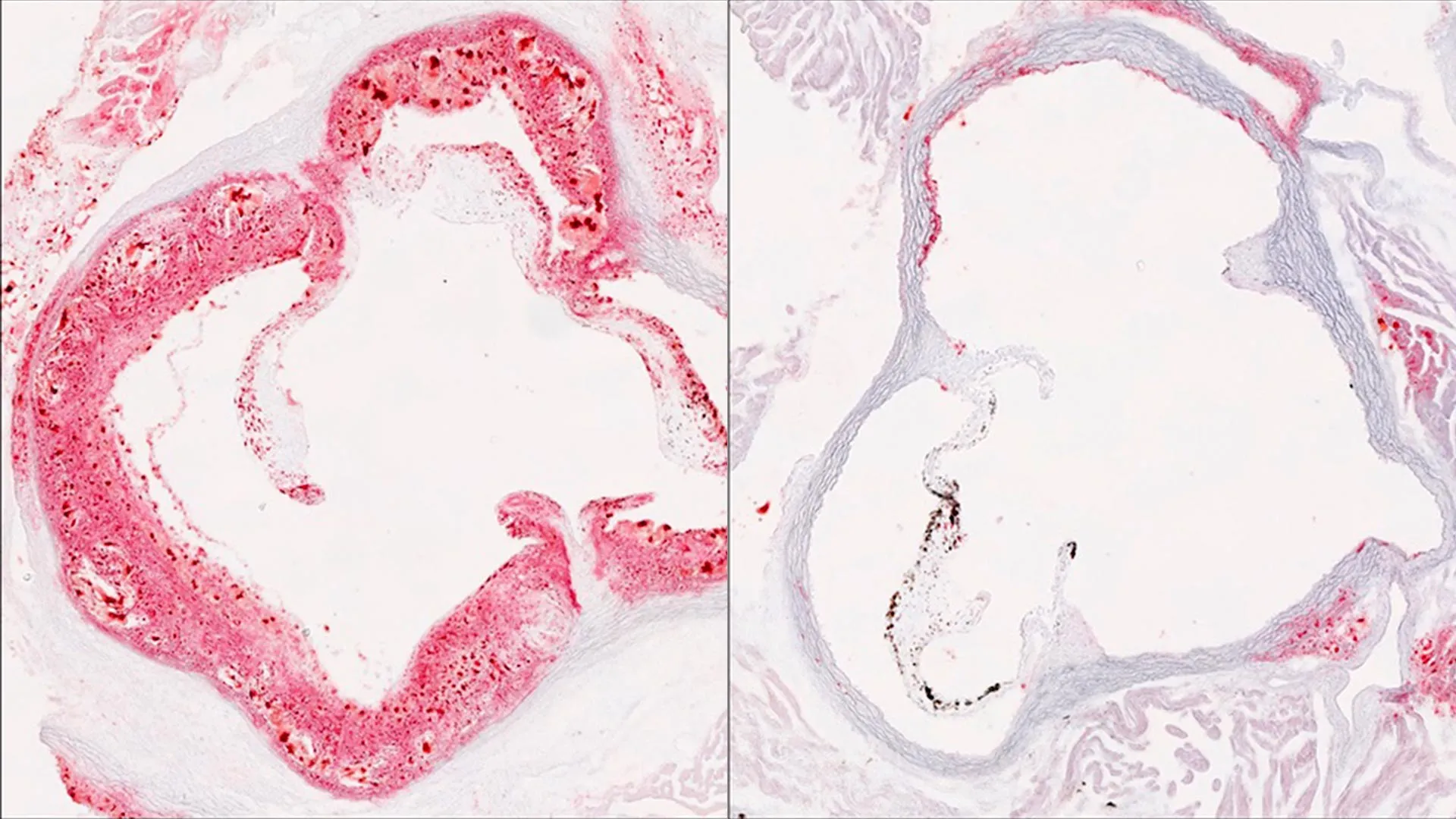
In the mutated mice, the reduction in circulating lipoproteins resulted in a measurable decrease in plaque buildup within the arteries. Atherosclerosis, the hardening and narrowing of arteries due to fat and cholesterol deposits, is the primary precursor to heart attacks and strokes. The researchers noted that by limiting the "raw materials" (the lipoproteins) that form these plaques, the mutation provided a robust protective effect against arterial disease.
The Trade-off: Hepatic Steatosis
The research also highlights the complexities of metabolic regulation. While the reduction of blood cholesterol is a clear health win, the resulting accumulation of fat in the liver presents a cautionary note. This phenomenon underscores the reality that the liver is not merely a factory for cholesterol but a vital metabolic organ that must maintain internal homeostasis. The study demonstrates that HELZ2 sits at a critical junction:
- Turning HELZ2 "Up": Decreases blood cholesterol, potentially preventing heart disease, but increases the risk of hepatic lipid accumulation (fatty liver).
- Turning HELZ2 "Down": Increases blood cholesterol but may help clear excessive fat from the liver.
This dual-action capability makes HELZ2 a highly sophisticated—if delicate—therapeutic target.
Official Perspectives and Expert Analysis
The research team at UT Southwestern emphasized that their findings represent a paradigm shift in how the medical community approaches lipid management.
Moving Beyond the Statin Era
For decades, statins have been the gold standard for cholesterol reduction. These drugs work by inhibiting the HMG-CoA reductase enzyme, which is involved in the synthesis of cholesterol. While effective, they do not work for every patient and can have side effects. Dr. Zhang noted that the discovery of HELZ2 offers a "completely different way of controlling harmful cholesterol particles." Instead of targeting the enzymatic synthesis of cholesterol, HELZ2 allows clinicians to target the production of the transporters (lipoproteins) themselves.
The Potential for Precision Medicine
"The idea that we can control apoB at the RNA level represents a major shift in how we think about cholesterol regulation," said Dr. Zhang. "It gives us a new molecular lever—and potentially a new set of tools—for tackling these conditions."
The researchers believe that future therapies could involve "tuning" HELZ2 activity to find a middle ground—a therapeutic sweet spot that lowers systemic cholesterol enough to protect the heart without inducing excessive liver fat. This level of precision, while currently in the experimental stages, reflects the growing field of metabolic engineering and genetic therapeutics.
Broader Implications: A New Frontier in Disease Treatment
The implications of this discovery extend far beyond the laboratory. By identifying a new regulatory mechanism for apoB, scientists are looking at potential treatments for two of the most pervasive health crises in modern society: cardiovascular disease and non-alcoholic fatty liver disease (NAFLD).
Redefining Fatty Liver Disease Treatment
NAFLD, which affects a significant portion of the global population, is often linked to obesity and metabolic syndrome. If researchers can develop a way to modulate HELZ2 safely, it could provide a dual-pronged strategy: reducing the risk of cardiovascular death while managing the accumulation of fat in the liver. This would be a landmark advancement in treating the metabolic syndrome complex.
Future Therapeutic Strategies
The transition from mouse models to human therapeutics is a long road, but the research sets the stage for a new class of drugs. Scientists are now investigating whether small molecules or genetic interventions can be used to mimic the HELZ2 effect in a controlled manner. Because HELZ2 acts early in the protein synthesis chain, it may offer a more efficient, long-lasting approach to lowering LDL levels compared to current pharmacological agents.
Acknowledging the Infrastructure of Discovery
This study was facilitated by the high-caliber environment at UT Southwestern, including the contributions of Dr. Bruce Beutler. As a recipient of the 2011 Nobel Prize in Physiology or Medicine, Dr. Beutler’s expertise in genetic screening was instrumental in identifying the specific mutations that led to this discovery. The integration of such high-level genetic tools with clinical internal medicine highlights the importance of institutional support in pushing the boundaries of biological understanding.
The study was supported by significant grants from the National Institute of Diabetes and Digestive and Kidney Diseases (NIDDK) of the National Institutes of Health, reflecting the high priority placed on metabolic research by the federal government.
Conclusion
The discovery of HELZ2’s role in lipid metabolism provides a rare glimpse into the machinery of human physiology. It reveals that our body’s ability to manage cholesterol is not a static process, but a highly dynamic system governed by genetic regulators like HELZ2. While the journey from this discovery to a pharmacy shelf is ongoing, the identification of this "molecular lever" provides researchers with a powerful new tool.
As the medical community continues to grapple with the rising tide of heart disease and metabolic disorders, the work of Dr. Zhang, Dr. Jiang, and their colleagues serves as a reminder that the key to future treatments often lies in the most fundamental genetic processes—hidden, until now, within the liver’s own complex regulatory network. By mastering the dial of HELZ2, we may one day be able to balance the health of the heart and the liver with unprecedented precision.