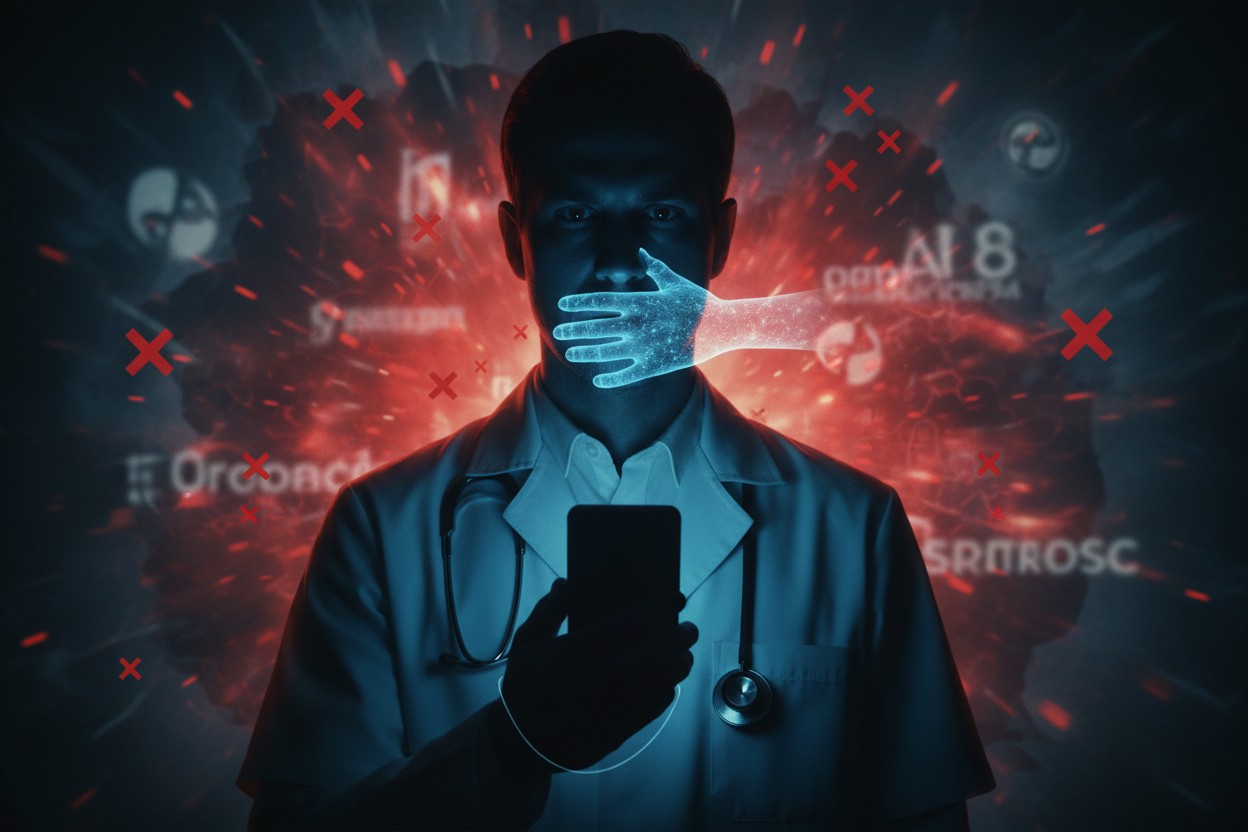
In the wake of the COVID-19 pandemic, a complex and highly coordinated apparatus emerged to monitor, report, and neutralize healthcare professionals who questioned the safety or efficacy of the mass-vaccination initiative. Investigative journalists and whistleblowers have recently unveiled evidence suggesting that this "censorship machine" was not merely a spontaneous organic response by concerned citizens, but a funded, strategic operation backed by major players in the pharmaceutical industry.
At the center of this controversy is the Public Good Project (PGP), a nonprofit organization that, according to tax filings, received $1.275 million from the Biotechnology Innovation Organization (BIO)—the primary lobbying group for industry giants including Pfizer and Moderna. Through initiatives such as "Stronger" and "Shots Heard," the PGP effectively weaponized social media reporting tools and professional regulatory bodies to systematically silence dissenting medical voices.
The Financial Nexus: Connecting PGP and Big Pharma
The link between the pharmaceutical lobby and the suppression of medical debate is cemented by public tax records. The $1.275 million contribution from BIO to PGP represents a direct financial conduit between the manufacturers of COVID-19 vaccines and the organization responsible for monitoring and flagging social media discourse.
Internal documents and public statements from PGP leadership reveal that the organization did not act as a neutral party. During a 2023 presentation, the CEO of PGP explicitly characterized the organization as a "primary partner" to Twitter (now X), specifically tasked with tackling "vaccine misinformation." This partnership allowed PGP to act as a gatekeeper, working in tandem with social media algorithms to identify and remove content that deviated from the official pandemic narrative.
Furthermore, the PGP leadership went beyond digital moderation. In transcripts from various public addresses, the CEO advocated for the revocation of medical licenses for doctors who engaged in what the organization labeled "disinformation." This transition from digital moderation to professional career destruction marks a significant shift in how medical debate is governed in the modern era.
Chronology of a Coordinated Campaign
The infrastructure of this campaign developed in distinct phases, evolving from a modest social media monitoring group into an aggressive, multi-channel pressure machine.
Phase 1: Inception and Infrastructure (2020–2021)
Initially, the "Shots Heard" initiative began as a grassroots Facebook group created by two physicians. However, it was quickly absorbed and professionalized by the PGP. The transition transformed the group from a discussion forum into a highly organized, reactive "attack machine." Members were trained in social media surveillance techniques, learning how to track dissenting doctors and coordinate mass reporting campaigns to social media platforms, medical boards, and employers.
Phase 2: The Expansion of Surveillance (2021–2022)
The campaign expanded to include international and multi-platform efforts, such as the United Nations-affiliated "Team Halo." This project recruited scientists and medical professionals to combat "misinformation" on platforms like TikTok. These individuals were provided with specific scripts and guides on how to file formal complaints against colleagues who challenged vaccine mandates. During this period, the focus shifted from public debate to administrative harassment, targeting the livelihoods of physicians through their state medical boards.
Phase 3: The Exposure and Backlash (2023–Present)
The final phase involves the unraveling of these efforts as whistleblowers and investigators began to expose the fraudulent nature of the operation. By infiltrating private groups, investigators discovered that many of the influencers used by these organizations to push the pro-mandate narrative were not who they claimed to be. The revelation that some participants were using fabricated credentials signaled to the public that the "grassroots" support for these censorship efforts was largely manufactured.
Supporting Data and Evidence of Malfeasance
The impact of this campaign on the medical profession has been documented by researchers and victims alike. In a study published in the HealthCare Ethics Committee Forum, authors highlighted the systemic nature of the suppression faced by practitioners who questioned the safety profiles of the vaccines. The report notes that the label "anti-vaxxer" was used as a stigmatizing tool to isolate dissenters, effectively chilling scientific inquiry.
The Cost of Dissent
The human and financial toll of this harassment is significant. Dr. Mary Talley Bowden, a prominent critic of vaccine mandates, became a primary target for "Shots Heard." Members filed a barrage of frivolous complaints with the Texas Medical Board. While the board eventually dismissed the complaints, the legal process cost Dr. Bowden over $125,000. This is a recurring pattern: the goal is often not to win the case, but to inflict sufficient financial and reputational damage to exhaust the target into silence.
Fabricated Expertise
Investigations into "Team Halo" uncovered a disturbing pattern of credential inflation. For instance, the individual identified as "T.J. ‘Pax’ Hardy," who posed as an epidemiologist, was forced to admit his lack of credentials following an exposé on TikTok. Similarly, investigative journalist Paul Thacker revealed that Dr. Allison Neitzel, frequently featured on CNN as a medical authority, had never completed a medical residency. Furthermore, the organization that promoted her—the National Association of Medical Doctors (NAMD)—was found to be a shell organization with no physical office, whose content appeared to be generated by artificial intelligence.
Official Responses and Government Collusion
The influence of these organizations was not limited to the private sector. Evidence suggests a high degree of integration between government agencies, pharmaceutical lobbyists, and social media giants.
According to research by America First Legal, internal documents from Facebook revealed that the Centers for Disease Control and Prevention (CDC) had "backdoor" access to the platform, allowing officials to flag and remove millions of posts under the guise of combating misinformation. This revelation aligns with disclosures from Alphabet (Google’s parent company), which admitted to the U.S. Congress that the Biden administration had pressured YouTube to remove content that did not even violate the platform’s own policies, but rather contradicted government messaging.
These admissions demonstrate that the "censorship machine" was not merely a private enterprise, but a collaborative effort between the state and private industry to enforce a unified public health narrative.
Implications for Medical Freedom and Public Trust
The exposure of these campaigns has profound implications for the future of public health and democratic discourse.
- The Erosion of Credibility: The reliance on inflated metrics, AI-generated content, and fake "grassroots" influencers has backfired. As the public realizes that much of the online consensus was artificially manufactured, trust in both public health institutions and the mainstream media has plummeted.
- The Legal Reckoning: The legal challenges initiated by targeted doctors are beginning to expose the internal communications between pharmaceutical lobbyists, social media companies, and regulatory boards. These discovery processes may reveal the full extent of the coordination.
- Financial Motivations: A memo from the biotech lobby, surfaced by investigators, noted that the maintenance of vaccine profitability required the elimination of high-profile critics. This document provides the strongest evidence yet that the campaign against dissent was a calculated business strategy rather than a genuine effort to protect public health.
As the dust settles, it is becoming clear that the attempt to silence dissent has served only to radicalize the debate. The efforts to suppress "misinformation" through censorship and harassment have been identified by many as the primary cause of the current, deep-seated skepticism toward institutional medicine.
In conclusion, the saga of the Public Good Project and its affiliates serves as a cautionary tale of what happens when private financial interests gain the power to dictate the boundaries of scientific debate. The pushback from the medical community, the legal profession, and the public suggests that the era of uncontested, state-backed narrative enforcement is facing a significant challenge. As those who were once silenced continue to speak out, the focus is shifting from the content of their arguments to the methods used to suppress them—a shift that may fundamentally alter the landscape of medical freedom for years to come.