


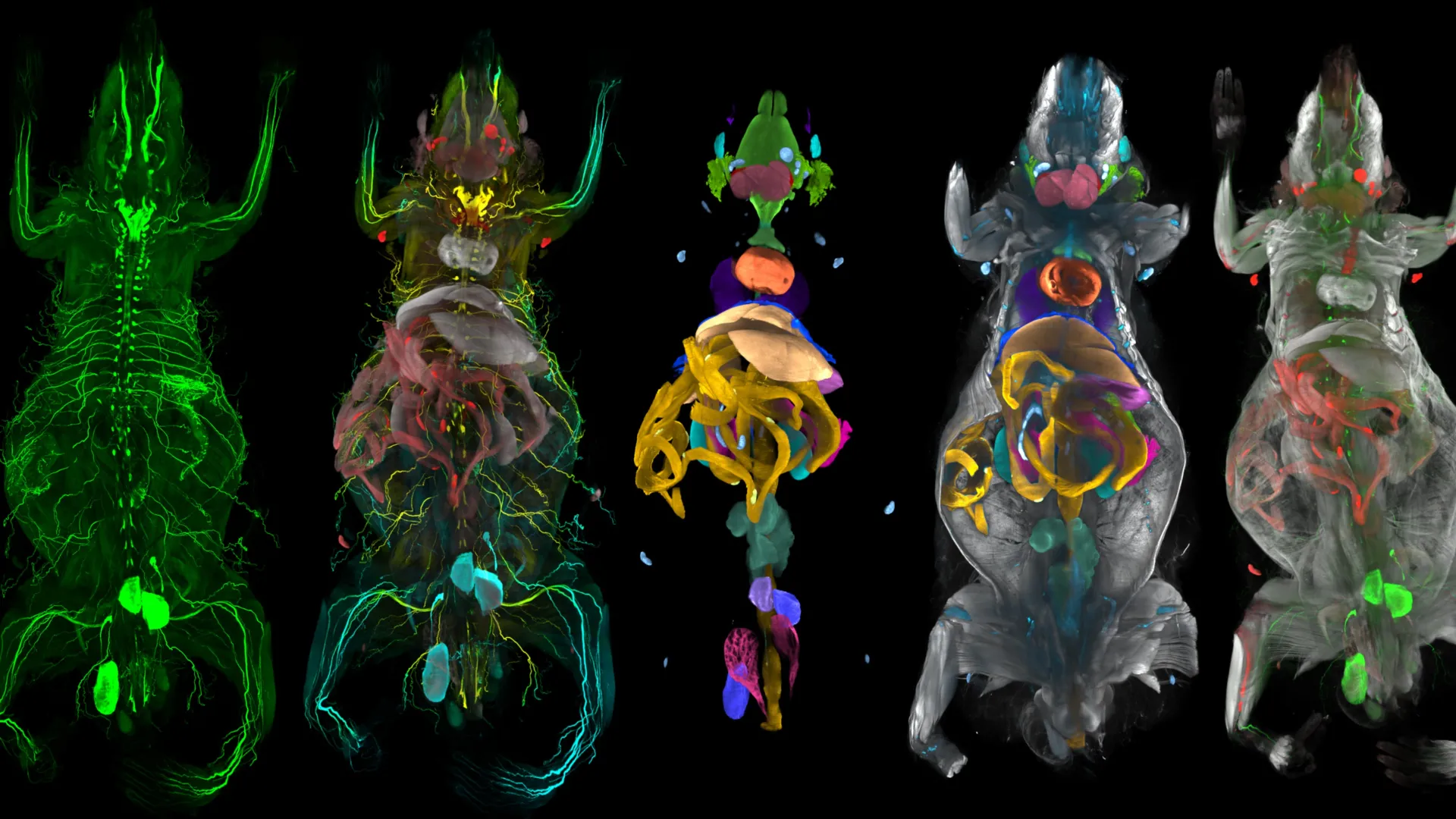
In a landmark study published in the journal Nature, an international research consortium led by Helmholtz Munich and Ludwig Maximilians University (LMU) has unveiled a technological leap that promises to fundamentally change how we study systemic disease. The team has developed "MouseMapper," a sophisticated artificial intelligence framework capable of mapping disease-related biological changes across an entire mouse body at the resolution of individual cells.
This breakthrough addresses a long-standing "blind spot" in medical science: the inability to observe how diseases like obesity ripple through an organism simultaneously. By integrating whole-body imaging with foundation-model deep learning, researchers have already uncovered previously unknown nerve damage linked to obesity—a discovery with profound implications for human health.
The Limitations of Traditional Pathology
For decades, medical research has been constrained by a "siloed" approach. To understand how a disease affects the liver, scientists analyze the liver. To understand neuropathy, they study the nerves. While this reductionist method has yielded immense knowledge, it ignores the reality that the body is an interconnected ecosystem.
Obesity is a systemic disease, not merely a metabolic one. It disrupts immune activity, alters nerve structures, and reshapes tissues from the brain to the peripheral limbs. However, scientists have historically lacked the tools to observe these widespread effects in a single, intact organism. Studying individual organs in isolation often misses the "crosstalk" between systems—the molecular signals and inflammatory cascades that travel across the body to trigger complications like type 2 diabetes, cardiovascular disease, and cancer.
The Chronology of an AI Breakthrough
The development of MouseMapper was a multi-stage engineering feat that combined advanced tissue optics with state-of-the-art computational biology.
1. Transparency and Visualization
The process begins with "tissue clearing," a revolutionary technique that renders biological tissues transparent while preserving their structural integrity. By tagging nerves and immune cells with fluorescent markers, researchers can effectively turn a mouse into a transparent map of biological activity.
2. High-Resolution Scanning
Once the tissues are cleared, the team utilized advanced light-sheet microscopy to capture three-dimensional images of the entire mouse. This generated massive datasets, containing tens of millions of cellular structures. Without an automated system, analyzing this data would take human researchers years, if not decades.
3. The Arrival of MouseMapper
Enter the AI. The research team, led by Prof. Ali Ertürk, Director of the Institute for Biological Intelligence (iBIO) at Helmholtz Munich, developed MouseMapper as a foundation-model-based deep learning system. Unlike traditional AI that is trained on a narrow set of tasks, a foundation model is designed to generalize. It can identify and segment 31 distinct organ and tissue types automatically, mapping complex nerve networks and immune-cell clusters without the need for manual, region-specific annotations.
Obesity and the Facial Nerve: A Startling Discovery
To test the efficacy of the new platform, the research team placed mice on a high-fat diet to induce obesity. The goal was to observe the structural fallout of metabolic syndrome across the entire body.
The results were immediate and unexpected. MouseMapper identified widespread inflammation and structural remodeling of nerves that had never been documented in the context of obesity. Specifically, the researchers focused on the trigeminal nerve—a vital cranial nerve responsible for sensation in the face and complex motor functions.
In obese mice, the trigeminal nerve exhibited a significant reduction in branching and nerve endings. Behavioral assessments confirmed that these structural changes translated to physiological decline: the obese mice showed a marked decrease in sensitivity to sensory stimulation.
The Human Connection
Crucially, the team did not stop at the laboratory mouse. By comparing the molecular signatures found in the mice to tissue samples from humans with obesity, they discovered a conserved pattern of inflammation and nerve remodeling. This suggests that the facial nerve damage observed in mice is likely occurring in humans as well, potentially explaining some of the neurological complexities seen in obese patients that have previously been dismissed or misdiagnosed.
Official Perspectives and Expert Insight
The potential of MouseMapper is being hailed as a paradigm shift by those involved in its creation.
"MouseMapper is built on a foundation model, which means it generalizes far beyond the data it was originally trained on," explains Ying Chen, co-first author of the study. This scalability is what differentiates the tool from previous image-analysis software, which often required extensive retraining for every new experiment or tissue type.
Dr. Doris Kaltenecker, a senior scientist at the Institute for Diabetes and Cancer (IDC) and the study’s first author, emphasized the necessity of whole-body analysis. "We revealed previously unknown structural and molecular changes in the trigeminal ganglion and its facial branches, and the same molecular signature was conserved in human tissue. This kind of finding simply cannot emerge from studying one organ at a time."
For Prof. Ali Ertürk, the long-term vision is even more ambitious. "Our goal is to create a comprehensive framework for understanding how diseases affect the body as an interconnected system," he stated. "Our long-term vision is to build truly realistic digital twins of mice in health and disease: cell-level atlases that we can query, perturb, and screen in silico computationally."
Implications for Future Medical Research
The introduction of MouseMapper marks the beginning of a new era in drug discovery and disease prevention. The researchers believe the tool will be instrumental in studying:
- Neurodegenerative Diseases: Understanding how systemic inflammation contributes to the decline of neural pathways.
- Cancer Metastasis: Mapping how cancer cells travel and interact with immune cells across different organ systems.
- Autoimmune Disorders: Identifying "hotspots" of immune activity that occur far from the primary site of inflammation.
- Metabolic Health: Pinpointing the exact moment when systemic changes begin, allowing for earlier medical intervention.
By making their whole-body datasets publicly available, the team is fostering a global collaboration, allowing researchers around the world to conduct their own "virtual" experiments. This democratizes high-end biological research, enabling labs with limited imaging resources to access the vast datasets generated by this study.
Furthermore, the "digital twin" concept described by Prof. Ertürk could significantly reduce the number of physical animal experiments required in the future. If researchers can simulate how a new drug affects the entire body using an AI-driven digital atlas, they can narrow down the most promising candidates before ever moving to a clinical trial or further animal testing. This not only accelerates the pace of discovery but aligns with the "3Rs" principle of animal research: Replacement, Reduction, and Refinement.
Conclusion: A New Frontier
The discovery of facial nerve damage in obese mice is only the beginning. As MouseMapper continues to learn from new datasets, it will likely unveil countless other systemic links that define human health. By finally viewing the body as a whole, rather than a collection of disparate parts, science is moving toward a more holistic, and ultimately more effective, approach to medicine.
This research, supported by a vast network of European and German research grants, stands as a testament to the power of interdisciplinary collaboration. As we move forward, the "MouseMapper" platform will undoubtedly serve as a cornerstone in the effort to decode the complex, interconnected nature of human disease, bringing us one step closer to personalized, systemic treatments for the world’s most challenging health conditions.