The pharmaceutical landscape has been undeniably reshaped over the last few years by a class of drugs that have become household names: Ozempic, Wegovy, Mounjaro, and Zepbound. Initially heralded as a breakthrough in the treatment of type 2 diabetes and obesity, these glucagon-like peptide-1 (GLP-1) receptor agonists have transcended their original clinical indications. As millions of patients report profound physiological and psychological shifts—most notably the silencing of "food noise"—medical researchers have begun to investigate whether these drugs possess a broader, more systemic utility.
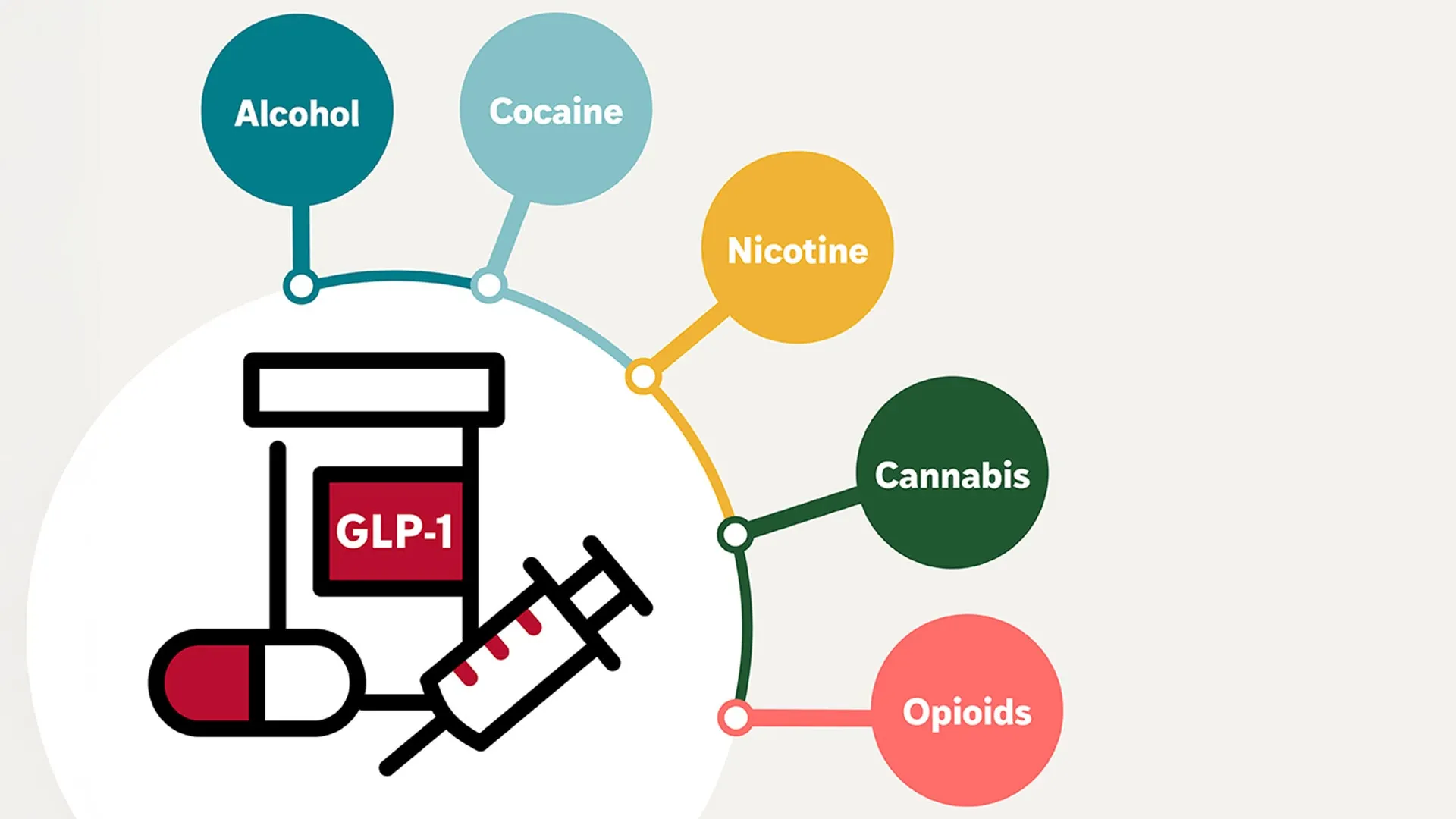
A landmark study conducted by researchers at the Washington University School of Medicine in St. Louis and published in The BMJ suggests that the reach of these medications may extend deep into the realm of behavioral health. According to the study, GLP-1 receptor agonists are associated with a significant reduction in the risk of developing substance use disorders (SUDs) and, perhaps more pivotally, are linked to fewer overdoses, hospitalizations, and mortality rates among those already struggling with addiction.
The Chronology of a Medical Discovery
The journey toward this realization was not born from a sudden hypothesis, but rather from a steady accumulation of anecdotal evidence that eventually demanded empirical rigor.
From Anecdote to Observation
The narrative began in clinical offices across the country. Patients prescribed GLP-1 medications for weight management or glycemic control began reporting a peculiar side effect: they were losing their desire for alcohol and tobacco. These reports were not isolated; they were consistent, persistent, and crossed demographic lines.
Early observational studies provided the first crumbs of evidence, suggesting links between GLP-1 therapy and lower risks of alcohol and cannabis use disorders. However, these earlier investigations were largely fragmented, focusing on individual substances rather than the phenomenon of addiction as a holistic biological event.
The VA Study: A Statistical Powerhouse
To determine whether these effects were localized or systemic, researchers at Washington University undertook a massive retrospective study. Utilizing electronic health records from 606,434 U.S. veterans diagnosed with type 2 diabetes, the team aimed to create a robust dataset that could withstand clinical scrutiny.
The study period spanned three years of post-prescription health records. Researchers compared patients taking GLP-1 medications—specifically semaglutide, liraglutide, or dulaglutide—against a control group taking SGLT2 inhibitors, another class of diabetes medication. This design allowed the researchers to isolate the effects of the GLP-1 mechanism rather than simply comparing drug users to non-drug users.
Supporting Data: The Scope of the Impact
The data produced by the Washington University team is striking in its breadth. By segmenting the 606,434 participants into those without a pre-existing substance use disorder and those already diagnosed with one, the researchers were able to measure both preventative and therapeutic efficacy.
Preventing the Onset of Addiction
Among the 524,817 participants who did not have a substance use disorder at the start of the study, the preventative power of GLP-1 medications was clear. Those taking GLP-1 drugs were 14% less likely to develop any form of substance use disorder compared to those on other diabetes medications.
The protective effect was consistent across the spectrum of major substances:
- Alcohol: 18% lower risk
- Cannabis: 14% lower risk
- Cocaine: 20% lower risk
- Nicotine: 20% lower risk
- Opioids: 25% lower risk
In practical terms, the researchers estimated that for every 1,000 patients treated with a GLP-1 drug, there were seven fewer new substance use disorder diagnoses.
Reducing Harm in Established Addiction
The impact on the 81,617 participants who entered the study with an existing addiction was even more dramatic. For these individuals, the drugs functioned as a harm-reduction tool of unexpected potency. Over the three-year monitoring period, GLP-1 users saw:
- A 30% reduction in emergency department visits.
- A 25% reduction in hospitalizations.
- A 40% reduction in drug-related overdoses.
- A 50% reduction in drug-related deaths.
Statistically, this translated to 12 fewer serious, addiction-related health crises for every 1,000 users.
Official Responses and Expert Analysis
The scientific community has reacted to these findings with a mix of cautious optimism and professional excitement. Dr. Ziyad Al-Aly, the study’s senior author and a clinical epidemiologist at WashU Medicine and the VA Saint Louis Health Care System, has been at the forefront of interpreting these results.
"In addiction medicine, a lot of treatments target just one thing," Dr. Al-Aly noted. "A nicotine patch helps with smoking, but not alcohol. There is no medication that works across addictive substances, let alone all of them."
Dr. Al-Aly emphasizes that the mechanism of action here is likely not a direct pharmacological reaction to the chemical makeup of a specific drug, but rather a disruption of the underlying biological architecture of craving. "The revelation about GLP-1 medication is that it really works against all major substances, and it works uniformly," he explained. "It is likely acting against the craving itself. It blunts that craving that pulls people toward whatever they’re addicted to."
Targeting the Biology of Craving
The scientific community has long known that GLP-1 receptors are not exclusive to the pancreas or the digestive tract; they are present in various regions of the brain, particularly those associated with reward processing and impulse control.
The "Drug Noise" Hypothesis
Dr. Al-Aly draws a parallel between the "food noise" that plagues those with obesity—the constant, intrusive preoccupation with eating—and what he terms "drug noise." This "drug noise" represents the relentless, underlying biological drive that pushes an individual toward substance use.
By targeting the brain’s reward centers, GLP-1 medications may effectively "quiet" this signal. If the brain is no longer receiving the acute, dopamine-driven feedback loop that characterizes addiction, the compulsion to seek out the substance may diminish. This explains why the drugs appear to be agnostic to the specific substance involved; they are not treating the nicotine or the alcohol, but rather the brain’s hunger for the reward that those substances provide.
Filling the Gaps in Current Care
This discovery is particularly vital because many forms of addiction lack any pharmacological intervention. While opioid use disorder can be managed with buprenorphine or methadone, there are currently no FDA-approved medications for stimulant addictions, such as cocaine or methamphetamine. If GLP-1s can fill this therapeutic void, the implications for public health would be nothing short of revolutionary.
Future Implications for Public Health
The findings of the BMJ study provide a compelling argument for the initiation of clinical trials specifically designed to evaluate GLP-1 agonists as a formal treatment for addiction.
Moving Toward Clinical Trials
While the retrospective data is robust, the medical community maintains a standard of evidence that requires randomized, controlled trials to confirm these results. Such trials would need to measure not just substance intake, but also mortality and long-term recovery metrics. Given the current public health crisis surrounding opioid overdoses and the persistent challenges of alcohol and nicotine dependence, the urgency for these trials is high.
A Dual-Purpose Strategy
For patients suffering from chronic conditions like obesity or type 2 diabetes—conditions that often co-occur with mental health struggles and addiction—the prospect of a "dual-purpose" medication is enticing. "GLP-1s may offer a dual benefit for patients with chronic conditions who are also struggling with a substance use disorder: one medication can treat both conditions at once," said Al-Aly.
However, researchers caution against viewing these drugs as a "magic bullet." Addiction is a complex biopsychosocial disorder, and any pharmacological intervention would likely need to be integrated into a comprehensive care plan that includes psychological counseling, behavioral therapy, and robust social support systems.
Conclusion: Quieting the Roar
The research out of Washington University marks a turning point in how we perceive the biological basis of addiction. By moving the conversation away from the specific substances themselves and toward the common, shared biological signal that drives them, we open the door to a new paradigm in treatment.
As Dr. Al-Aly poignantly observed, "Moving beyond food noise to drug noise, GLP-1s are quieting the roar of addiction." Whether these medications ultimately receive approval as a treatment for substance use disorders remains to be seen, but the evidence is now too significant to ignore. We are witnessing the beginning of a potential shift in how medicine addresses one of the most persistent and devastating challenges facing modern society.
Funding for this research was provided by the U.S. Department of Veterans Affairs. The authors stated that the funders had no influence over the study’s design, data collection, or final interpretations. The views expressed in the study do not necessarily reflect the official policies of the Department of Veterans Affairs or the United States government.