










1 July, 2026
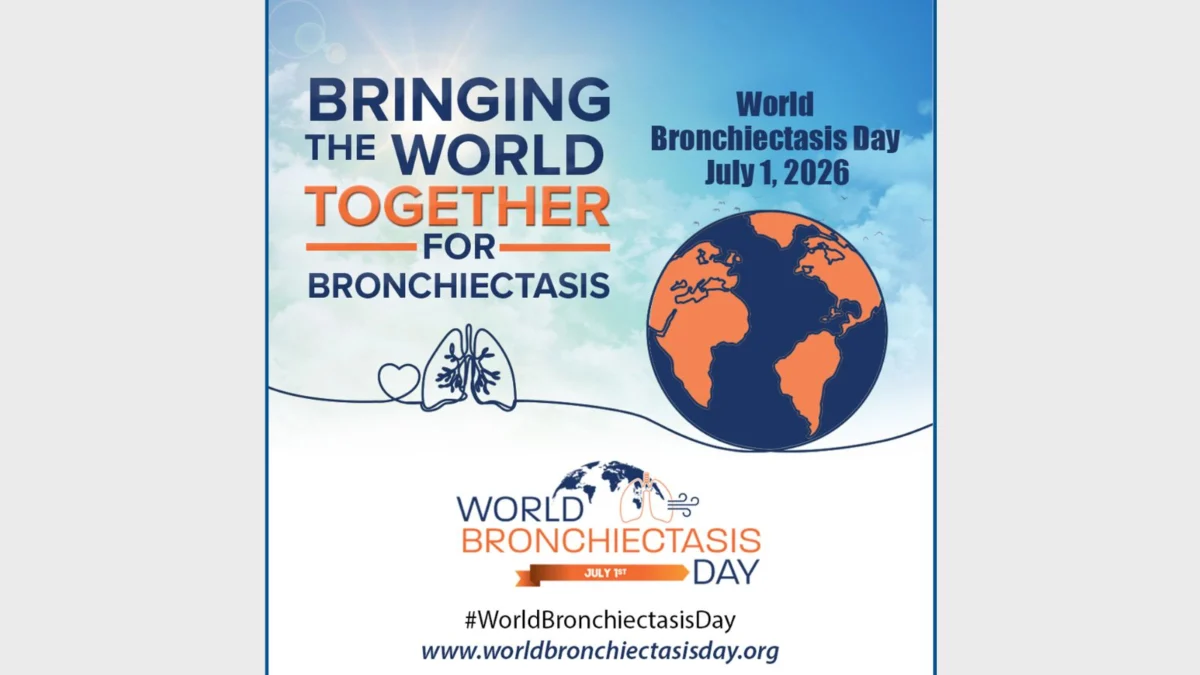
As the global medical community marks the fifth annual World Bronchiectasis Day on July 1, 2026, the Forum of International Respiratory Societies (FIRS)—a powerhouse coalition including the European Respiratory Society (ERS)—has launched a concerted effort to shed light on a condition often overshadowed by more prominent respiratory ailments. Bronchiectasis, a chronic, debilitating lung disease, affects hundreds of thousands of individuals across the globe, yet it remains shrouded in relative obscurity.
By partnering with the Bronchiectasis and NTM Foundation and a constellation of international advocacy groups, FIRS is aiming to transform the narrative surrounding this disease, moving from passive awareness to active, collaborative research and improved clinical care.
Main Facts: Understanding the Mechanics of Bronchiectasis
Bronchiectasis is a structural lung disease defined by the permanent enlargement and scarring of the bronchial tubes. Unlike healthy airways, which are elastic and clear mucus efficiently, the damaged airways of a bronchiectasis patient become "floppy" and scarred, creating a vicious cycle of obstruction and infection.
The Clinical Manifestation
For the patient, the condition is far from silent. It is characterized by a persistent, productive cough that often produces thick, discolored mucus. Because the airways cannot effectively clear this secretion, they become a breeding ground for bacteria, leading to frequent and often severe chest infections. The symptoms are broad and exhausting:
- Respiratory Distress: Chronic breathlessness and chest pain.
- Systemic Symptoms: Unexplained fevers, night sweats, chills, and significant, unintentional weight loss.
- Chronic Fatigue: The body’s constant battle against recurring infections leads to profound, life-altering tiredness.
While there is currently no curative treatment, the medical consensus is clear: early diagnosis and aggressive, personalized management can drastically improve quality of life and prevent long-term pulmonary deterioration.
Chronology of a Growing Global Concern
The journey to establish World Bronchiectasis Day as a focal point for global respiratory health has been marked by a transition from localized clinical observation to a coordinated international movement.
- Pre-2022: Bronchiectasis was frequently treated as a secondary complication of other conditions, such as COPD or asthma, leading to under-diagnosis and a lack of dedicated therapeutic research.
- 2022: The inaugural World Bronchiectasis Day was launched to unify the disparate voices of patients and clinicians, establishing July 1 as the date for global mobilization.
- 2023: A landmark study published in The Lancet Respiratory Medicine provided the first comprehensive, multi-regional look at the disease. This data served as a wake-up call, confirming that bronchiectasis was not a uniform disease but one with significant regional variations.
- 2024-2025: Advocacy efforts expanded, with organizations securing more funding for research and patient education programs, slowly shifting the perception of bronchiectasis from a "rare" disease to a significant global health burden.
- 1 July, 2026: The fifth observance represents a milestone, with the largest international alliance to date pushing for standardized care protocols and a deeper exploration into the etiology of the disease.
Supporting Data: The 2023 EMBARC Insights
A pivotal moment in the scientific understanding of this disease came with the data from the European Bronchiectasis registry (EMBARC). The study, led by Chalmers et al., scrutinized patient characteristics across various borders, providing essential insights into the disease’s nature.
Key Findings:
- Etiology: The research confirmed that the most common driver of the disease remains "post-infective," meaning the damage is often the long-term sequela of a previous, severe lung infection. However, a significant subset of patients remains classified as "idiopathic," meaning the underlying cause remains unknown, highlighting a major gap in diagnostic capability.
- Geographical Disparities: The study uncovered alarming disparities. Patients in Central and Eastern Europe demonstrated higher scores on the Bronchiectasis Severity Index (BSI) compared to their counterparts in other regions. These patients experienced a higher frequency of exacerbations, which in turn correlated with increased hospitalization rates.
- The Need for Precision Medicine: The researchers concluded that the "one-size-fits-all" approach to treatment is failing. The data argues for more robust therapeutic development that accounts for the distinct genetic, environmental, and socio-economic factors that dictate patient outcomes globally.
Official Responses: The Call to Action
The leadership of the respiratory community is leveraging the 2026 platform to demand systemic change. Guy Marks, President of FIRS, issued a stirring call to action as part of this year’s commemoration.
"World Bronchiectasis Day provides an important opportunity to increase awareness of a disease that can have a significant impact on patients’ quality of life," Marks stated. "Through global alliance, we can bring together patients, clinicians, researchers, and advocacy organizations to advance education, improve access to care, and accelerate progress in bronchiectasis research."
Marks’ message underscores the fundamental philosophy of FIRS: that scientific advancement in respiratory health is impossible in a vacuum. By bridging the gap between the laboratory and the bedside, the alliance aims to ensure that research does not merely exist in journals but translates into actionable care for the person struggling to breathe.
Implications: The Path Forward
The focus of the 2026 observance is not merely on "awareness" but on "impact." The implications for the future of bronchiectasis care are multi-faceted, involving clinical, social, and research-based dimensions.
1. Clinical Implications: Standardizing Care
The data from the EMBARC registry suggests that where a patient lives dictates their prognosis. To rectify this, the international community is advocating for the global standardization of care pathways. This includes better access to airway clearance techniques, inhaled therapies, and long-term monitoring strategies that can prevent the frequent hospitalizations currently plaguing high-risk populations.
2. Research Implications: Investigating the "Idiopathic" Mystery
The significant percentage of idiopathic cases suggests that there are environmental or genetic triggers yet to be identified. Future research is expected to pivot toward identifying these hidden variables. By understanding why some patients develop severe disease while others remain stable, scientists hope to move toward a model of preventative medicine rather than reactive symptom management.
3. Patient Advocacy and Education
The Bronchiectasis and NTM Association is currently spearheading a massive repository of educational resources. The objective is to empower patients to recognize the early signs of a flare-up and to equip them with the knowledge to manage their condition, reducing the reliance on emergency services.
4. Policy and Funding
The ultimate goal of the 2026 initiatives is to elevate bronchiectasis on the agendas of national health ministries. By framing the disease as a significant contributor to global morbidity, advocates are lobbying for increased government funding for clinical trials and public health infrastructure dedicated to respiratory health.
Conclusion: A Global Commitment
As the sun sets on July 1, 2026, the respiratory community is not resting on its laurels. The events planned throughout the year—ranging from local community webinars to international research symposia—are designed to maintain the momentum generated by World Bronchiectasis Day.
For the hundreds of thousands of people living with this chronic, often isolating condition, the coordinated efforts of FIRS and its partners offer more than just hope; they offer a roadmap for a future where bronchiectasis is better understood, more effectively treated, and eventually, effectively managed to the point where it no longer defines the lives of those it touches.
Individuals and families seeking support, information on upcoming events, or wanting to participate in the advocacy movement are encouraged to visit the official World Bronchiectasis Day website, where a full calendar of activities, research updates, and personal narratives is available to the public.
In the struggle against chronic lung disease, the loudest voice is often the most important. On this World Bronchiectasis Day, the international community has made it clear: they will no longer be silent.
References
- Bronchiectasis and NTM Foundation, Educational Resource Library, 2026.
- Chalmers J, Polverino E, Crichton M et al. "Bronchiectasis in Europe: data on disease characteristics from the European Bronchiectasis registry (EMBARC)." The Lancet Respiratory Medicine, 2023; 11, 637-649. DOI: 10.1016/S2213-2600(23)00093-0.