Published July 1, 2026 | Originally featured in Yoga Journal, January-February 1984
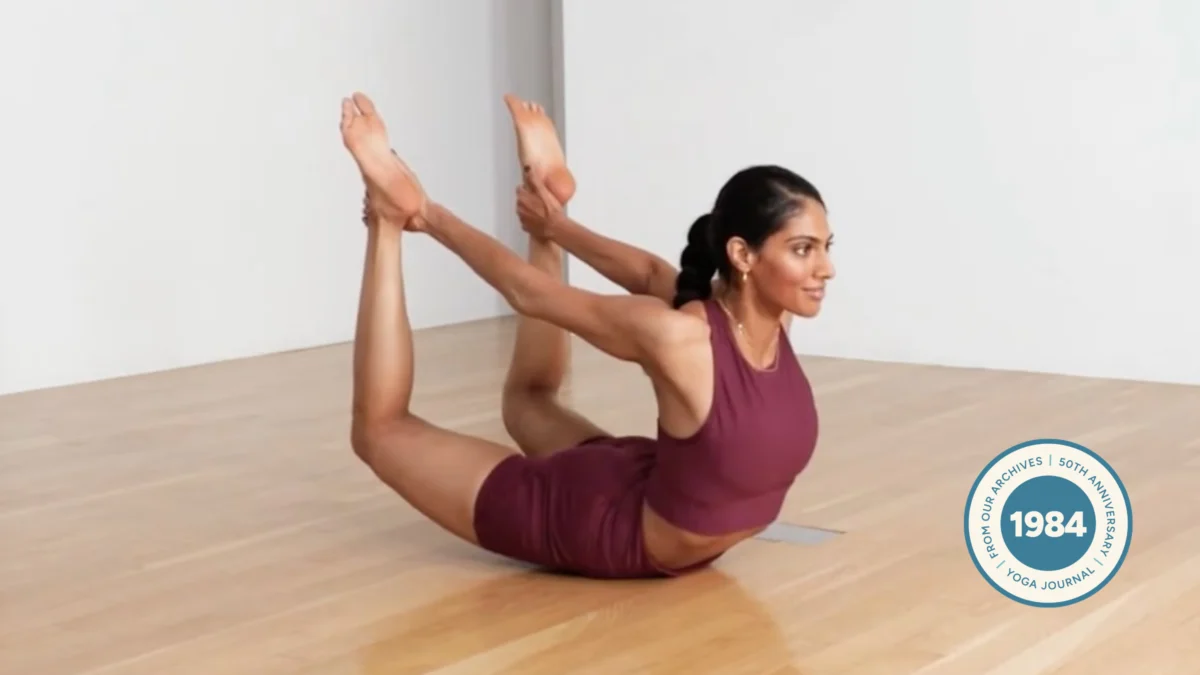
In the landscape of yoga, few postures possess the structural elegance and corrective power of Bow Pose, or Dhanurasana. As part of Yoga Journal’s ongoing archives series—a project dedicated to resurfacing the foundational insights of the 20th-century yoga movement—we return to the January-February 1984 issue to re-examine a practice that remains as relevant today as it was four decades ago.
While modern fitness trends often emphasize high-intensity movement, the classical study of Bow Pose reminds us that the true work of physical health lies in restoring the body’s natural, intelligent alignment.
The Anatomy of the Spine: Why We Need Bow Pose
To understand the necessity of Dhanurasana, one must first understand the architecture of the human vertebral column. The spine is not a straight rod; it is a sophisticated series of curves designed to absorb shock and distribute weight.
The Natural Curvature
The cervical (neck) and lumbar (lower) spine are designed to curve posteriorly, while the thoracic (mid-back) and sacral regions curve in the opposite direction. This alternating "S-curve" is the hallmark of a healthy spine. However, the modern human condition—defined by sedentary desk work, the pervasive "tech neck" associated with smartphone usage, and the constant downward pull of gravity—tends to flatten these natural curves.
The Degenerative Effect
Over time, the cervical and lumbar curves begin to diminish, while the thoracic curve becomes exaggerated, leading to the "hunched" posture common in the 21st century. This displacement is not merely aesthetic; it is the precursor to chronic back pain, disc compression, and reduced range of motion.
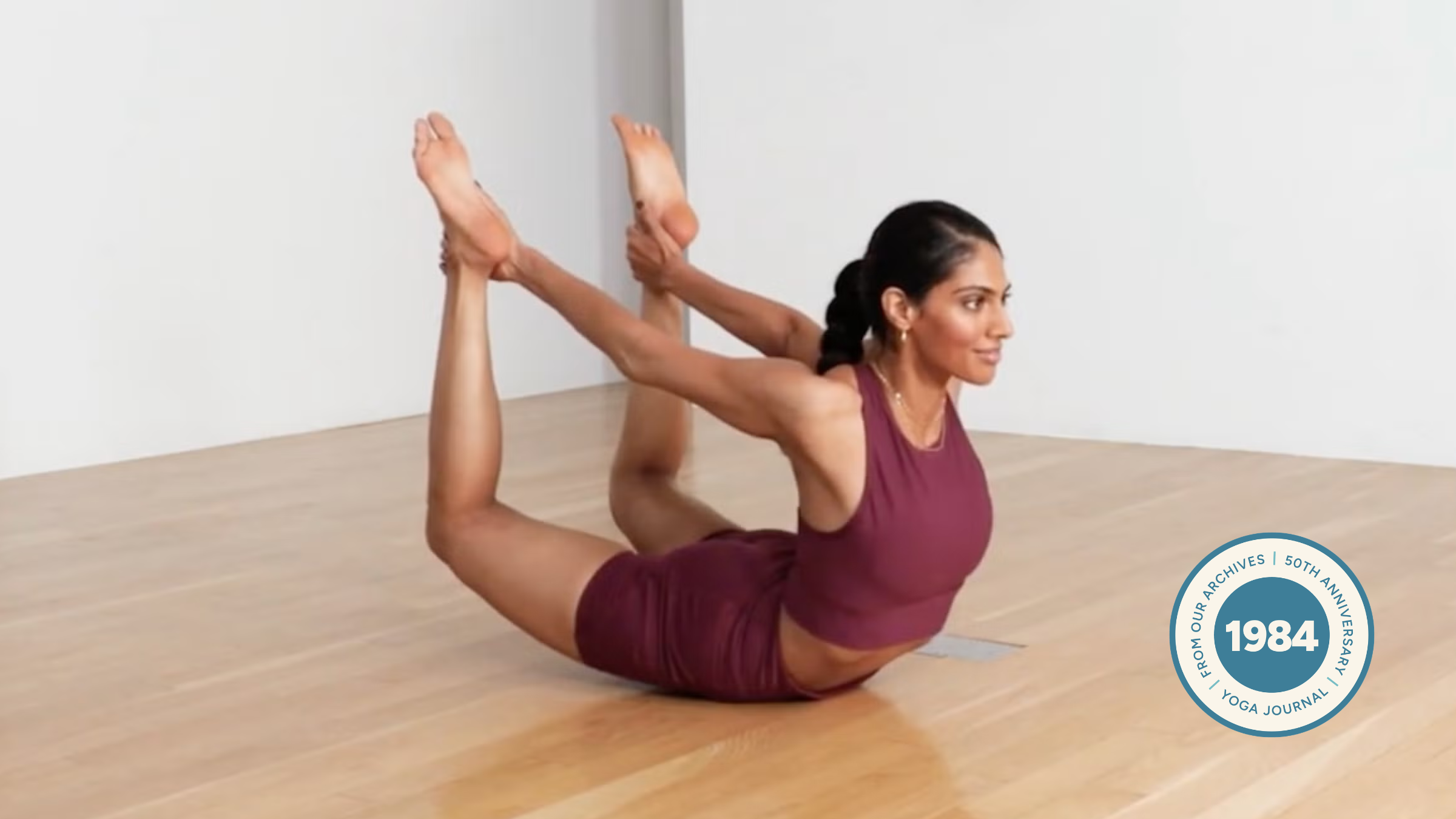
Dhanurasana acts as a potent corrective agent. By engaging in a controlled, intentional backbend, the practitioner strongly reverses these "flat" tendencies. As noted by the legendary B.K.S. Iyengar in his seminal text Light on Yoga, Bow Pose is instrumental in restoring elasticity to the spine and serves as a therapeutic modality for those suffering from disc-related complications.
Supporting Data: Beyond Simple Stretching
In the fitness industry, back health is often mistakenly equated with flexibility. Countless regimens prioritize stretching the back, yet often overlook the vital component of strength.
The Role of the Erector Spinae
True spinal health requires the strengthening of the erector spinae—the robust group of paravertebral muscles that hold the spine erect. When these muscles are weak, the spinal column is forced to bear the brunt of gravity and movement, leading to systemic strain. Dhanurasana is one of the few classical poses that requires a coordinated, isometric contraction of these muscles, creating a "corset" of support around the vertebral column.
Moving Against the Grain
Daily human activity is almost exclusively forward-leaning: typing, driving, eating, and picking up objects. We live our lives in a state of perpetual forward flexion. Bending backward is an act of deliberate anatomical reclamation. Yoga philosophy posits that for the body to remain vital, the spine must be articulated in all directions. Bow Pose allows the joints to explore a range of motion that is anatomically permitted but rarely utilized in modern life, effectively "unlocking" the front of the body that has become chronically tight from hours of sitting.
The Psychological Implications of Backbends
The impact of Dhanurasana extends far beyond the musculoskeletal system. In the lexicon of yoga, poses are often categorized by their energetic "flavor."
Courage and Individualization
While forward bends are traditionally associated with introspection, surrender, and the calming of the nervous system, backbends are categorized as "activating." Dhanurasana is inherently energizing. Practitioners often report a surge in confidence and willpower following a backbend-heavy practice.
Experts suggest this psychological shift occurs for two reasons:
- Physical Opening: The dramatic opening of the chest cavity encourages deeper, fuller respiration, which is physiologically linked to a reduction in anxiety and an increase in alertness.
- Endocrine Stimulation: There is evidence to suggest that the compression and subsequent release involved in backbends may stimulate the adrenal glands, providing a natural, sustained boost in energy.
The Paradox of Calm
Perhaps the most profound insight for the long-term practitioner is the paradox of the pose. While initially, the pose feels intense, fiery, and challenging, years of consistent practice lead to a surprising outcome: the ability to find "inner stillness" within a backbend. This is the essence of pratyahara—the conscious withdrawal of the senses. When a student can maintain equanimity while in the deep arch of the Bow, they have mastered the true test of yoga: maintaining stability in the midst of intensity.
Chronology of Practice: A Technical Guide
Dhanurasana requires precision. Rushing into the pose can lead to compensatory strain in the lower back, particularly for those with tight hip flexors.
Step-by-Step Methodology
- Preparation: Lie face down. Place a folded mat under the lower abdomen; this provides a fulcrum that protects the pubic and hip bones from harsh contact with the floor.
- Elongation: Lift one leg at a time and stretch it back. This action elongates the lower abdomen, creating space before the bend begins.
- The Engagement: Reach for the ankles, not the feet. Grasping the feet can pull the ankles out of alignment, creating lateral stress.
- The Checkpoint: Ensure the lower abdomen and upper thighs remain in contact with the floor initially. If the thighs lift prematurely, the backbend is being forced into the lower lumbar spine rather than being distributed along the entire length of the spine.
- The Lift: Inhale and lift the legs. Focus on moving upward rather than backward. The goal is a balanced arc where the shoulders and knees rise at an equal rate.
- Integrity: Grip the coccyx (tailbone) firmly between the buttocks to protect the lumbar region. Keep the knees no wider than the hips to maintain pelvic stability.
Post-Pose Integration
Following a backbend, it is essential to allow the nervous system to recalibrate. Lie on the stomach for a moment to rest. After completing a set of Dhanurasana, it is highly recommended to perform a gentle spinal twist. Twisting relieves any residual tension created by the deep backbend and ensures that the muscles are released symmetrically.
Implications for Modern Wellness
The relevance of the 1984 Yoga Journal archive lies in its warning: we are losing our ability to move our spines with integrity. As we move further into an era of digital dominance, the "degenerative tendencies" mentioned in the original 1984 text have only accelerated.
The True Test of Yoga
The ultimate goal of yoga is not merely to achieve a "perfect" Bow Pose. It is to cultivate a mind that is radiant and calm, regardless of the physical position the body is in. As the archives suggest, the pose is merely a vehicle for expressing that calmness. When we integrate Dhanurasana into our daily routine, we are not just correcting our posture; we are practicing the art of staying upright, confident, and resilient in a world that is constantly trying to pull us forward and down.
By embracing the backbend, we reclaim our structural history and prepare our bodies for the challenges of the future. Whether you are a novice or a seasoned practitioner, the Bow remains an essential tool in the pursuit of a balanced, healthy, and energized life.