







July 2, 2026
In a significant development for global health security, researchers have officially launched a critical clinical trial to evaluate two experimental treatments for the Bundibugyo strain of the Ebola virus. As the outbreak in eastern Congo continues to surge—claiming 438 lives and infecting over 1,400 people to date—the World Health Organization (WHO) confirmed that the first patient has been enrolled in the study.
This trial represents a desperate but methodical attempt to curb a pathogen for which, currently, no targeted vaccines or specific antiviral therapies exist. As the death toll climbs, the international medical community is turning its eyes toward the Ituri province, hoping that science can provide a lifeline to a region already beleaguered by long-standing conflict and humanitarian instability.
The Core Challenge: Targeting the Bundibugyo Strain
The Ebola virus is not a monolith; it exists as several distinct species, each with varying levels of virulence and geographic prevalence. The current crisis in the Democratic Republic of the Congo (DRC) is driven by the Bundibugyo ebolavirus, a strain historically less common than the Zaire strain that caused the devastating 2014-2016 West African epidemic.
Because of its rarity, pharmaceutical development for Bundibugyo has lagged behind, leaving clinicians with little more than "supportive care"—rehydration, electrolyte balancing, and symptom management—as their primary tools. While supportive care, when administered early, has allowed more than 200 patients to recover, the fatality rate remains distressingly high.
The new trial, orchestrated by a coalition including the DRC’s National Institute for Biomedical Research (INRB), Oxford University, the Institute of Tropical Medicine in Antwerp, and the WHO, aims to move beyond mere symptom management toward proactive therapeutic intervention.
The Experimental Arsenal: Remdesivir and MBP134
The trial protocol, designed to be rigorous yet adaptive, will compare two distinct therapeutic agents against a control group receiving standard supportive care.
Gilead Sciences’ Remdesivir (Veklury)
Perhaps the most recognizable drug in the trial, remdesivir is a broad-acting antiviral originally developed to combat Ebola years ago before gaining global prominence as a treatment for COVID-19. Its mechanism involves the inhibition of viral RNA-dependent RNA polymerase, essentially preventing the virus from replicating its genetic material. Laboratory studies have indicated that remdesivir may hold promise against the Bundibugyo strain, providing a logical baseline for the study.
Mapp Biopharmaceutical’s MBP134
If remdesivir is the "repurposed" contender, MBP134 is the precision-engineered weapon. Developed with significant funding from the U.S. government, MBP134 consists of a cocktail of monoclonal antibodies designed specifically to bind to the glycoproteins on the surface of various Ebola virus species, including Bundibugyo. By neutralizing the virus before it can enter human cells, these antibodies offer a highly targeted approach that researchers hope will significantly reduce mortality rates.
The Trial Methodology
According to Dr. Vasee Moorthy, a research adviser for the WHO, the study uses a randomized, multi-arm design. Participants are allocated to one of four cohorts:
- Standard supportive care (Control).
- Standard care plus remdesivir.
- Standard care plus MBP134.
- Standard care plus both remdesivir and MBP134.
Survival outcomes will be tracked for 28 days post-initiation of treatment. Dr. Moorthy notes that while the study aims to enroll up to 1,000 participants, the trial is designed to identify "signals of high efficacy" early. If one treatment demonstrates a clear and dramatic survival benefit, the trial could be modified to prioritize that agent, potentially saving more lives in the process.
A Chronology of the Crisis
The trajectory of this outbreak highlights the persistent danger posed by zoonotic diseases in regions where human encroachment on wildlife habitats is increasing.
- Initial Detection: The outbreak was identified earlier this year in the densely forested regions of Ituri. Initial cases were linked to traditional burial practices and direct contact with infected bodily fluids.
- The Escalation Phase: By late spring, the virus had bypassed local containment efforts. Public health officials struggled with contact tracing as the infection moved through rural villages and into more populated transit hubs.
- International Mobilization: As the case count surpassed 1,000 in early June, the WHO and the DRC government intensified calls for global assistance. The deployment of international research teams followed shortly thereafter.
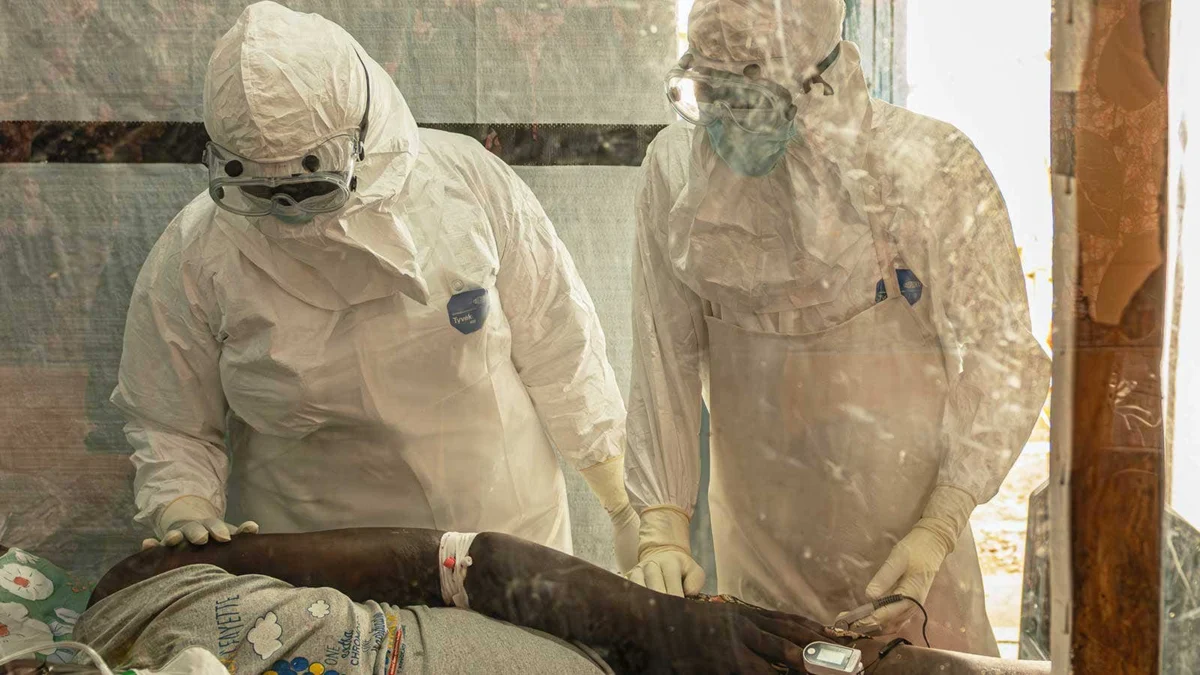
- July 2, 2026: The first patient is enrolled in the clinical trial at a dedicated treatment center in Ituri, marking the beginning of the evaluation phase.
Geopolitics and Healthcare: The Security Dilemma
One of the most profound challenges facing the researchers is the environment in which the trial is taking place. The Ituri province has been a theater of armed conflict and civil unrest for years. This volatility creates a "security vacuum" that complicates every aspect of the medical response.
Healthcare workers have frequently become targets, and treatment centers have occasionally been forced to lock down due to nearby fighting. The WHO acknowledges that the current trial is limited to a single, secure facility in Ituri. Expanding the trial to other locations is an operational priority, but it remains hostage to the security situation on the ground.
"We are operating in an environment where we are fighting two wars: one against a microscopic pathogen and one against the instability that prevents us from reaching those who need help," noted a regional health representative. The success of the trial, therefore, depends not only on the efficacy of the drugs but on the ability of the international community to provide a safe "humanitarian corridor" for both patients and medical personnel.
Official Responses and Ethical Implications
WHO Director-General Dr. Tedros Adhanom Ghebreyesus expressed cautious optimism in a recent statement, characterizing the trial as a moral imperative. "This trial offers real hope that we can deliver concrete results for—and with—the communities at the heart of the outbreak," he stated.
The ethical framework of the study has been scrutinized by international oversight boards. Key concerns include:
- Informed Consent: Obtaining valid consent in a crisis setting where families are traumatized and medical literacy varies.
- Equity of Access: Ensuring that if a drug is proven effective, it does not remain a luxury item but is manufactured and distributed to the affected communities.
- Supply Chain Sustainability: The U.S. government has pledged significant doses of MBP134, and Gilead has committed to donating remdesivir. However, researchers are already planning for a "post-trial" phase to ensure that, should the treatments prove successful, they remain accessible to the DRC’s health ministry.
Implications for Global Health Security
The implications of this trial extend far beyond the borders of the Congo. If the study demonstrates that MBP134 or remdesivir (or a combination thereof) can effectively treat the Bundibugyo strain, it will validate a new "plug-and-play" model for responding to rare hemorrhagic fever outbreaks.
Currently, the world often reacts to Ebola outbreaks with a mixture of fear and ad-hoc measures. The transition toward a pre-planned, research-ready clinical trial architecture represents a maturation of the global public health response. If this trial succeeds, it will establish a blueprint for future rapid-response research, allowing scientists to pivot from observational data to clinical trials in a matter of weeks rather than months.
However, the "wait and see" approach remains the dominant reality. Dr. Moorthy cautioned that it could take months to achieve statistical significance. "Science moves at its own pace," he said, "even when the virus moves at a gallop."
Conclusion: A Race Against Time
As of early July 2026, the global community watches with bated breath. The 438 deaths recorded are not just statistics; they represent a breakdown in the barrier between humans and a lethal, ancient virus. The introduction of remdesivir and MBP134 into the treatment protocol provides a glimmer of hope, but the path forward remains treacherous.
The success of this trial will be measured in survivors. If the researchers can prove the efficacy of these drugs, they will provide the world with a shield against future Bundibugyo outbreaks. If they fail, the international community will be forced to return to the drawing board, further refining the strategy for the next inevitable encounter with the Ebola virus. For now, in a small, guarded clinic in Ituri, the first steps toward a cure have finally been taken.