




By Gregory Laub
Senior Director, Video, MedPage Today
July 2, 2026
High response rates and manageable safety profiles were observed across diverse, high-risk patient cohorts in a landmark retrospective study.
New real-world data presented at the 2026 American Society of Clinical Oncology (ASCO) annual meeting has provided robust confirmation that CD20-directed bispecific antibodies—specifically mosunetuzumab (Lunsumio) and epcoritamab (Epkinly)—are not only effective but also maintain a manageable safety profile for patients battling relapsed or refractory (R/R) follicular lymphoma (FL).
The findings, which bridge the gap between controlled clinical trial environments and the complexities of routine clinical practice, suggest that these therapies are highly viable options even for patients with aggressive, high-risk disease features. The study, presented by Dr. Jessica Allen of the University of Utah, underscores the utility of these agents in a population that has historically been difficult to treat.
Main Facts: Bridging the Gap Between Trials and Practice
In the landscape of hematologic oncology, follicular lymphoma remains a challenging diagnosis. While modern therapies have significantly extended survival, the emergence of resistance—often manifesting as progression of disease within 24 months (POD24)—remains a primary concern.
The pivotal clinical trials that led to the regulatory approval of mosunetuzumab and epcoritamab established high bars for efficacy. However, clinicians have long questioned whether these results could be replicated in "real-world" cohorts, where patients are often older, possess more comorbidities, and have been exposed to multiple prior lines of therapy.
The multicenter retrospective study conducted by the Collaborative U.S. Bispecifics Consortium addresses these uncertainties. By analyzing data from 99 patients across 11 U.S. academic medical centers, the research team offered a transparent look at how these dual-targeting therapies behave outside the rigid constraints of a clinical trial. The results were striking: an overall response rate (ORR) of 87%, with a complete response (CR) rate of 72%. These figures not only match but in some metrics exceed the results observed in the initial pivotal trials, which reported ORRs of 80% to 82% and CR rates of 60% to 63%.
Chronology of Research and Clinical Application
The trajectory of bispecific antibody therapy has been one of rapid evolution. Following the initial success of these agents in early-phase trials, the medical community sought to understand their long-term viability.
- Initial Phase (2022-2024): Pivotal trials demonstrated the potential of CD20/CD3 bispecific antibodies to redirect T-cells toward malignant B-cells. These trials established the baseline for efficacy and safety.
- The Consolidation Phase (2025): As these drugs entered broader commercial use, oncologists began noting their utility in more heterogeneous populations, including elderly patients and those with prior CAR-T cell therapy exposure.
- The 2026 ASCO Presentation: Dr. Jessica Allen and the Collaborative U.S. Bispecifics Consortium synthesized this data. By focusing on a retrospective analysis of 99 patients, the study provided the definitive real-world assessment that the community had been awaiting. The presentation at ASCO served to solidify the role of these drugs as a new standard of care in the third-line setting and beyond.
Supporting Data: Dissecting the Patient Cohort
To understand the magnitude of these findings, one must look at the makeup of the study cohort. This was not a "best-case scenario" population.
Demographics and Baseline Characteristics
The median age of the participants was 68 years, with a significant 12% of the cohort aged 80 or older. The presence of these older, potentially frail patients is critical, as it demonstrates that bispecific therapy is tolerable even for a demographic typically excluded from intensive treatment regimens.
The treatment history of the cohort was equally significant:
- Prior Therapy: 68% of patients had received three or more prior lines of treatment.
- Disease Aggression: 46% of the patients met the criteria for POD24, a known marker for poor prognosis in follicular lymphoma.
- Prior Immunotherapy: 15% of the study participants had already undergone chimeric antigen receptor (CAR) T-cell therapy, a group that traditionally faces very few effective treatment options once they progress.
Efficacy Metrics
The 1-year progression-free survival (PFS) rate stood at 72%. This is a pivotal metric for clinicians, as it suggests that the majority of patients achieve a durable response. Perhaps most importantly, these high efficacy rates were sustained across the high-risk subgroups. Whether a patient had a high-risk Follicular Lymphoma International Prognostic Index (FLIPI) score, POD24 status, or prior CAR-T failure, the response rates remained consistent and encouraging.
Safety and Tolerability: A Manageable Profile
One of the primary concerns with bispecific antibodies is the potential for cytokine release syndrome (CRS) and immune effector cell-associated neurotoxicity syndrome (ICANS). In the real-world setting, these risks can be amplified by patient frailty and delayed monitoring.
However, the study revealed that these risks are manageable:
- Cytokine Release Syndrome: CRS was observed in 34% of patients. Importantly, the vast majority were Grade 1, indicating that these events were mild and clinically manageable with standard protocols.
- Neurotoxicity: ICANS occurred in only 3% of patients, a notably low rate that underscores the safety profile of these agents when administered with appropriate caution.
- Infections: While infections were reported in approximately 27% of patients, they were primarily viral in nature. Crucially, there were no deaths attributed to infection, a finding that offers reassurance to clinicians managing immunosuppressed patients.
Official Responses and Expert Commentary
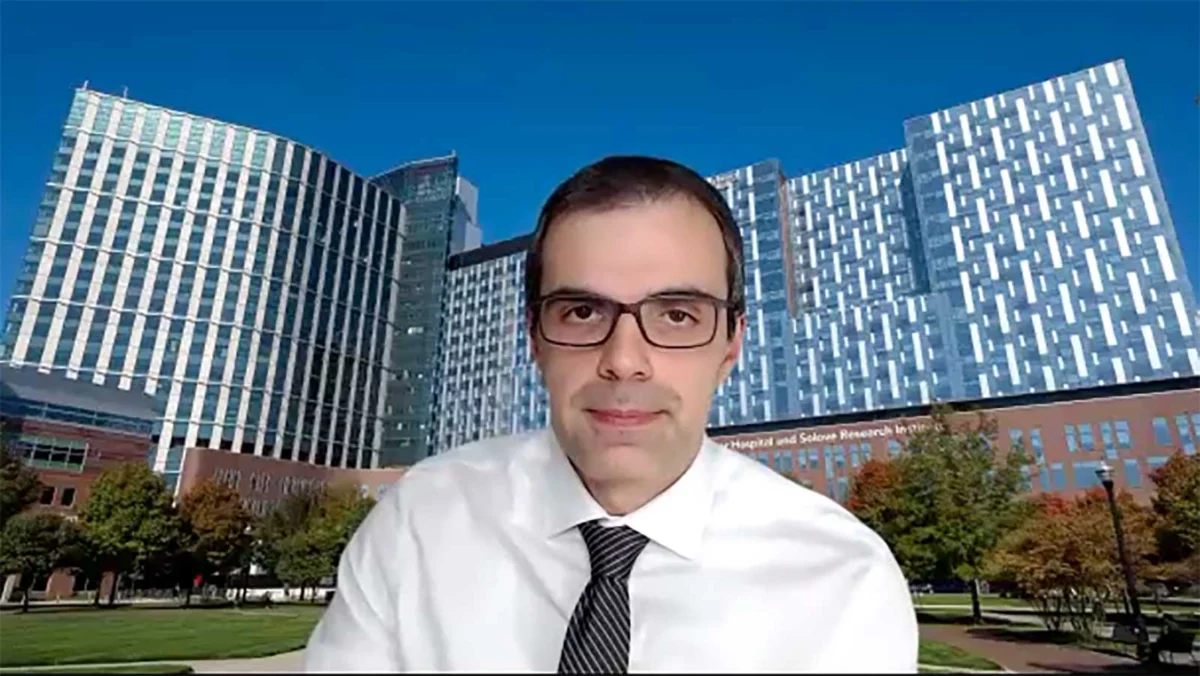
Dr. Yazeed Sawalha of the Ohio State University Wexner Medical Center provided expert commentary on the study, framing it as a major win for patients with limited options.
"The data provided by Dr. Allen’s team is a testament to the versatility of these agents," Dr. Sawalha noted in his MedPage Today remarks. "We are seeing that even in patients with high-risk features—who have historically been difficult to treat—these bispecifics are delivering outcomes that are equal to, if not better than, what we saw in the initial registration trials."
Dr. Sawalha highlighted the importance of the study’s "real-world" nature. "When you take a drug out of the controlled trial environment and put it into the clinic, you often expect efficacy to dip due to patient complexity. The fact that these response rates held steady—or improved—in a cohort where 68% of patients had received three or more prior lines of therapy is truly remarkable."
Implications: The Future of Follicular Lymphoma Treatment
The implications of these findings for clinical practice are profound. First, they provide clinicians with the confidence to use mosunetuzumab and epcoritamab earlier and more broadly. If these drugs can effectively manage patients who have already failed CAR-T therapy or who possess aggressive disease markers like POD24, they may soon be positioned as a preferred choice in the relapsed setting.
Second, the data supports the expansion of bispecific therapy access. With a manageable safety profile in the elderly, hospitals may feel more empowered to offer these treatments in community settings, provided they have the necessary training to monitor for CRS and ICANS.
Finally, the study highlights the importance of the Collaborative U.S. Bispecifics Consortium’s approach. By pooling data across 11 academic centers, the researchers created a high-powered dataset that serves as a benchmark for future studies. As researchers look to combine bispecific antibodies with other agents, this real-world foundation will be essential for identifying which patient populations stand to benefit most from combination therapies.
In conclusion, the data presented at ASCO 2026 marks a significant advancement in the treatment of follicular lymphoma. By proving that high-risk, heavily pre-treated patients can achieve durable, deep responses with a manageable safety profile, the oncology community has moved one step closer to transforming R/R follicular lymphoma from a terminal concern into a manageable, long-term condition. As these therapies continue to evolve, the focus will likely shift toward optimizing sequences and identifying the biomarkers that predict the deepest, most sustained responses.