






Published July 3, 2026
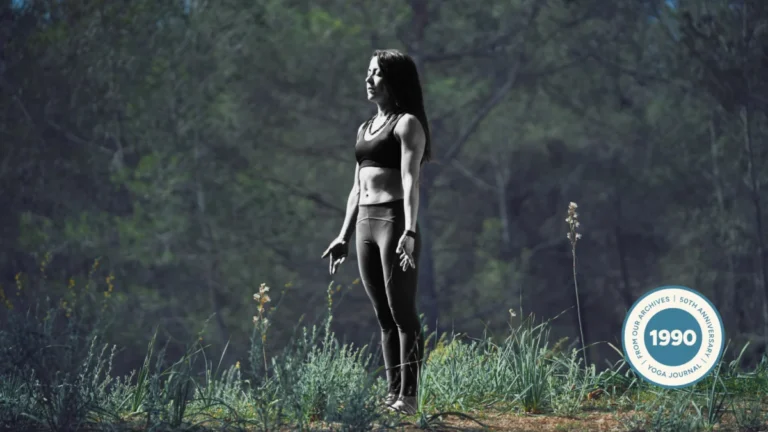
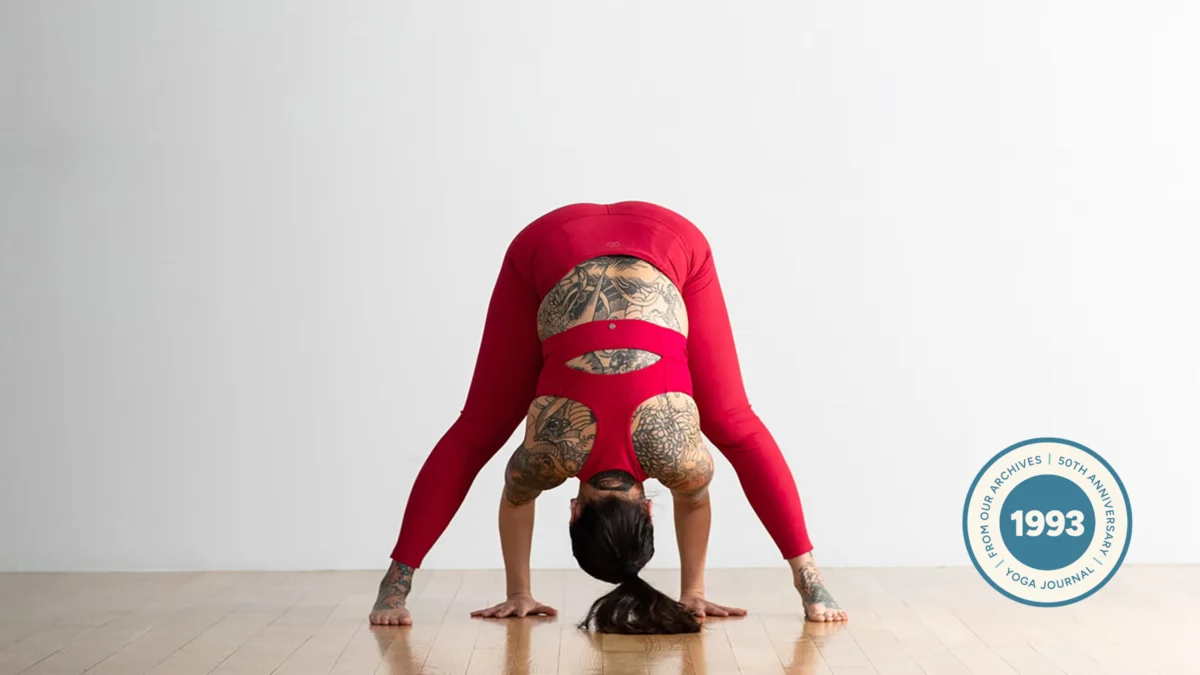
In the modern yoga landscape, where the pursuit of physical "perfection" often dominates social media feeds, the foundational philosophy of Hatha yoga—that the practice is a vehicle for experiencing life’s authentic expression through the body—can easily be lost. A deep dive into the Yoga Journal archives, specifically an illuminating feature from the March-April 1993 issue, serves as a poignant reminder that yoga is not about reaching the floor; it is about reaching a state of internal awareness. At the heart of this inquiry lies Prasarita Padottanasana (Wide-Legged Standing Forward Bend), a pose that, when approached through the lens of breath-led movement, becomes a masterclass in somatic intelligence.
The Philosophy of Fluidity: Yoga as Authentic Experience
Hatha yoga, at its most traditional level, is intended to honor the fluid nature of our existence. By prioritizing our own authentic inner experience over the rigid external alignment of a posture, we connect with a deep, primal knowing. This connection is mediated by the breath—the "messenger of the soul." When we practice with this intention, the body ceases to be an object to be manipulated and becomes a vessel for the unfolding of consciousness.
Chronology of Practice: From Chair to Standing
The transition from a seated exploration to the full expression of Prasarita Padottanasana is a journey of increasing the lever of gravity. Understanding this progression is vital for practitioners seeking to move beyond mere stretching.
Phase 1: The Chair-Based Foundation
The preliminary practice begins with a simple, yet profoundly revealing, exercise on a chair. By sitting with legs wider than the hips and creating a "tripod" with the feet and pelvis, the practitioner establishes a base that allows the spine to move without the immediate restriction of tight hamstrings.
As the practitioner curls down from the crown of the head, the goal is to observe the wave-like oscillation of the spine. This process—which should take approximately 20 full, slow breaths—reveals the spontaneous interplay between gravity and respiration. In this position, the inhalation often encourages a slight lift, while the exhalation fosters a release forward. By observing the pelvic floor’s response—the opening of the perineum and the lifting of the tailbone—the practitioner learns to map the spine through the breath.
Phase 2: The Beginner’s Standing Transition
Once the connection between the breath and the pelvis is established, the transition to a standing wide-legged stance occurs. Standing four to five feet apart with toes slightly turned inward, the practitioner must first secure the foundation.
The article emphasizes the importance of the "smiling kneecap." By engaging the quadriceps, the kneecap lifts, preventing the internal torque that often plagues practitioners who "jam" their knees backward. This engagement is a balance of effort and ease; it requires the minimum amount of force necessary to stabilize the joints, ensuring that the legs remain fluid rather than locked.
Phase 3: The Advanced Integration
As the practitioner gains comfort, the pose deepens. By bringing the fingertips in line with the toes and bending the elbows to a 90-degree angle, the stretch intensifies. However, the true "advanced" state is not defined by the head touching the floor, but by the ability to maintain a full, unobstructed breath while holding the posture for extended durations.
Supporting Data: The Anatomy of Breath Restriction
The most significant barrier to the effective practice of Prasarita Padottanasana is the "frozen pelvis." When the hamstrings are tight, the pelvis remains locked, preventing the spinal elongation necessary for a healthy forward bend.
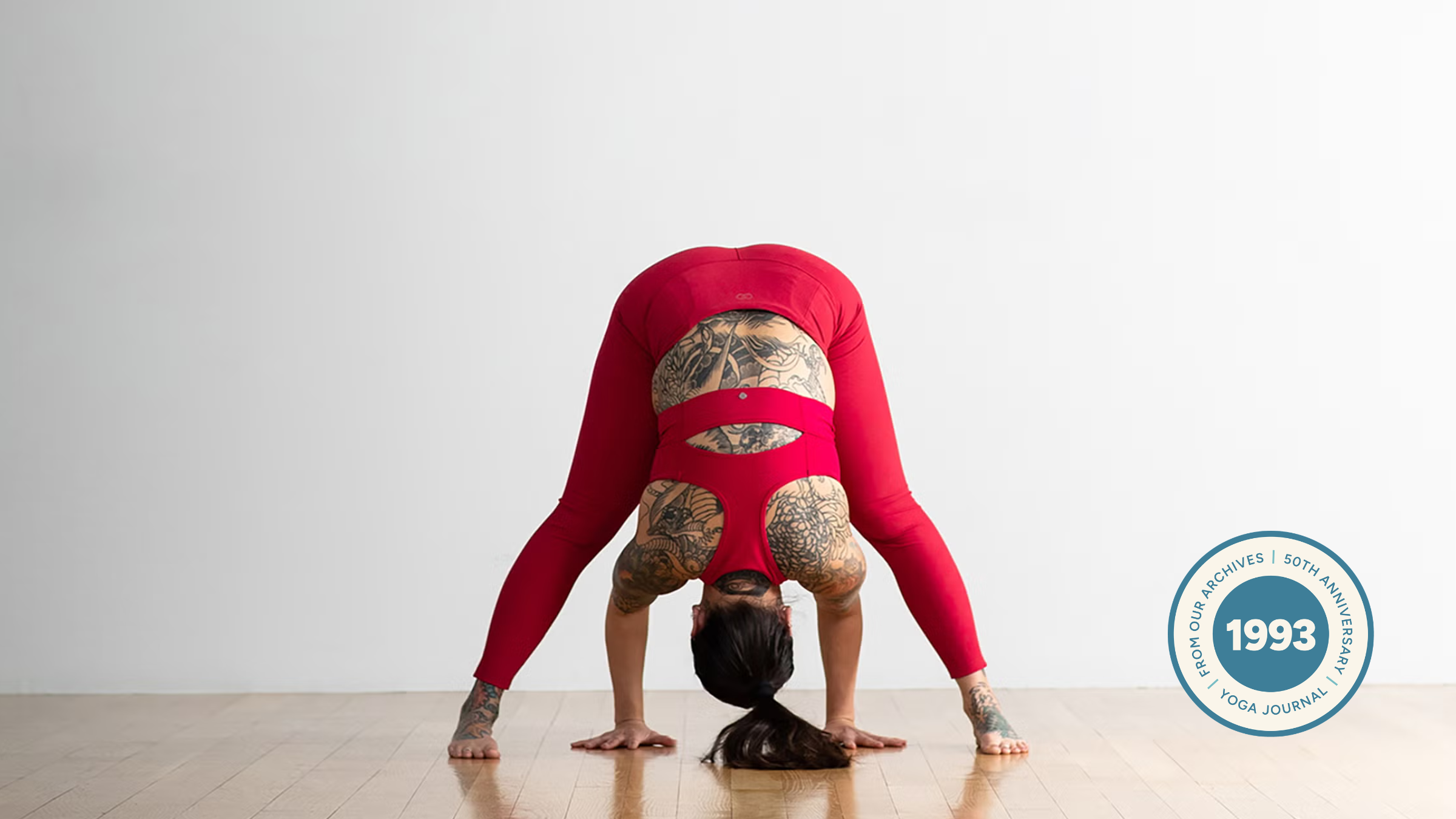
Scientific observation within the practice suggests that when a practitioner attempts to force a forward fold by rounding the back and tightening the abdomen, they effectively collapse the diaphragm. This collapse makes deep, rhythmic breathing impossible. The "fix" is not to push harder, but to modify the environment. By using yoga blocks or a chair to elevate the hands, the practitioner opens the front of the abdomen. This allows the breastbone to elongate forward, clearing the path for the diaphragm to function optimally.
Official Perspectives: The "Glassblower" Analogy
Expert practitioners often use the metaphor of a glassblower to explain the internal expansion required in this pose. One does not shape the body from the outside in; one directs the breath from the inside out.
"You must visualize the direction in which you wish to release," suggests the 1993 study. "From a midpoint at the back of the waist, visualize elongating the spine equally in opposite directions." This approach moves the practice away from mechanical manipulation and into the realm of dialogue. If a practitioner cannot feel this movement, they are encouraged to utilize audible, sighing exhalations through the mouth. This technique bypasses the subtle control of the nasal passages, allowing for a more expansive, diaphragmatic movement that can release long-held tensions in the spinal column.
Implications for Modern Practice
The implications of this archival approach are profound for the contemporary yoga student. In an era where "attainment" is the primary metric of success, the practice of Prasarita Padottanasana serves as a corrective.
The Ego vs. The Breath
The most critical takeaway is the shift in focus from the ego to the breath. Ambition—the desire to achieve a specific "look" in a pose—tends to produce a quiescent, yet rigid, mind. Conversely, when the practice is directed by the breath, the mind becomes naturally tranquil. The goal is not the completion of the posture, but the observation of one’s own internal unfolding.
The "Surfing" Mindset
The metaphor of surfing is particularly relevant here. Just as a surfer cannot force the wave, a yogi cannot force the release of the spine. One must position oneself correctly—using props, adjusting stance, and engaging the muscles appropriately—and then wait to "catch the wave" of the breath. Once caught, that respiration carries and supports the body, making the pose sustainable and transformative.
Long-Term Benefits
By maintaining this breath-centric focus, practitioners move beyond the risk of injury. The common pitfalls—jammed knees, rounded lumbar spines, and strained necks—are almost always the result of overriding the body’s signals in favor of visual achievement. By prioritizing the space in which the breath can move freely, practitioners ensure that their yoga practice remains a lifelong, sustainable endeavor rather than a fleeting, physically demanding performance.
Conclusion: The Unification of Self
Ultimately, Prasarita Padottanasana is a laboratory for the intersection of mind, body, and spirit. As we step out of the pose and return to an erect, standing position, we are invited to pause and observe the aftereffects. When the practice is performed with intention rather than ambition, the state of the mind reflects the space created in the body.
In the final assessment, the true definition of yoga is not found in the flexibility of the hamstrings or the depth of the forward fold, but in the unification of the self through the rhythm of the breath. By returning to these foundational principles, we ensure that our practice remains a true reflection of the fluid, living, and breathing nature of our human experience. As we navigate the complexities of our modern lives, the lessons learned on the mat in Prasarita Padottanasana—of positioning, listening, and allowing the breath to lead—become essential tools for navigating the world at large.