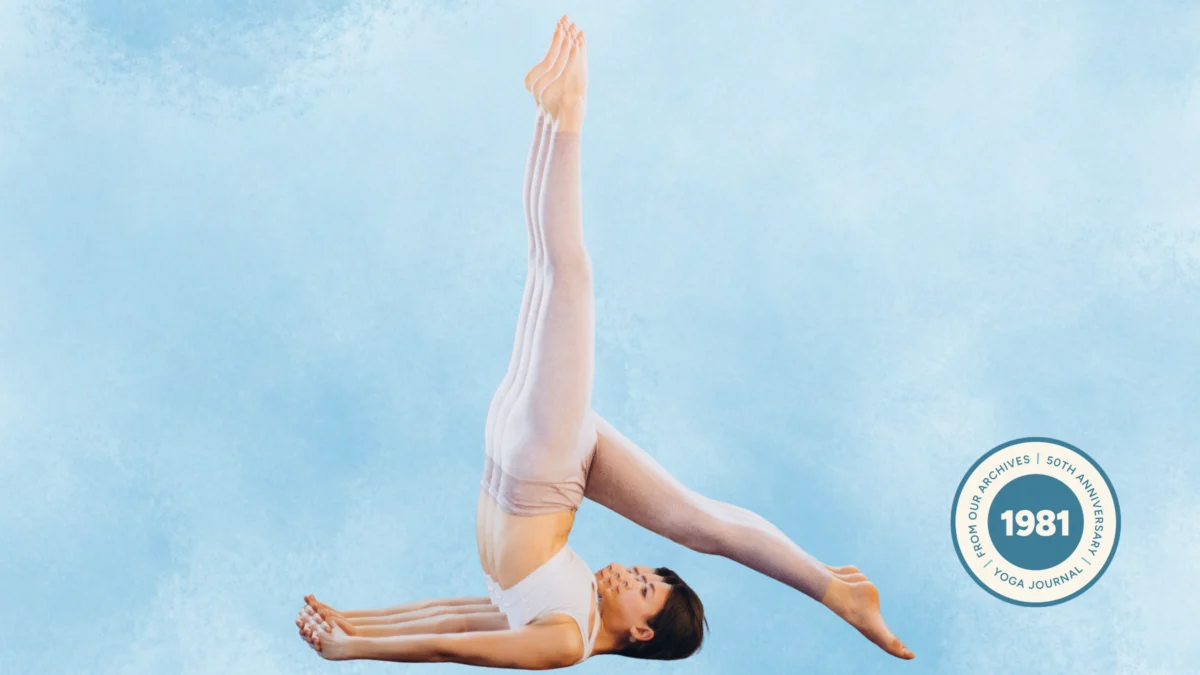
Yoga Journal’s archival series revisits the wisdom of the 1981 masterclasses, exploring the profound physical and psychological discipline of Eka Pada Sarvangasana.
Published on July 3, 2026, this retrospective look at the practice of Eka Pada Sarvangasana (One-Legged Shoulderstand) serves as a bridge between the foundational teachings of B.K.S. Iyengar and the modern practitioner. First featured in the September-October 1981 issue of Yoga Journal, this asana remains a cornerstone for those seeking to bridge the gap between physical flexibility and mental equanimity.
The Foundations of the Inversion
According to the teachings of B.K.S. Iyengar, Eka Pada Sarvangasana is not merely a gymnastic feat; it is a therapeutic tool. Iyengar famously noted that the pose "tones the kidneys and leg muscles," making it a vital component of a comprehensive inversion practice. However, the pose comes with a prerequisite: absolute competence in the standard Sarvangasana (Shoulderstand).
The transition from a standard shoulderstand to the single-legged variation introduces a complex variable of balance and gravitational management. For the advanced beginner, the use of props—specifically a chair—is not a sign of weakness, but a sophisticated method of ensuring structural integrity while the body adapts to the new geometry of the pose.
The Discipline of Concentration: A Chronology of Practice
The journey into Eka Pada Sarvangasana is one of incremental progress. In the early 1980s, instructors emphasized that the practitioner must be able to hold a standard Shoulderstand for at least five minutes with ease before attempting to lower a single leg.
Phase I: The Prerequisite (Standard Shoulderstand)
Before the variation is introduced, the student must master the base pose. This involves creating a stable foundation using a folded mat or blanket to support the shoulders, protecting the cervical spine. The goal here is to establish a vertical line that allows the vascular and metabolic systems to benefit from the inversion.
Phase II: Introducing the Variation
Once the five-minute threshold is met, the practitioner may introduce the movement of one leg. The critical instruction from 1981 remains the gold standard today: the movement must be slow, deliberate, and performed on the exhalation.
Phase III: Integration and Refinement
As flexibility improves, the student transitions from using a chair to using a wall, and eventually to unsupported movement. Throughout this progression, the core requirement remains the same: the spine must remain neutral, and the chest must stay open.
Supporting Data: The Mechanics of Spinal Alignment
A recurring issue in the practice of Eka Pada Sarvangasana is the premature attempt to touch the floor with the foot. When the student rushes this movement, two mechanical failures occur:
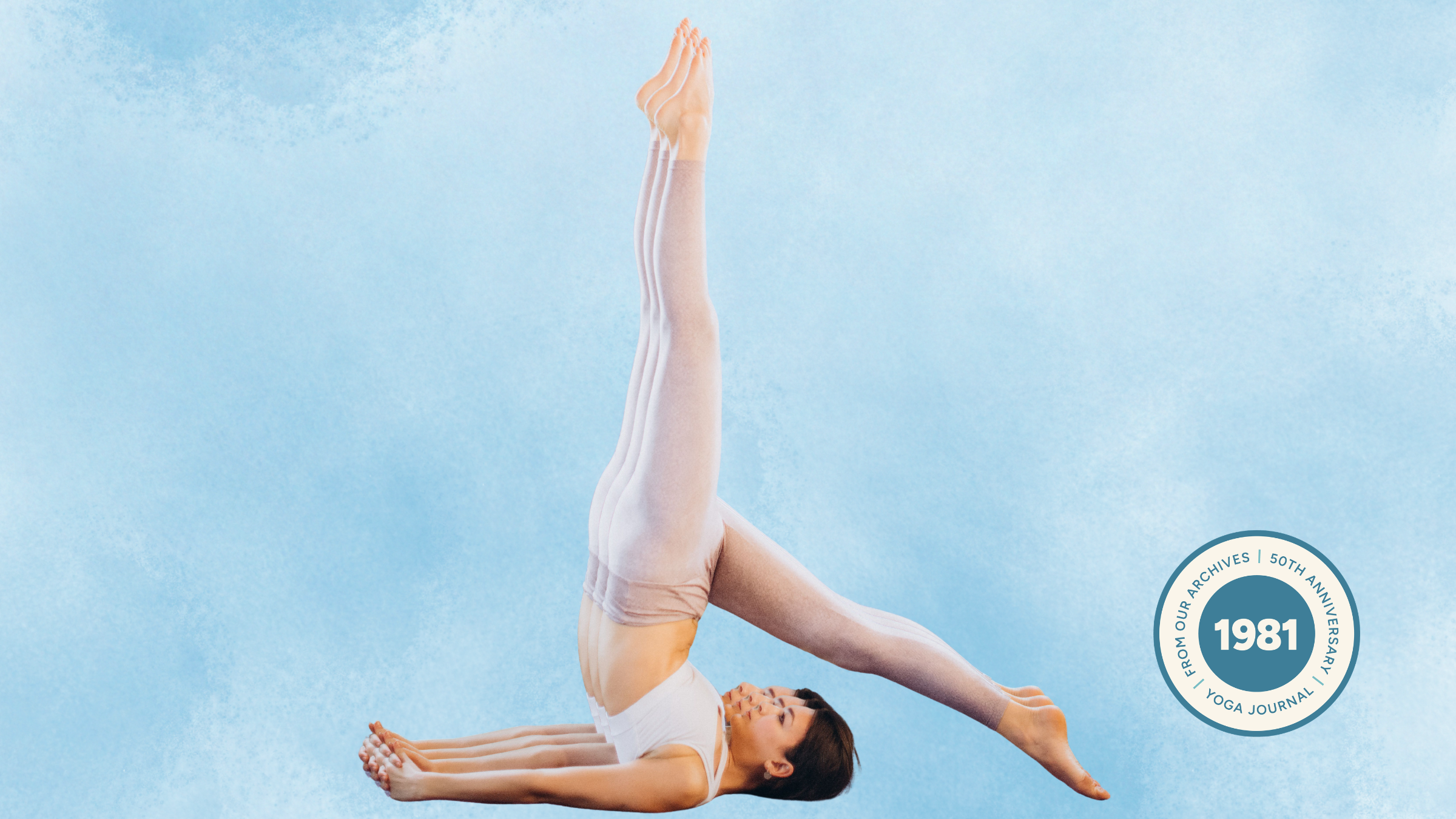
- The Bending of the Knee: By bending the knee to reach the floor, the practitioner loses the essential stretch of the hamstrings. More importantly, it signals a lapse in mental concentration. Yoga philosophy posits that if the body cannot be held in stillness, the mind will inevitably follow suit, losing the "equanimity of the self."
- The Collapse of the Spinal Column: If the hamstrings are tight, the act of forcing the foot to the floor causes the spine to round. This rounding creates pressure on the thoracic cavity and the abdominal organs. A compressed abdomen hinders diaphragmatic breathing, effectively neutralizing the calming benefits of the inversion.
By keeping the leg straight and the spinal column elongated, the practitioner ensures the chest remains open, allowing for deep, rhythmic breathing that sustains the nervous system.
Psychological Implications: The Mirror of the Self
While Headstand (Sirsasana) is often viewed as a pose of external orientation—where the gaze is directed toward the world—Shoulderstand is distinctly internal. In the inversion of the shoulderstand, the student is forced to confront their own presence.
This makes Eka Pada Sarvangasana a powerful vehicle for self-examination. It provides a unique "interested detachment," a state where one can observe past actions, current thought patterns, and emotional states without becoming consumed by them. This detachment is the prerequisite for personal growth.
Furthermore, the pose challenges the practitioner’s attachment to safety. Being upside down is an inherently vulnerable position; by moving one leg, the student is forced to manage a new level of instability. This practice teaches the student to give up the fear of the unknown, fostering a mental resilience that extends far beyond the yoga mat.
Official Guidance: How to Practice Safely
To perform Eka Pada Sarvangasana with the precision intended by the 1981 guidelines, follow these steps:
- Prepare the Base: Use a thick, folded mat to provide 2–3 inches of height under the shoulders. This elevation is crucial to prevent neck strain.
- Establish the Inversion: Hold the standard Shoulderstand for five minutes. Ensure the breath is steady and the body is relaxed.
- The Descent: On an exhalation, slowly lower one leg toward the support (a chair or a wall). Keep the knees locked and the upper leg perfectly motionless.
- Maintain Equanimity: Do not twist the hips. If the hips shift, the spine will lose its alignment. Focus on the quality of the action rather than the depth of the leg.
- The Return: After holding the position for several breaths, inhale to raise the leg back to the vertical position. Adjust the shoulderstand, regulate the breath, and repeat on the opposite side.
Implications for Daily Life: Beyond the Mat
The ultimate value of Eka Pada Sarvangasana lies in its translatability to life outside the studio. The pose asks the practitioner to maintain inner peace while the body is placed in an increasingly demanding and unstable position.
This mirrors the human experience: we are constantly being asked to maintain our center, our "inner equanimity," while our life circumstances—relationships, careers, finances—shift and move like a leg in transition.
True mastery in yoga is not the ability to touch the floor with one’s foot. It is the ability to maintain the "poise of the self" while navigating the complexities of existence. As the 1981 archive reminds us, "Freedom and flexibility in asana mean nothing if one does not carry these lessons into daily life."
By practicing the controlled, intentional movement of Eka Pada Sarvangasana, we are not just stretching hamstrings; we are practicing the art of staying grounded while the world—or our own body—is turned upside down. This is the essence of the practice: to remain open, to remain calm, and to remain in control, regardless of the position in which we find ourselves.