Published July 2, 2026
In the vast lexicon of the Ashtanga Yoga system, certain postures serve as milestones of physical and psychological development. Among these, Marichyasana D—the final, most complex iteration of the Marichi series—stands as a crucible for the practitioner. It is a pose that demands the simultaneous integration of deep hip opening, spinal rotation, and an unwavering commitment to the foundational ethics of the yoga tradition.
As we revisit this timeless instructional guide from the Yoga Journal archives (May-June 2002), we are reminded that the asana is not merely a feat of flexibility; it is a mirror reflecting our adherence to the Yamas—the ethical restraints that form the first limb of Patanjali’s eight-limbed path.
The Ethical Foundation: Ahimsa and Satya as Practice
The journey toward a complex pose like Marichyasana D begins long before the body enters the mat. It begins with Ahimsa (nonviolence) and Satya (truthfulness). In the context of yoga, these are not abstract philosophical concepts but practical diagnostic tools for the asana practitioner.
Ahimsa, or kindness, serves as the primary safeguard against injury. When a student forces their body into a posture for which it is not yet prepared, they are engaging in a form of violence against the self. Satya, the truth, acts as the corrective lens. It requires the student to assess their current condition with radical honesty. If a posture causes sharp pain or physical instability, the "truth" is that the body is not yet ready for the full expression of that shape. To ignore this is to abandon the core principles of yoga.
Chronology of Progression: From Dandasana to the Full Bind
Ashtanga Yoga is a systematic methodology, designed by masters such as Sri K. Pattabhi Jois to build capacity incrementally. Each sequence serves as a prerequisite for the next, creating a logical, anatomical progression.
Phase 1: The Root of the Hip (Staff Pose & Variations)
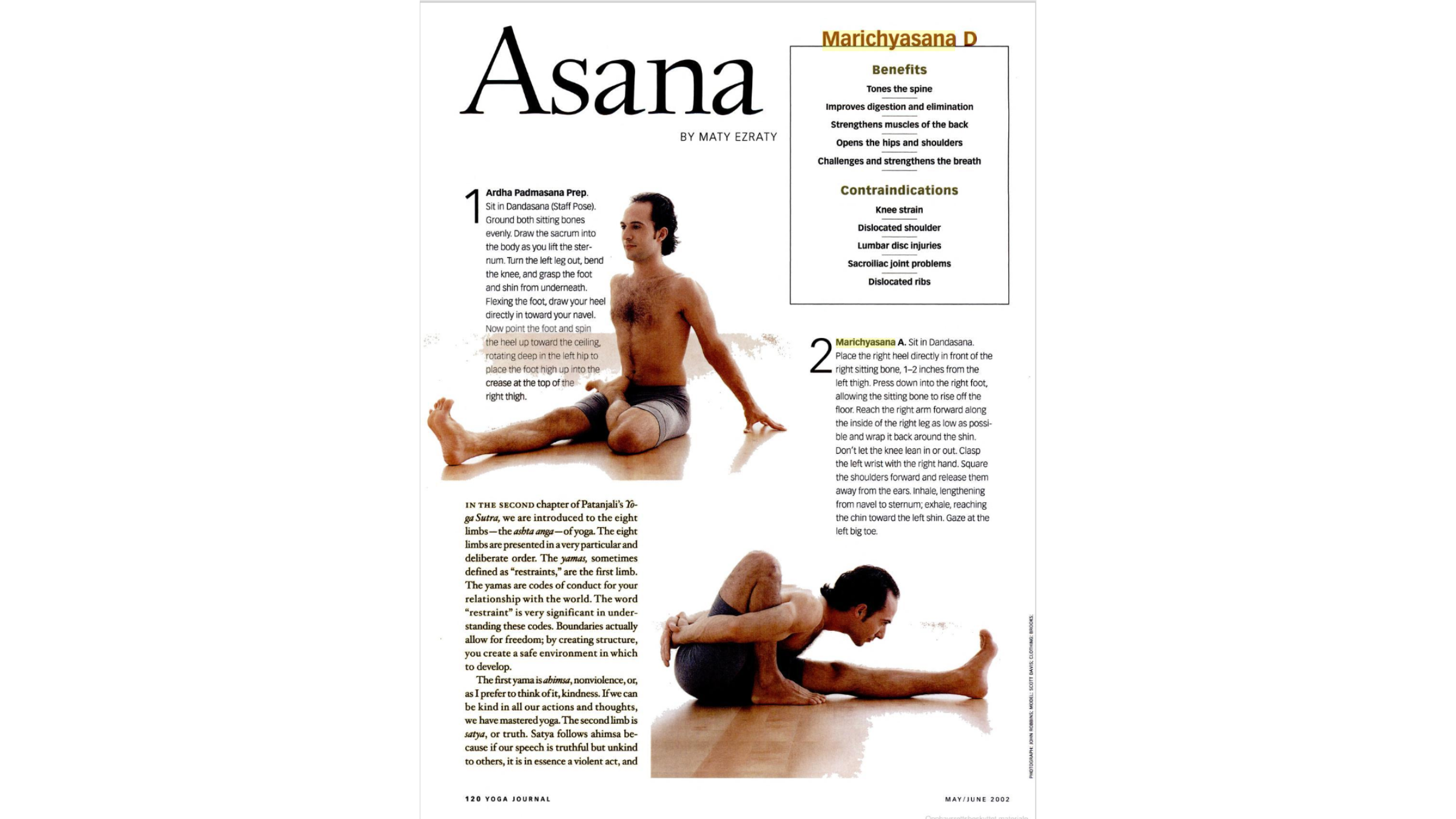
The preparation for Marichyasana D centers on the hips. If the hips are tight, the stress of the pose will inevitably transfer to the knees—a common site of injury in yoga practice. Practitioners begin in Dandasana (Staff Pose), learning to ground the sitting bones and extend through the heels. The goal is to cultivate a "hollow" core, where the spine is lifted and the shoulders are aligned, creating the internal space necessary for the deeper rotations to follow.
Phase 2: Mastering the Bind (Marichyasana A & B)
Before attempting the twist, the student must master the wrap. In Marichyasana A, the focus is on pressing the armpit and shin together without creating a gap. This "snug" fit protects the shoulder joint. Marichyasana B introduces the challenge of Ardha Padmasana (Half Lotus). If the knee is not prepared for the external rotation of Lotus, the student is encouraged to work with variations that utilize props, such as blocks or blankets, to support the knee and prevent the joint from being "forced."
Phase 3: The Geometry of the Twist (Marichyasana C & D)
Twisting is a delicate art governed by two primary rules:
- Elongation First: One must create maximum length in the spine before attempting any rotation.
- The Lumbar Lead: The twist must originate from the lowest part of the lumbar spine, moving upward through the kidneys and into the chest, rather than simply cranking the shoulders or head.
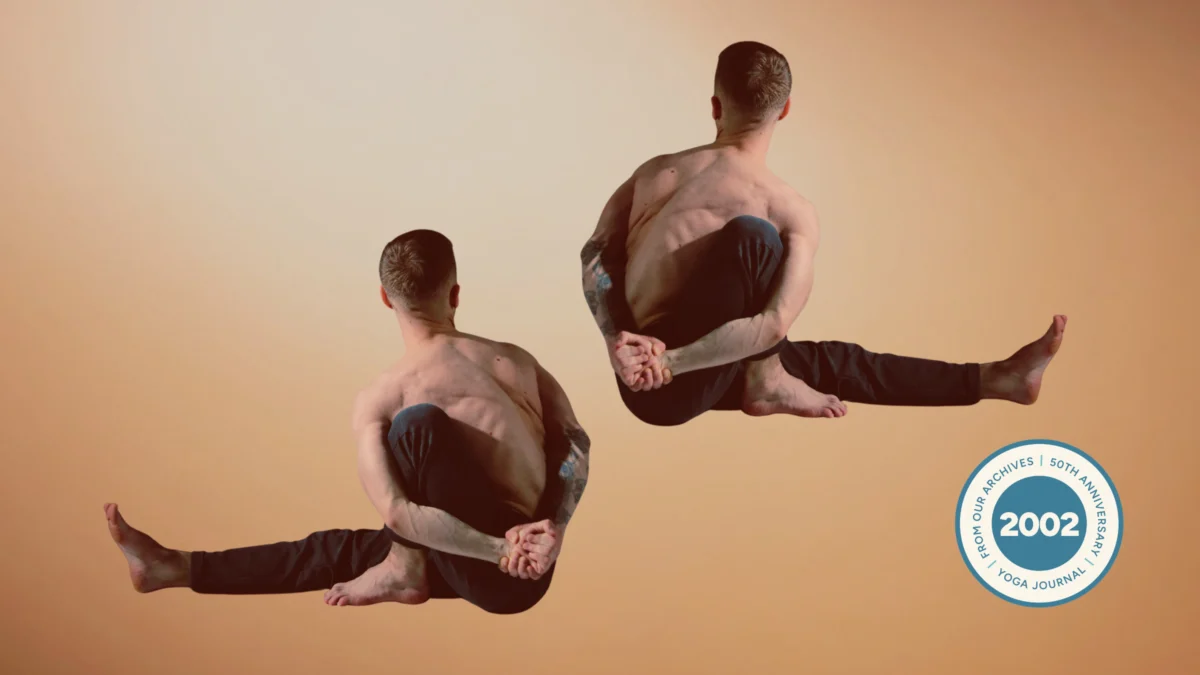
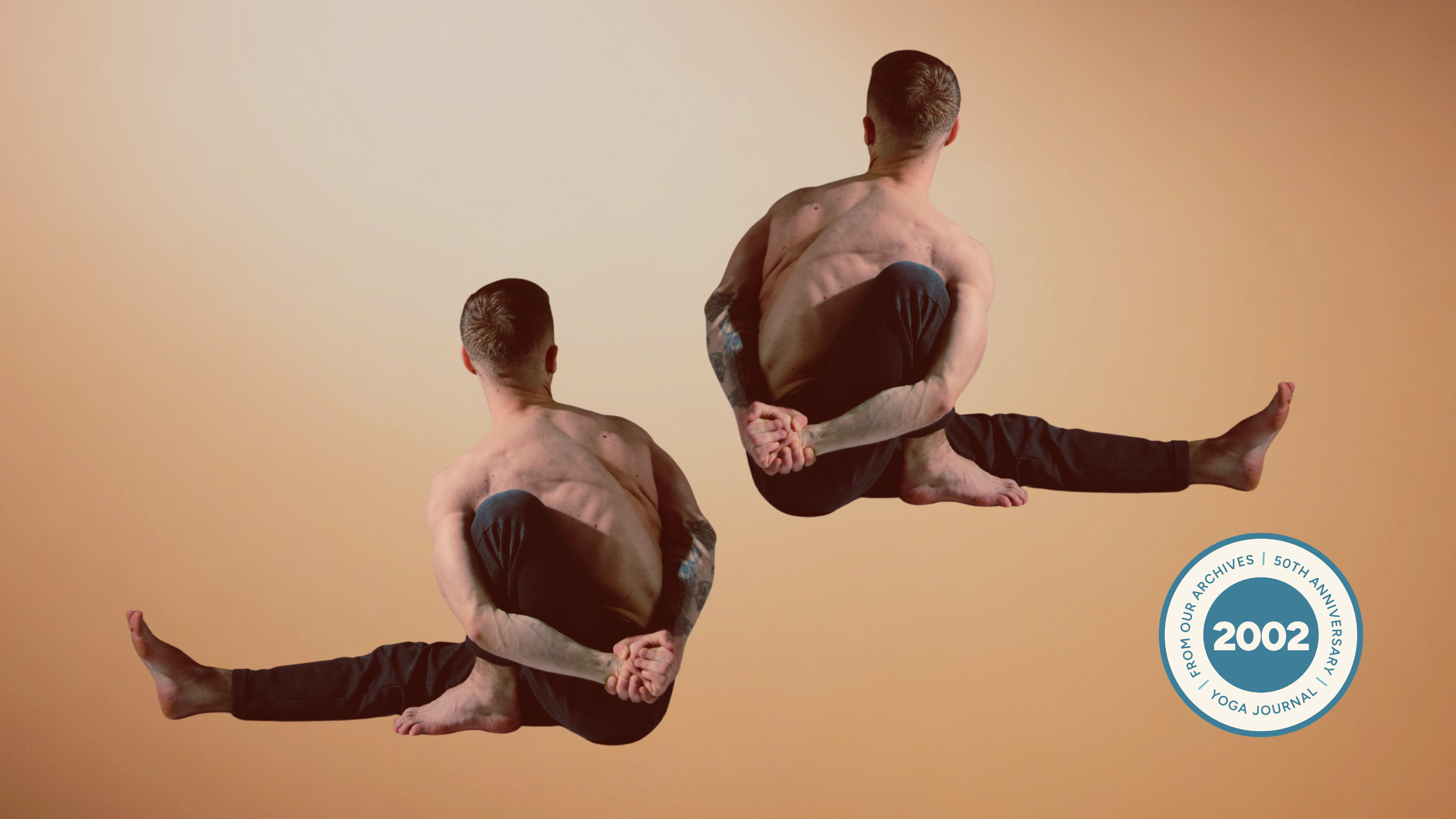
Marichyasana D combines these elements: the left leg is in Half Lotus, the right leg is in a Marichyasana A configuration, and the entire torso is twisted and bound. It is the culmination of all previous efforts.
Supporting Data: Anatomical Safety and Mechanical Leverage
The biomechanics of Marichyasana D are unforgiving. A common error, such as "sickling" the foot (inversion or eversion of the ankle), places significant torque on the knee joint. By keeping the foot flexed and held from underneath, the practitioner ensures the ankle joint is stable, which in turn protects the knee.
Furthermore, the role of the "bind"—the act of clasping hands behind the back—is often misunderstood. It is not meant to be a decorative flourish. Instead, the bind provides a point of leverage. By clasping the wrist, the practitioner creates a structural loop that allows the chest to lift and the spine to remain upright. If the back rounds, the practitioner has lost the fundamental integrity of the pose. In such cases, the data is clear: the practitioner should revert to an earlier variation or utilize a strap to bridge the gap between hands, prioritizing spinal health over the visual completion of the pose.
Official Perspectives: The Teacher’s Responsibility
The art of teaching yoga lies in the transition from imposing asanas to guiding students. A proficient teacher recognizes that a flexible student and a stiff student require different entry points into the same posture.
As noted in the 2002 archives, the teacher’s role is to ensure the framework of Ashtanga Yoga does not become a hurdle to progress. If a student is struggling with the classical form, the teacher should introduce variations that address the "root" of the difficulty—whether that be tight hamstrings or a lack of hip mobility. This personalized approach ensures that the student remains on a path of growth rather than a path of frustration. The instruction provided by lineage holders emphasizes that the asana is a map, not a destination.
Implications for Modern Practice: Beyond the Mat
The implications of this approach to Marichyasana D extend far beyond the physical benefits of improved spinal rotation or hip flexibility. By practicing the restraint and truthfulness required to navigate a difficult pose, the practitioner develops an internal compass.
The Psychological Impact of "Right Action"
When a practitioner chooses to forgo a full bind because their body is not yet ready, they are making a conscious decision to value their long-term well-being over short-term ego gratification. This is the essence of the Yamas. In the professional, high-pressure environments of 2026, the ability to recognize one’s limits—and to work within them with patience—is a vital life skill.
The Integration of Ethics and Physicality
The wisdom of the 2002 Yoga Journal feature remains as relevant today as it was over two decades ago: "You would never tell a friend to hike Mt. Everest before attempting a local canyon." This common-sense approach to yoga reminds us that compassion for the self is the highest form of discipline.
Conclusion: The Ultimate Goal
Marichyasana D, with all its complexity and allure, is ultimately a training ground. Whether you are clasping your wrists or working with a strap, the goal remains the same: to align the body in a way that allows the mind to be still.
As we move forward in our practice, we must remember that the poses are merely tools. The true success of a practice is not measured by the depth of a twist or the stability of a bind, but by the kindness with which we treat ourselves throughout the process. As Gandhi famously observed, "Truth is God and God is truth." By applying this standard to every breath and every movement on the mat, we fulfill the true purpose of yoga. We transform the physical challenge of an asana into a profound meditation on existence, patience, and the integrity of the human spirit.