







At the 2026 American Association for Cancer Research (AACR) Annual Meeting, the scientific community paused to recognize a career defined by intellectual rigor and foundational discovery. The Cancer Research Institute (CRI) and the AACR jointly presented the prestigious AACR-CRI Lloyd J. Old Award in Cancer Immunology to Kenneth M. Murphy, MD, PhD.
The award serves as a testament to Dr. Murphy’s multi-decade pursuit of understanding the immunological architecture that governs human health and disease. His work, particularly in the characterization of dendritic cells (DCs), has transformed our understanding of how the body recognizes and fights malignant tumors, moving the field from speculative theory to the precise, data-driven discipline that underpins modern immunotherapy.
A Legacy of Foundational Inquiry: The Main Facts
The AACR-CRI Lloyd J. Old Award is one of the most distinguished honors in the field, reserved for scientists whose work has fundamentally shifted the paradigm of cancer immunology. Dr. Murphy’s contributions are centered on the intricate orchestration of immune responses, specifically the role of dendritic cells in priming the body’s defenses.
Unlike many targeted therapies that focus solely on the tumor, Dr. Murphy’s research emphasizes the "general" of the immune system—the dendritic cell—which identifies, processes, and presents antigens to CD8+ T cells. Without this critical signaling, the immune system remains blind to the presence of cancer. By identifying the specific subset of cDC1 cells responsible for the robust activation of cytotoxic T cells, Dr. Murphy has provided the theoretical framework for why certain patients respond to immune checkpoint inhibitors while others do not.
A Chronology of Discovery: From Basic Science to Clinical Impact
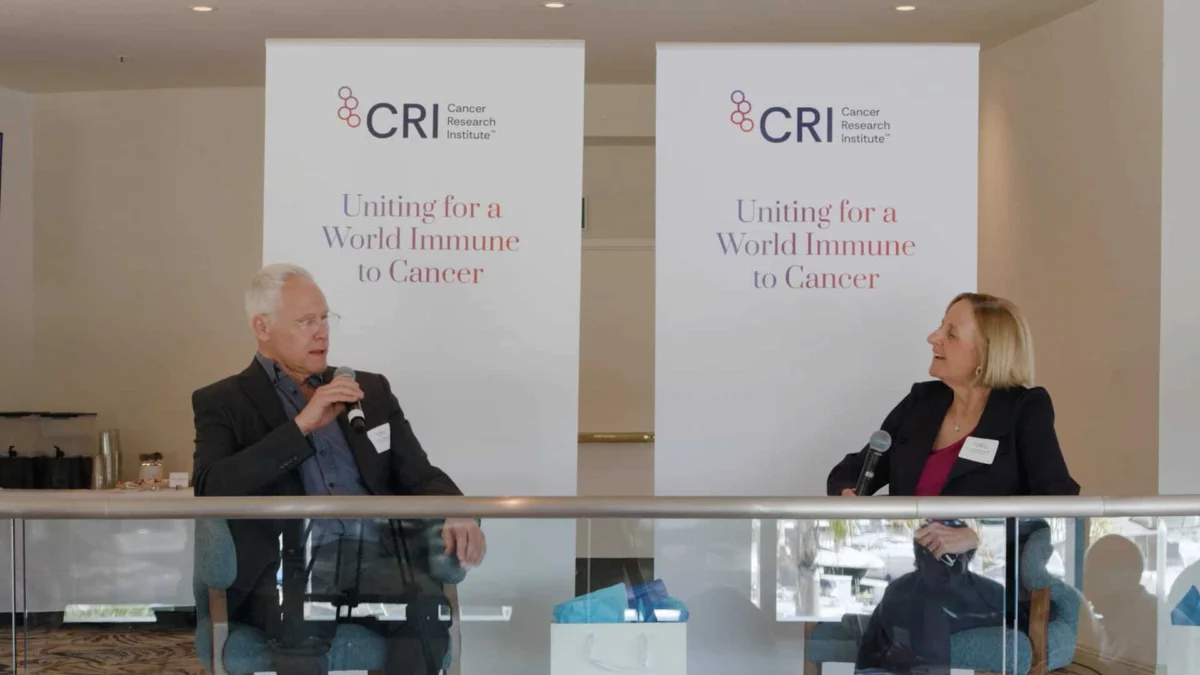
Dr. Murphy’s career serves as a masterclass in the "nonlinear" nature of scientific progress. In a fireside chat with 2025 award recipient Crystal Mackall, MD, Dr. Murphy reflected on a journey that was never mapped out by milestones, but rather guided by the pursuit of biological truth.
The Early Decades: Questioning the Immune Response
In the early stages of his career, Dr. Murphy’s research was focused on the fundamental question: How does the immune system differentiate between types of threats? At the time, the nuances of T-cell differentiation and the signals required to activate an anti-tumor response were largely unknown. His laboratory systematically dissected the signaling pathways that allow the immune system to maintain tolerance while remaining ready to strike against pathogens and malignancies.
The Rise of the Dendritic Cell
The mid-to-late career phase for Dr. Murphy was dominated by the emergence of dendritic cell biology. Through rigorous observation and genetic modeling, his lab isolated the role of the cDC1 subset. This was a "Eureka" moment for the field, as it explained the mechanics of "cross-presentation"—the process by which DCs capture tumor antigens and present them to T cells. This discovery bridged the gap between basic immunology and clinical oncology, providing the missing link for researchers working on therapeutic cancer vaccines.
Modern Integration: mRNA and Beyond
Today, Dr. Murphy’s work is at the heart of the next generation of cancer therapies. As mRNA and cDNA vaccine platforms dominate the headlines, his lab has provided the biological validation that these platforms require: that for a vaccine to be effective, it must successfully engage the dendritic cell compartment. His current research continues to probe the "stem-like" qualities of T cells, asking how we can program these cells to persist long enough to prevent cancer recurrence.
The Fireside Conversation: A Synthesis of Wisdom
A highlight of the 2026 AACR Annual Meeting was the "fireside-style" conversation between Dr. Murphy and Dr. Crystal Mackall. Moving away from the traditional lecture format, this dialogue allowed for a candid exploration of the challenges facing modern oncology.
Supporting Data and Insights
The discussion touched upon the cycles of optimism and disappointment that have historically plagued the field of cancer vaccines. Dr. Murphy provided a nuanced perspective, noting that past failures were often not due to the choice of antigen, but rather a misunderstanding of which cells were necessary to present that antigen.
"We are still asking the same question that we started off with," Dr. Murphy noted, underscoring that the core challenge of immunology remains the initiation and maintenance of a durable response. He pointed to the transition between stem-like T cells and effector cells as the primary determinant of long-term success. If the immune system cannot sustain its "memory" of the tumor, the cancer will inevitably return.
The Evolving Landscape: AI and the Future of Research
As the scientific environment shifts, the conversation expanded to the impact of artificial intelligence and the changing nature of the research workforce.
AI: Tool or Oracle?
Both Dr. Murphy and Dr. Mackall acknowledged the growing role of AI in analyzing massive datasets. However, they provided a sobering caveat: AI is a tool for management, not a replacement for human intuition.
- The Data Dilemma: Dr. Mackall noted that the sheer volume of information available to young scientists can be overwhelming, potentially leading to "analysis paralysis."
- The Human Factor: Dr. Murphy emphasized that the ability to ask the "right" question—the one that drives the field forward—remains a uniquely human endeavor that relies on context, insight, and the synthesis of biological observations.
Official Responses and Implications
The scientific community’s response to the award has been one of universal validation. Leaders from the Cancer Research Institute noted that the award to Dr. Murphy highlights a shift back toward valuing foundational biology.
Implications for Clinical Practice
The implications of Dr. Murphy’s work are profound for both the laboratory and the bedside:
- Refining Checkpoint Blockade: Clinicians are beginning to realize that the efficacy of checkpoint inhibitors is inherently linked to the patient’s dendritic cell fitness. Future trials may focus on "priming" the immune system via DCs before or during checkpoint therapy.
- Next-Generation Vaccines: The focus is shifting toward targeting the vaccine payload specifically to the cDC1 subset, which Dr. Murphy’s research has proven to be the most effective for CD8+ T cell priming.
- Durability: Future research will likely focus on the mechanisms that prevent T-cell exhaustion, ensuring that the "stem-like" population remains viable in the hostile tumor microenvironment.
Conclusion: The Path Ahead
If there is a unifying theme to Dr. Murphy’s career, it is that breakthroughs are rarely the result of rigid five-year plans. Instead, they are the byproduct of following biology wherever it leads. As the field of cancer immunology stands at the precipice of a new era, the lessons from Dr. Murphy’s work remain clear: technology provides the speed, but basic science provides the direction.
As he looks toward the future, Dr. Murphy remains optimistic, though grounded in the reality of the work that remains. The next decade of immunotherapy will not be defined by a single "magic bullet," but by the slow, steady, and brilliant work of decoding the immune system—one question at a time. For the next generation of researchers, his career serves as a reminder that in the pursuit of scientific truth, patience, curiosity, and a deep respect for biological complexity are the most important tools in the kit.