





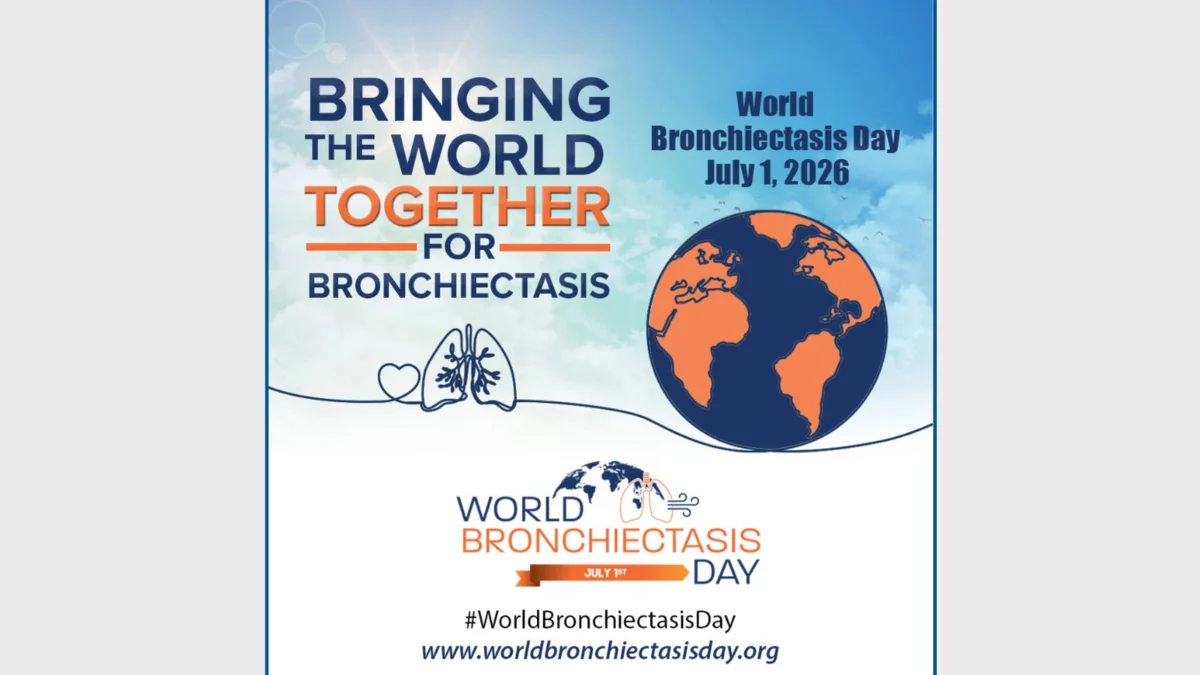
1 July, 2026
As the global medical community marks the fifth annual World Bronchiectasis Day, a critical spotlight has been turned toward a chronic, often overlooked respiratory condition that impacts the lives of hundreds of thousands of people across every continent. The Forum of International Respiratory Societies (FIRS), in partnership with the Bronchiectasis and NTM Foundation and a coalition of global health advocates, is spearheading an international campaign today to bolster awareness, catalyze research, and improve the standard of care for patients suffering from bronchiectasis.
Though it remains less familiar to the general public than asthma or chronic obstructive pulmonary disease (COPD), bronchiectasis represents a significant burden on global healthcare systems and a life-altering reality for those living with the disease. Today’s observance serves as a clarion call for earlier detection, more robust therapeutic innovation, and a unified approach to managing a condition that currently has no cure.
The Landscape of Bronchiectasis: A Clinical Overview
Bronchiectasis is a chronic lung condition characterized by the permanent enlargement and scarring of the bronchi—the main air passages in the lungs. In a healthy respiratory system, these airways are flexible and capable of clearing mucus through small, hair-like structures called cilia. In patients with bronchiectasis, the structural integrity of these airways is compromised.
The resulting damage creates a vicious cycle: the airways become unable to clear mucus effectively, leading to the accumulation of fluid that acts as a breeding ground for bacteria. This chronic inflammation and recurrent infection further damage the airways, creating a progressive disease trajectory that, if left unmanaged, can lead to permanent respiratory decline.
Symptom Recognition and Early Detection
The clinical presentation of bronchiectasis is frequently misinterpreted as a persistent "smoker’s cough" or chronic bronchitis. Key symptoms that clinicians are urging the public to recognize include:
- Chronic, productive cough: Often involving the expulsion of thick, discolored mucus (sputum).
- Breathlessness: A feeling of air hunger that may worsen during physical activity.
- Recurrent chest infections: Repeated bouts of pneumonia or bronchitis that require frequent medical intervention.
- Systemic malaise: Unexplained fatigue, persistent low-grade fevers, night sweats, and unintentional weight loss.
- Thoracic pain: Chronic discomfort or sharp sensations in the chest cavity.
While the disease remains incurable, medical experts emphasize that early diagnosis is the cornerstone of effective management. Through specialized physical therapy (airway clearance techniques), targeted antibiotics, and regular monitoring, patients can significantly improve their quality of life and stave off the most severe complications.
Chronology of Awareness: The Road to 2026
The movement toward a dedicated global day for bronchiectasis began as a grassroots effort by patient advocacy groups and respiratory specialists who felt the condition was chronically underfunded and misunderstood.
- Pre-2022: Bronchiectasis was largely managed in siloes, with little global coordination on clinical guidelines or public advocacy. Research was often fragmented, and patients reported significant delays in diagnosis, often waiting years to receive an accurate label for their symptoms.
- 2022: The inaugural World Bronchiectasis Day was launched to harmonize international efforts. The goal was to move the disease from the margins of respiratory medicine to the center of the global health agenda.
- 2023: A landmark study published in The Lancet Respiratory Medicine provided the first truly comprehensive, large-scale data on the disease’s characteristics across Europe. This study served as a catalyst, identifying significant regional disparities in disease severity and outcomes.
- 2024–2025: The focus shifted toward global standardization of care. Advocacy groups began lobbying for increased funding for NTM (Nontuberculous Mycobacteria) research, which is frequently comorbid with bronchiectasis.
- 2026: The fifth annual observance marks a maturation of the movement. Today, the focus is on "Global Alliance," emphasizing that whether a patient is in Central Europe or the Global South, the standard of care should be defined by the latest scientific consensus rather than geographical circumstance.
Supporting Data: The 2023 EMBARC Study and Beyond
The 2023 study by Chalmers, Polverino, et al., utilizing data from the European Bronchiectasis Registry (EMBARC), remains a cornerstone of current understanding. The research highlighted that "post-infective" disease—where a prior respiratory infection leaves permanent damage to the airways—is the most common cause of bronchiectasis. However, a notable segment of the population is classified as "idiopathic," meaning the underlying cause remains elusive.
Regional Disparities
One of the most concerning findings from the EMBARC data was the variation in disease severity. Patients in Central and Eastern Europe were found to exhibit higher scores on the Bronchiectasis Severity Index (BSI) compared to their counterparts in other regions. These patients experienced a higher frequency of exacerbations—acute episodes where symptoms worsen significantly—leading to increased rates of hospital admission.
These findings serve as a critical evidence base for the 2026 call to action. The study underscores that "one-size-fits-all" treatment plans are insufficient. Instead, there is a dire need for:
- Tailored Treatment Protocols: Accounting for local infection patterns and regional environmental factors.
- Increased Therapeutic Development: Accelerating the pipeline for anti-inflammatory agents and advanced mucolytics.
- Global Data Sharing: Breaking down the barriers to information exchange between registries in different continents to better understand why certain populations experience more severe disease progression.
Official Responses: FIRS and the Path Forward
The Forum of International Respiratory Societies (FIRS) has taken a lead role in advocating for these systemic changes. As the umbrella organization for the world’s leading respiratory societies, FIRS carries significant weight in influencing global health policy.
Guy Marks, President of FIRS, issued a statement on this year’s anniversary emphasizing the necessity of coalition-building. "World Bronchiectasis Day provides an important opportunity to increase awareness of a disease that can have a significant impact on patients’ quality of life," Marks noted. "Through global alliance, we can bring together patients, clinicians, researchers, and advocacy organizations to advance education, improve access to care, and accelerate progress in bronchiectasis research."
The sentiment is echoed by the Bronchiectasis and NTM Foundation, which has organized a comprehensive calendar of events for July 1. These include:
- Educational Webinars: Targeting primary care physicians to improve their ability to spot early-stage symptoms.
- Patient Advocacy Forums: Providing a platform for those living with the disease to share their experiences and help destigmatize the condition.
- Research Symposia: Showcasing the latest breakthroughs in diagnostic imaging and personalized medicine.
The Broader Implications: Toward a Healthier Future
The efforts surrounding World Bronchiectasis Day 2026 carry significant implications for the future of global respiratory health. By elevating the profile of this chronic condition, the international community hopes to achieve three primary objectives:
1. The De-stigmatization of Chronic Cough
In many societies, persistent coughing is either ignored or stigmatized. By normalizing the conversation around bronchiectasis, advocacy groups hope to encourage patients to seek help earlier. Early intervention prevents the "snowball effect" of recurrent infections, which, in the long term, reduces the economic burden on hospitals and ensures that patients remain productive members of society.
2. Standardizing Clinical Excellence
The regional disparities highlighted by the EMBARC study suggest that where a patient lives often dictates their prognosis. The 2026 goal is to export best practices from high-performing clinical centers to regions currently struggling with high rates of severe disease and frequent hospitalizations. This involves both digital health initiatives—such as telemedicine consultations—and the training of specialized respiratory therapists in underserved areas.
3. Fostering Innovation
The pharmaceutical industry has historically prioritized other, more "visible" respiratory diseases. By creating a unified global awareness day, the respiratory community is signaling to researchers and investors that there is a significant, unmet need in the bronchiectasis space. This is expected to drive more clinical trials and, ultimately, more effective, targeted therapies that move beyond simple symptom management toward disease modification.
Conclusion: A Call to Action
As the sun sets on World Bronchiectasis Day 2026, the work is far from over. The respiratory community has established a clear roadmap: better data, more equitable access, and sustained investment in research. For the hundreds of thousands of people navigating life with bronchiectasis, this day is more than just a calendar marker; it is a promise that their condition is no longer being ignored.
For those interested in learning more or participating in ongoing advocacy, the World Bronchiectasis Day website, maintained by the Bronchiectasis and NTM Association, provides a full suite of resources, event schedules, and links to patient support groups. Through the collective efforts of the global health community, the future for those with bronchiectasis is finally looking brighter.
References:
- Bronchiectasis and NTM Foundation Resource Library. Access full document.
- Chalmers, J., Polverino, E., Crichton, M., et al. "Bronchiectasis in Europe: data on disease characteristics from the European Bronchiectasis registry (EMBARC)." The Lancet Respiratory Medicine, 2023; 11, 637-649. DOI: 10.1016/S2213-2600(23)00093-0.