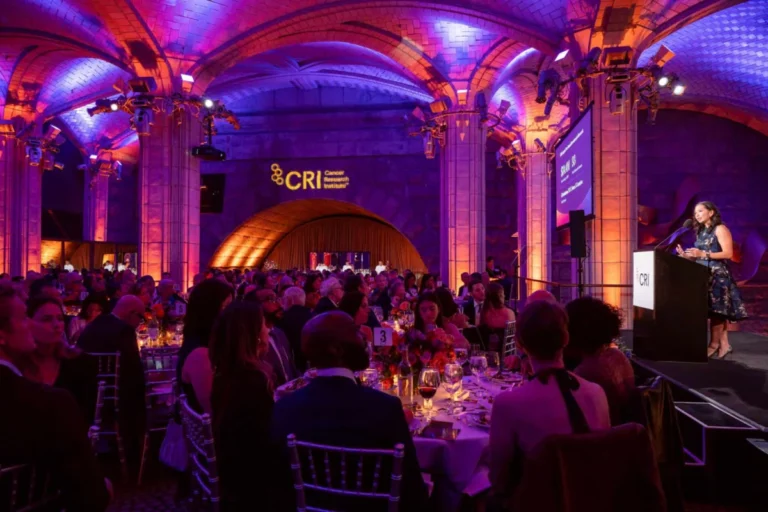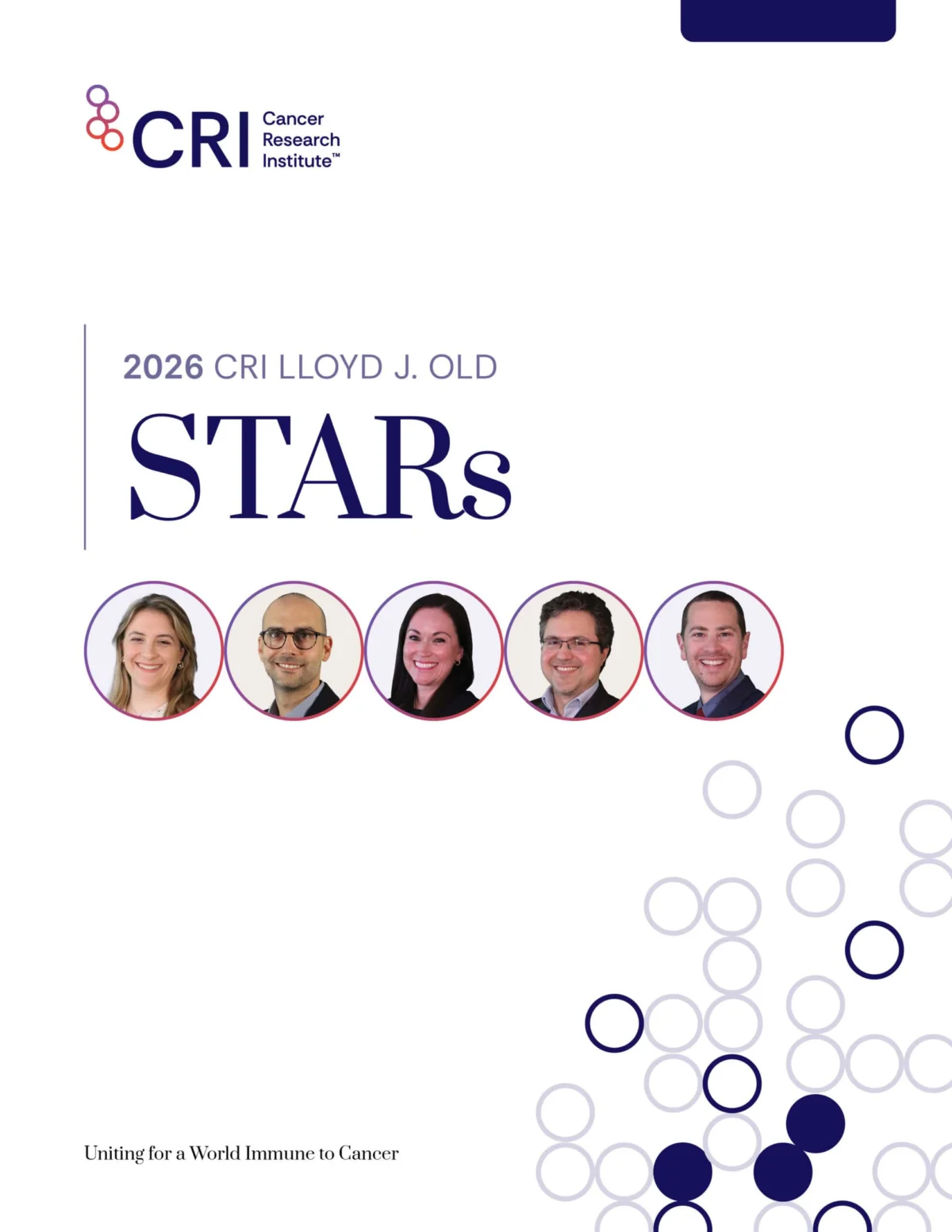
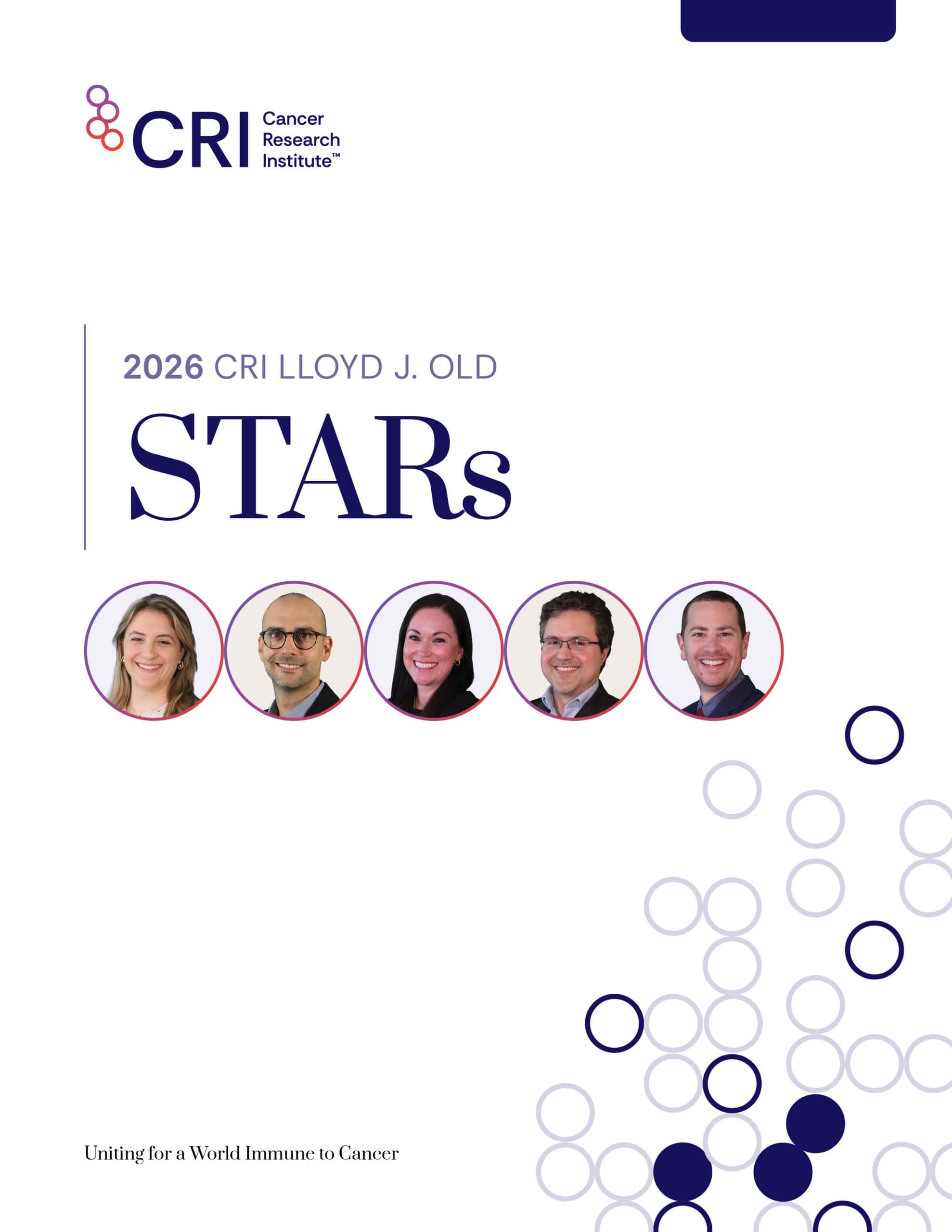
The landscape of oncology is undergoing a seismic shift, moving away from conventional treatments toward the precise, molecular battlefield of immunotherapy. At the center of this revolution is the Cancer Research Institute (CRI), a long-standing vanguard in the effort to harness the human immune system to eradicate malignant cells. This week, the CRI announced its 2026 class of Lloyd J. Old STARs—an elite cohort of five scientists whose work promises to redefine the boundaries of what is possible in cancer care.
The "STAR" acronym, which stands for "Scientists Taking Risks," is more than a title; it is a mandate. Each awardee will receive $1.25 million in flexible funding over the next five years, a financial infusion designed to liberate these researchers from the constraints of traditional, incremental grant-seeking. By prioritizing high-risk, high-reward inquiries, the CRI is betting on the intellectual agility of these visionaries to solve some of the most persistent enigmas in medical science.
The Paradigm of the STAR Program: Investing in People, Not Just Projects
The Lloyd J. Old STAR program represents a departure from the traditional academic funding model. Typically, researchers must outline a rigid set of deliverables and hypotheses to secure funding. While this ensures accountability, it often stifles the serendipitous discovery that arises when scientists are free to pivot their research based on real-time data.
The CRI’s approach is fundamentally different: they are investing in the individual. The program identifies scientists who have demonstrated exceptional promise and gives them the "jet fuel"—as described by the CRI’s leadership—to pursue the unconventional. This philosophy is deeply rooted in the legacy of Dr. Lloyd J. Old, a pioneer in the field of cancer immunology who believed that the most profound breakthroughs often require the courage to pursue ideas that others deem too risky or unproven.
Chronology: A Legacy of Innovation
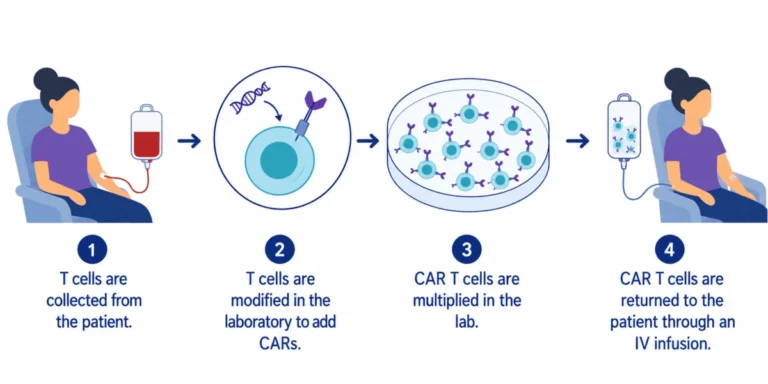
To understand the weight of this 2026 class, one must look back at the CRI’s storied history. Since its inception, the organization has played a pivotal role in funding the foundational research that eventually led to the development of immune checkpoint inhibitors and CAR-T cell therapies—treatments that have saved countless lives.
- The Early Years (1953–1970s): The CRI began as a niche organization at a time when the broader medical community was skeptical of immunotherapy. Their sustained support allowed foundational concepts—such as the role of the immune system in surveillance against tumors—to move from theory to laboratory reality.
- The Expansion (1980s–2000s): As the field matured, the CRI formalized its funding mechanisms to identify the next generation of researchers. They began prioritizing projects that bridged the gap between basic immunology and clinical application.
- The STAR Era (Modern Day): Recognizing that the most transformative research requires stability, the Lloyd J. Old STAR program was launched to provide long-term, unrestricted support. The 2026 class joins a prestigious lineage of scientists who have gone on to lead major research centers and secure Nobel-level contributions to the field.
Supporting Data: Why "High-Risk" Matters
The necessity for the STAR program is supported by the data of modern oncological challenges. While immunotherapy has seen remarkable successes in melanoma and certain blood cancers, "cold" tumors—those that do not trigger a strong immune response—remain a significant barrier.
Recent meta-analyses of clinical trials suggest that while the response rate for checkpoint inhibitors is increasing, a substantial portion of the patient population remains refractory to existing treatments. This "gap" in efficacy is precisely where the 2026 STARs are expected to operate. By providing $6.25 million in total funding for this class, the CRI is funding a high-intensity period of exploration that would otherwise be sidelined by the conservative nature of institutional grants.
The flexibility of these funds allows the awardees to invest in cutting-edge technologies, such as single-cell sequencing, spatial transcriptomics, and CRISPR-based gene editing, without the administrative burden of justifying every incremental expenditure to a traditional grant board.
Official Responses: The Leadership Perspective
The selection of the 2026 class was a rigorous process, involving a comprehensive review by the CRI’s Scientific Advisory Council. The council sought individuals who are currently "hitting their stride," meaning they have established their laboratories but are now at a critical juncture where an influx of resources could produce a breakthrough.
E. John Wherry, PhD, Associate Director of the CRI’s Scientific Advisory Council, articulated the strategic importance of this selection: "These are people who are hitting their stride scientifically and career-wise, and this is where you really want to put some jet fuel in the tank. We aren’t looking for researchers who want to do more of the same. We are looking for the architects of the next decade of cancer immunology."
Elizabeth Jaffee, MD, also an Associate Director, echoed this sentiment, emphasizing the long-term vision of the institute. "We’re picking people who are really our next leaders in the field of immunotherapy," she noted. "When you identify talent at this stage, you aren’t just funding a project; you are effectively securing the future of the field. These individuals have the tenacity to handle failure and the brilliance to recognize when a high-risk project is on the verge of a major pivot."
Implications: A Shift in the Cancer Treatment Landscape
The arrival of the 2026 Lloyd J. Old STARs carries significant implications for the future of patient care. By fostering a culture of scientific fearlessness, the CRI is essentially "de-risking" the innovation process.
1. Accelerating Personalized Medicine
The research supported by these grants is heavily focused on the intersection of genomics and immunology. As the STARs begin their work, the scientific community expects a surge in data regarding how individual patient profiles affect the efficacy of immunotherapy. This could lead to a more personalized, "tailor-made" approach to treatment, reducing side effects and increasing success rates for patients with rare or aggressive cancers.
2. Overcoming Treatment Resistance
One of the primary focus areas for the 2026 cohort is the mechanism of acquired resistance. Why do some patients initially respond to immunotherapy only to have the cancer return? The STARs are tasked with interrogating these mechanisms, potentially leading to the development of combination therapies that "re-sensitize" tumors to the immune system.
3. The Democratization of Research
The STAR program’s emphasis on "flexible funding" sets a standard that other philanthropic organizations and government bodies are beginning to notice. If the 2026 class achieves the anticipated milestones, it may lead to a broader shift in how scientific funding is distributed across the NIH and private foundations, favoring long-term potential over short-term metrics.
Looking Ahead: The Road to 2031
The five-year timeline for these awards is intentional. By 2031, the CRI expects that the research conducted by these five scientists will have translated into at least three to five new clinical trial targets. The journey will be one of intense laboratory work, rigorous peer review, and, undoubtedly, some dead ends—but as the CRI leadership emphasizes, those dead ends are often the essential precursors to the most successful discoveries.
As the scientific community watches the progress of these five leaders, the broader message remains clear: the fight against cancer is no longer a battle of attrition; it is a battle of ingenuity. With the support of the Lloyd J. Old STAR program, the 2026 class is positioned not just to treat cancer, but to fundamentally alter the prognosis for millions of patients worldwide.
The CRI’s investment is more than a donation; it is a declaration that in the face of one of humanity’s greatest adversaries, the most potent weapon remains the human mind, fueled by the freedom to explore the unknown. As these researchers step into their labs, they carry the hopes of the oncology community, tasked with the singular goal of turning the "high-risk" bets of today into the standard-of-care miracles of tomorrow.