



NEW YORK CITY — The Cancer Research Institute (CRI), a global leader in the fight to harness the immune system against cancer, has officially unveiled the recipients of its prestigious 2026 Scientific Achievement Awards. This year, the institute celebrates two luminaries whose work has fundamentally rewritten the textbooks on how the human immune system identifies, remembers, and eliminates malignant cells.
The 2026 honors have been bestowed upon Dr. Eric Vivier, who receives the William B. Coley Award for Distinguished Research in Basic and Tumor Immunology, and Dr. Joseph Sun, recipient of the Frederick W. Alt Award for New Discoveries in Immunology. These awards, which serve as the gold standard for recognizing transformative immunological research, will be formally presented during the CRI’s Annual Awards Gala on Tuesday, October 20, 2026, at the historic Guastavinos in New York City.
Main Facts: A Dual Recognition of Innate and Adaptive Excellence
The selection of Dr. Vivier and Dr. Sun underscores the CRI’s commitment to bridging the gap between basic laboratory science and life-saving clinical applications.
Dr. Eric Vivier, a Professor of Immunology at Marseille Medical School and head of the Innate Lymphoid Cells laboratory at the Centre d’Immunologie de Marseille-Luminy, is being recognized for his seminal contributions to the field of natural killer (NK) cells. His work has elevated the status of innate immunity, moving it from a secondary consideration in cancer biology to a primary pillar of therapeutic intervention.
Dr. Joseph Sun, a Member of the Immunology Program at Memorial Sloan Kettering Cancer Center and Professor at Weill Cornell Medical College, is being honored for his revolutionary findings regarding immunological memory. By demonstrating that NK cells possess the capacity for "adaptive-like" behavior—a trait previously thought exclusive to T and B cells—Dr. Sun has provided the scientific community with a new framework for understanding long-term cancer surveillance.
Chronology: A Path to Scientific Eminence
The Career Trajectory of Dr. Eric Vivier
Dr. Vivier’s journey in immunology is characterized by a relentless pursuit of the mechanisms governing cellular defense. Since 2015, he has been consistently ranked as a Highly Cited Researcher, reflecting the immense impact of his publications on the global scientific community.
His professional timeline is marked by significant academic and civic milestones:
- Early Foundations: Establishing himself as a pioneer in NK cell research at the Centre d’Immunologie de Marseille-Luminy.
- Translational Leadership: Recognizing that basic research is only as valuable as its clinical reach, Dr. Vivier co-founded Innate Pharma, a biotechnology firm that has been instrumental in bringing NK-cell-based therapies into clinical trials.
- Global Recognition: Beyond his research achievements, Dr. Vivier has been elected to the French National Academy of Medicine and the European Molecular Biology Organization (EMBO), cementing his status as a titan of European science.
The Rise of Dr. Joseph Sun
Dr. Sun’s career represents the power of nurturing early-career talent. A former CRI Irvington Postdoctoral Fellow (2007–2009), his rise through the ranks of academia serves as a blueprint for the impact of targeted research funding.
- The Breakthrough Years: Working under the mentorship of Dr. Lewis Lanier at UCSF, Dr. Sun made the startling discovery that NK cells undergo clonal expansion and possess long-lived memory following viral infection.
- Institutional Leadership: His success led to his current leadership roles at Memorial Sloan Kettering Cancer Center and Weill Cornell, where he now directs the Immunology and Microbial Pathogenesis Program.
Supporting Data: Why These Discoveries Matter
The significance of these awards lies in the tangible shifts they have caused in the oncology landscape.
The Vivier Impact: Deciphering the Innate Shield
Natural Killer cells are the "first responders" of the immune system. Before Dr. Vivier’s work, the scientific community largely viewed them as broad-spectrum, non-specific weapons. Dr. Vivier’s research mapped the signaling pathways that allow these cells to distinguish between healthy tissue and tumor cells with high precision. This has led to the development of "checkpoint inhibitors" for NK cells, which are now being tested in combinations to treat solid tumors that have historically been resistant to standard T-cell therapies.
The Sun Impact: Redefining Memory
The discovery of NK cell memory challenged a dogma that had held firm for decades: that only adaptive cells (T and B cells) could "remember" a pathogen or tumor antigen. Dr. Sun’s data proved that NK cells could be primed and activated to respond more aggressively upon subsequent encounters with the same threat. This has opened the door for "memory-engineered" immunotherapy, where researchers aim to create long-lasting, tumor-specific NK cells that can persist in the patient’s body for years, preventing recurrence.
Official Responses: Insights from the Scientific Community
The announcement has drawn widespread praise from the medical community, particularly from those who have followed the careers of these two scientists closely.
Dr. Lewis Lanier, a member of the CRI’s Scientific Advisory Council and the mentor who oversaw Dr. Sun’s postdoctoral training, expressed deep pride in the trajectory of his former student.
"Dr. Sun has been an absolute leader in his field," Dr. Lanier remarked. "I am overjoyed that we are going to acknowledge him as one of the true superstars who launched their careers with the support of a CRI Irvington Fellowship. It is a testament to the fact that when you invest in the right minds, you change the future of medicine."
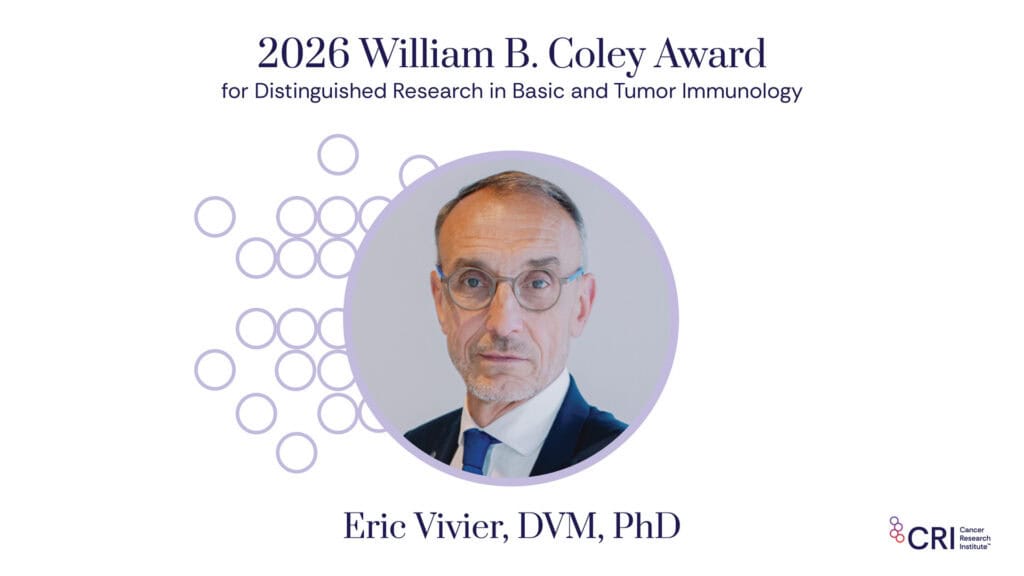
The selection committee for the William B. Coley Award noted that Dr. Vivier’s work represents the "ideal marriage of intellectual curiosity and clinical pragmatism," highlighting his ability to translate abstract molecular pathways into tangible therapeutic assets that reach patients in clinical settings.
Implications: The Future of Cancer Immunotherapy
The implications of the 2026 awards extend far beyond the gala ceremony in New York. As cancer research moves into an era of "precision immunology," the work of Vivier and Sun provides the necessary tools to navigate increasingly complex biological challenges.
1. Toward Universal Off-the-Shelf Therapies
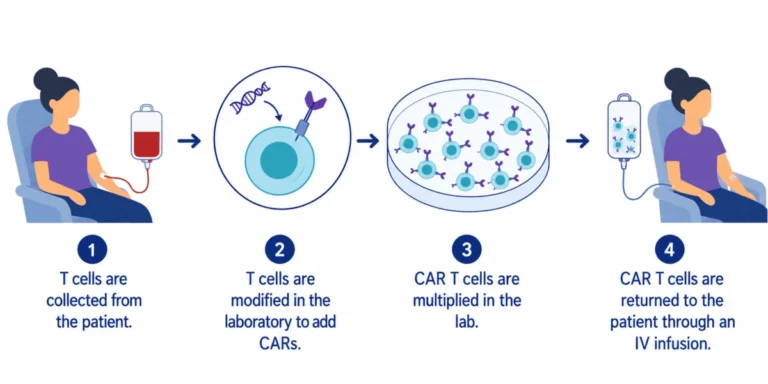
Because NK cells do not require the same degree of patient-specific matching as T-cell therapies (like CAR-T), Dr. Vivier’s work on innate immunity is the cornerstone of "off-the-shelf" allogeneic therapies. This could drastically reduce the cost and manufacturing time for immunotherapies, making them accessible to a wider patient population.
2. Overcoming Tumor Resistance
One of the greatest hurdles in cancer treatment is the tumor’s ability to "hide" from T cells. By leveraging the pathways identified by Dr. Sun, researchers are now designing combination therapies where NK cells are "trained" to attack tumors that have evolved to evade traditional T-cell surveillance.
3. The 2026 Coley Lecture
The discourse will continue at the Society for Immunotherapy of Cancer (SITC) Annual Meeting, to be held in Phoenix, Arizona, this November. Dr. Vivier is slated to deliver the 2026 Coley Lecture on Sunday, November 8. This address is expected to provide a roadmap for the next decade of innate immunology, focusing on how we might program the immune system to maintain a permanent, vigilant state of surveillance against cancer relapse.
A Legacy of Support
The Cancer Research Institute’s decision to honor these two men is also a reflection of its own longevity. For over half a century, the CRI has identified researchers at the precipice of discovery. By continuing to highlight work that defies traditional boundaries, the institute ensures that the next generation of scientists—like those currently in their own fellowship programs—has a standard of excellence to emulate.
As the scientific community prepares to gather in New York this October, the mood is one of anticipation. The 2026 Scientific Achievement Awards are not merely a celebration of past papers or accolades; they are a recognition of two individuals who have, through persistence and intellect, fundamentally shifted the odds in the favor of the patient. Through their vision, the immune system is no longer just a biological defense—it is a sophisticated, programmable, and ultimately curative weapon in the war against cancer.