









For many, the golden years are meant to be a time of freedom—freedom from the daily grind, the 9-to-5, and the relentless pace of modern productivity. Yet, for an increasing number of adults over 60, this newfound freedom is being quietly eroded by a persistent, nagging companion: "tech neck."
Whether it is the result of long hours spent scrolling through smartphones, reading tablets, or maintaining a static posture while working at a desk, the structural integrity of our cervical spine is under siege. Many seniors are told that chronic stiffness is simply a side effect of aging, a reality to be managed with heat pads and over-the-counter anti-inflammatories. However, there is a growing movement in physical health and wellness that challenges this fatalistic view. Mobility, as it turns out, is not something that must be chased in a high-intensity, crowded yoga studio; it is a skill set that can be cultivated in the quiet moments of the day—while the coffee brews, during a commercial break, or while waiting for a file to download on your computer.
The Modern Epidemic: Why Our Necks Are Stiffening
The human neck is a complex marvel of engineering, designed for movement, rotation, and dynamic stabilization. Yet, our modern environment—which demands we fixate our gaze on screens positioned at sub-optimal heights—forces the cervical spine into a state of chronic, static tension.
As we cross the threshold into our 60s, this "tech neck" phenomenon is exacerbated by three primary biological and behavioral culprits:
- Loss of Fluidity in Joint Capsules: Over time, the synovial fluid—the lubricant that keeps our joints moving smoothly—can decrease in volume and viscosity. Without regular, controlled movement, the tissues surrounding the cervical vertebrae can become "sticky," leading to that grinding sensation often felt during rotation.
- Postural Habituation: Years of occupational habits (such as sitting at a desk) engrave patterns into our nervous system. We begin to lose the subconscious ability to maintain an upright, neutral spine, leading to a "forward head carriage" that places significant strain on the trapezius and levator scapulae muscles.
- Neurological Desensitization: Chronic pain creates a feedback loop. When we feel stiff, we move less to avoid discomfort. This avoidance behavior teaches our nervous system that movement is dangerous, leading to increased muscle guarding and a further reduction in range of motion.
The Science of Simplicity: Why Chair Exercises Work
There is a common misconception that in order to be effective, exercise must be exhausting, complicated, or involve expensive equipment. Research in geriatric physical therapy suggests the opposite. Seated, low-impact mobilization is exceptionally effective because it provides a stable foundation. By sitting in a sturdy, armless chair, you eliminate the need for your body to engage in complex stabilization or balance work. This allows the nervous system to focus entirely on the target area: the neck and upper thoracic spine.
By isolating the cervical spine in a seated position, you can facilitate repetitive, controlled motion that stimulates blood flow to the joint capsules. This increased circulation not only helps to lubricate the joints but also gently desensitizes the nerves that trigger pain signals, effectively "resetting" the neck’s comfort threshold.

The 4-Move Mobility Program
To implement this program, you need no special gear—just a stable, armless chair. Sit tall with your feet flat on the floor, hip-width apart. Imagine a string gently pulling the crown of your head toward the ceiling, lengthening the back of your neck.
1. The Chin Retraction (The "Double Chin")
The primary antagonist to tech neck is the forward drift of the head. The chin retraction is designed to strengthen the deep neck flexors and realign the cervical vertebrae.
- The Move: While keeping your gaze level and your head upright, draw your chin straight back as if you are attempting to create a double chin.
- The Nuance: Crucially, avoid tilting your head up or down. The movement should be strictly horizontal, a "glide" rather than a pivot.
- Repetition: Perform 10 repetitions, holding the retracted position for three seconds each.
2. The Controlled Rotation
Stiffness often manifests as an inability to look over your shoulder, which can impact your confidence while driving or navigating busy environments.
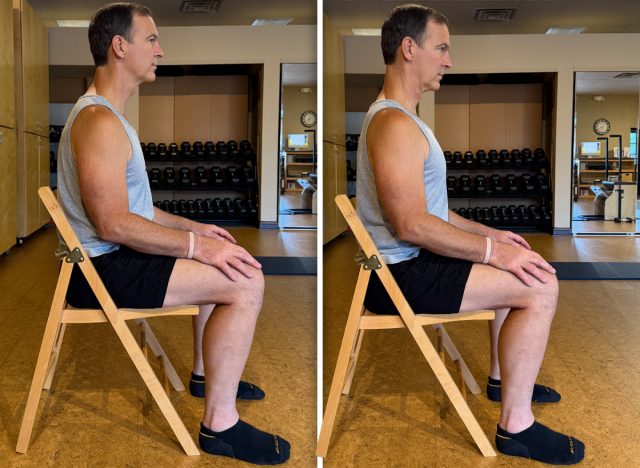
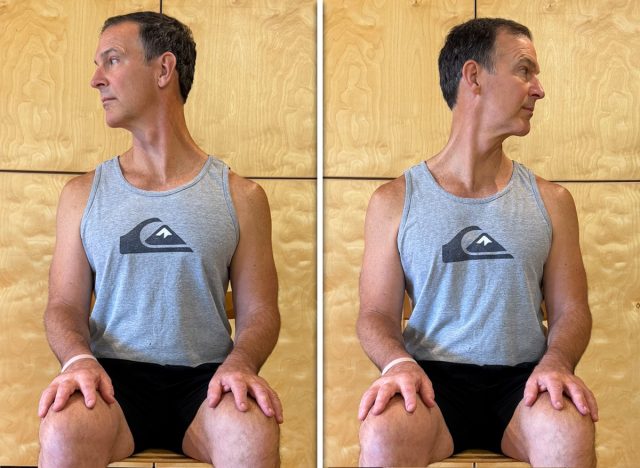
- The Move: From your neutral seated position, slowly rotate your head to the right, aiming to look over your shoulder as far as is comfortably possible. Pause, then return to center. Repeat on the left side.
- The Nuance: Do not use momentum. Imagine your head is turning against slight resistance, ensuring the movement is smooth and deliberate.
- Repetition: Aim for 8 repetitions per side, focusing on gaining a fraction of an inch more range with every turn.
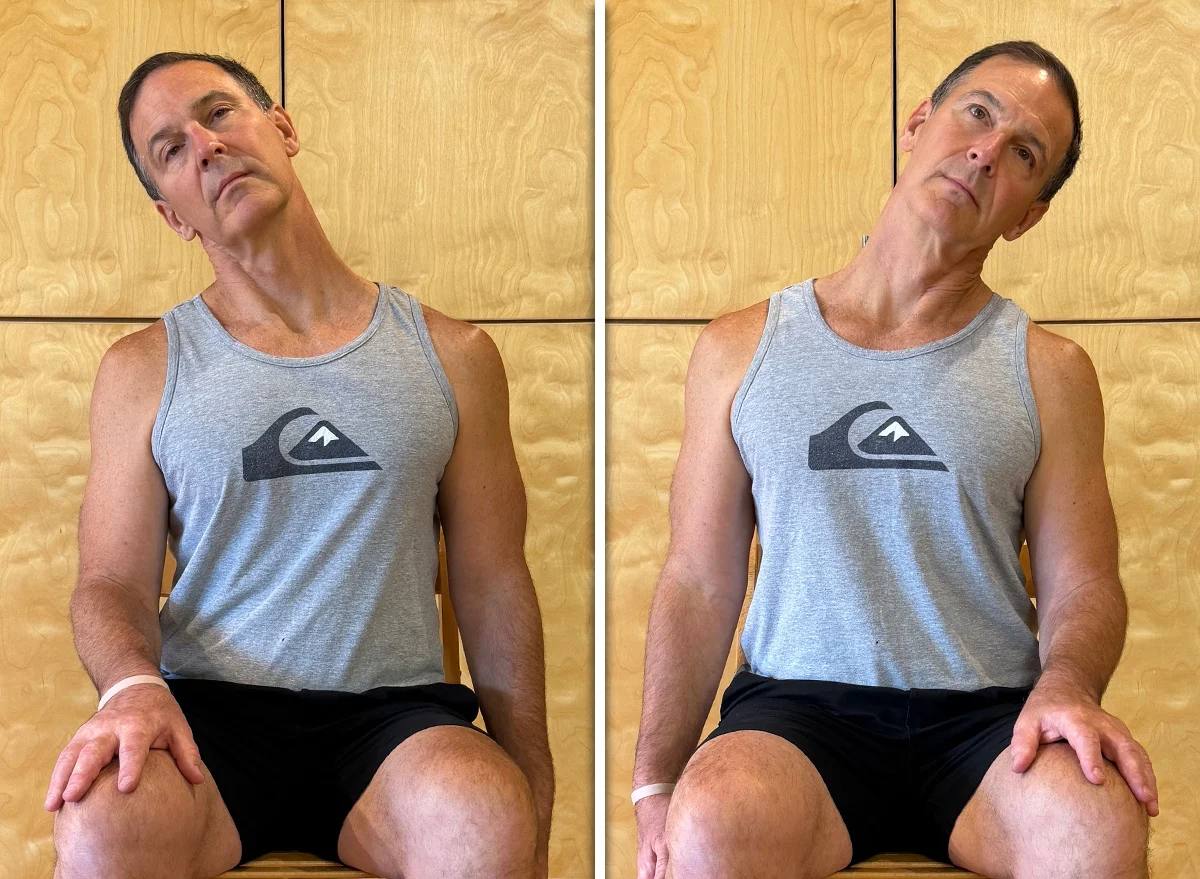
3. The Lateral Ear-to-Shoulder
This move targets the sternocleidomastoid and upper trapezius muscles, which are notorious for harboring stress-related tension.
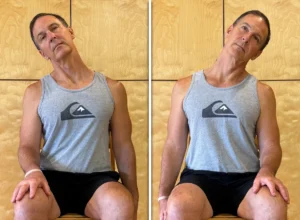
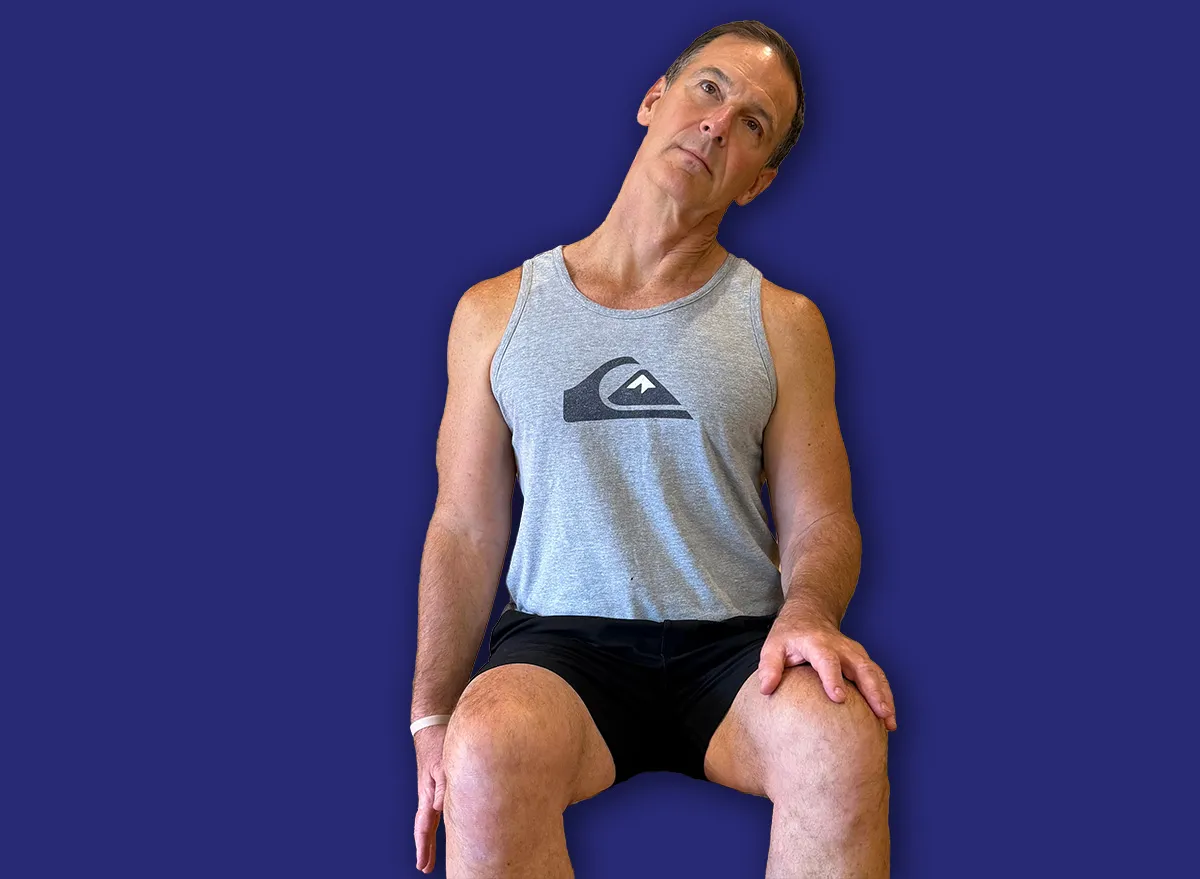
- The Move: Drop your right ear toward your right shoulder. Keep your left shoulder actively pressed down toward the floor.
- The Nuance: Avoid "crunching" the shoulder up to meet the ear. The goal is to create space on the left side of the neck.
- Repetition: Hold for 15 seconds on each side, breathing deeply into the stretched tissue.
4. The Seated "Cat-Cow" Neck Release
Adapting the classic yoga move for the chair allows you to link the movement of your neck to the thoracic spine, which provides the foundation for your head.
- The Move: As you round your upper back (Cat), gently tuck your chin to your chest to stretch the back of the neck. As you extend your chest forward (Cow), look slightly toward the ceiling to open the throat.
- The Nuance: The breath is the engine here. Exhale as you round, inhale as you extend.
- Repetition: Perform 10 cycles, moving in rhythm with your natural breath cycle.
Chronology of Recovery: What to Expect
If you are new to a mobility routine, do not expect overnight transformation. The nervous system requires consistent, non-threatening input to unlearn the "stiff" habit.
- Week 1: Focus on awareness. Notice how often your shoulders creep toward your ears during the day.
- Week 2: Introduce the four moves twice daily. You will likely feel a sense of "lightness" in the upper back immediately after the sessions.
- Week 4: By this point, the range of motion should begin to feel more fluid, and the frequency of morning stiffness should start to decline.
Implications for Longevity
The implications of maintaining cervical mobility extend far beyond comfort. A flexible, mobile neck is directly linked to better balance, safer driving, and an overall reduction in the compensatory pain that often leads to a sedentary lifestyle. When you reclaim your ability to turn, look, and move without hesitation, you are not just fixing a physical ailment; you are reclaiming your autonomy.
A Final Note on Ownership
Stop reading for a moment. Drop your shoulders away from your ears. Take a deep, belly-expanding breath. Did you realize they were creeping upward? That awareness is the most critical tool in your kit.
You do not need a gym membership or a specialized studio to address the consequences of modern life. You have a chair, and you have a neck that wants to be free. By integrating these four movements into the "in-between" moments of your day—those small windows of time that usually go to waste—you are teaching your nervous system that it is safe to move again. You are not just stretching; you are reclaiming your ability to live with ease.