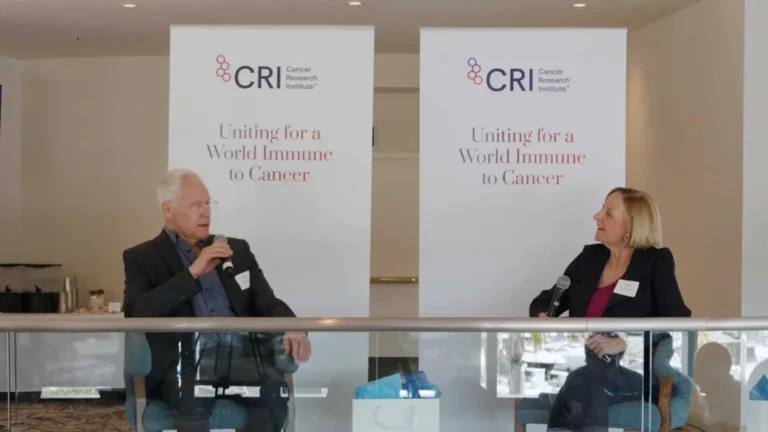









April is Esophageal Cancer Awareness Month—a vital period dedicated to highlighting a malignancy that, despite its lethal potential, remains profoundly understudied. While medical science has made significant strides in oncology, esophageal cancer continues to pose a formidable challenge to clinicians and researchers alike. Among the frontrunners in this battle is Dr. Valsamo (Elsa) Anagnostou, a Professor of Oncology at the Johns Hopkins School of Medicine and a Torrey Coast Foundation CRI CLIP Investigator. Her pioneering work is shifting the paradigm from static, reactive treatment to a model of dynamic, real-time molecular monitoring.
Main Facts: The Nature of a Moving Target
The fundamental obstacle in treating esophageal cancer is its inherent instability. Tumors are not monolithic entities; they are highly plastic, evolving rapidly in response to the selective pressure of systemic therapies, particularly immunotherapy. This phenomenon, known as cancer evolution, explains why a treatment that initially induces remission may eventually fail as the cancer "learns" to evade the immune system.
Dr. Anagnostou’s laboratory is at the forefront of deciphering these mechanisms. By integrating experimental biology with advanced computational data science, her team examines both solid tumor tissue and circulating tumor DNA (ctDNA) harvested from blood samples. This dual-pronged approach is designed to capture the molecular signatures of resistance as they emerge, providing a "liquid" window into the tumor’s behavior. The urgency of this research cannot be overstated: gastroesophageal cancers have historically seen a gap between laboratory discovery and clinical application, a chasm that Dr. Anagnostou is committed to bridging.
A Chronology of Clinical Advancement
The history of esophageal cancer treatment has long been characterized by a "wait-and-see" approach, often resulting in delayed intervention when recurrence occurs.
- The Traditional Paradigm: For decades, patients diagnosed with stage 2 or 3 esophageal cancer have undergone curative-intent surgery followed by chemotherapy. Despite the aggressive nature of these interventions, recurrence rates remain distressingly high, with many patients relapsing within 24 months.
- The Advent of Molecular Diagnostics: The last decade saw the rise of next-generation sequencing, allowing doctors to identify mutations within tumors. However, these snapshots were limited to the time of biopsy.
- The Liquid Biopsy Revolution: More recently, the development of liquid biopsies has enabled longitudinal tracking. Instead of relying on invasive surgical biopsies that provide only a localized view, clinicians can now track the genetic burden of a tumor through blood samples.
- The Immunotherapy Era: The current period marks a significant pivot. With the introduction of perioperative immunotherapy (administered before and after surgery), we are seeing the first major shift in survival paradigms for early-stage and locally advanced esophageal cancers.
Supporting Data: The Power of ctDNA
The clinical utility of liquid biopsies is supported by mounting evidence regarding ctDNA clearance. In recent clinical studies, the presence or absence of ctDNA has emerged as a powerful prognostic biomarker.
Data suggests that patients whose ctDNA is cleared—meaning the molecular signal of the tumor disappears from the bloodstream—following initial treatment have significantly improved survival outcomes. Conversely, patients who maintain detectable levels of ctDNA post-treatment are at a substantially higher risk of recurrence, often before such recurrence is visible on traditional imaging scans like CT or PET.
This molecular insight provides a critical advantage: it separates patients who appear identical under a microscope but harbor vastly different biological risks. By identifying "residual disease" that is otherwise invisible to standard pathology, liquid biopsies allow for the stratification of patients, potentially sparing those with low risk from over-treatment while identifying high-risk individuals who may require more aggressive, experimental, or alternative therapeutic strategies.
The Challenge of Heterogeneity
Esophageal cancer is not a singular disease; it is biologically diverse. This heterogeneity means that a treatment protocol that proves highly effective for one patient may be entirely ineffective for another.

"To truly understand response and resistance," Dr. Anagnostou notes, "we need a holistic view—one that integrates genetic, molecular, and cellular data to uncover what’s driving each patient’s disease."
This "multi-omic" approach, which layers information from genomics (DNA), transcriptomics (RNA), and proteomics (proteins), is the key to identifying the specific biomarkers that govern drug response. Resistance to immunotherapy, for instance, is rarely the result of a single mutation. It is typically a complex interplay of genetic instability, a hostile tumor microenvironment, and the patient’s own immune suppression. Mapping these variables is the current "holy grail" of oncology.
Official Perspectives: The Path Forward
Dr. Anagnostou’s vision for the future is rooted in the concept of "continuous monitoring." In this model, the clinical care pathway is redefined:
- Biological Matching: A patient’s tumor is molecularly profiled to match them with the most effective therapy from the outset, rather than relying on a one-size-fits-all approach.
- Real-Time Surveillance: Instead of waiting for imaging to show a recurrence, clinicians use liquid biopsies as a "molecular sensor" to track how the cancer is responding to treatment in real-time.
- Refined Intervention: If the liquid biopsy indicates that the tumor is beginning to evolve resistance, clinicians can pivot to secondary or combination therapies before the disease clinically manifests.
When asked about the current state of the field, Dr. Anagnostou remains cautiously optimistic. "I’m very encouraged by the advances in immunotherapy for early-stage gastroesophageal cancer," she says. "As we deepen our understanding of how tumors respond and resist treatment, and continue advancing liquid biopsy technologies, I’m hopeful we can better optimize care and improve outcomes for patients."
Implications for Patients and Policy
The implications of this research extend far beyond the laboratory. If these diagnostic tools can be standardized and integrated into routine care, they could fundamentally alter the patient experience.
- Reduction of Invasive Procedures: By utilizing blood-based monitoring, patients may require fewer repeat biopsies, reducing both physical discomfort and the risk of complications.
- Psychological Impact: Providing patients with objective, molecular-level updates on their progress can reduce the anxiety associated with the "scan-xiety" of waiting for quarterly imaging results.
- Economic Efficiency: By optimizing treatment and avoiding ineffective therapies, the healthcare system could potentially reduce costs associated with failed treatments and the intensive management of advanced-stage recurrences.
As we continue through Esophageal Cancer Awareness Month, the work of researchers like Dr. Anagnostou serves as a reminder that progress is not just measured in new drugs, but in new ways of thinking. By shifting from a static view of cancer to a dynamic, molecular-informed strategy, we are moving closer to a future where esophageal cancer is no longer a terminal diagnosis, but a manageable condition.
The convergence of immunotherapy and liquid biopsy technology represents a watershed moment. It is a testament to the power of interdisciplinary research—where computational science meets clinical oncology—to solve the most complex problems in human health. For patients and families navigating the difficult journey of an esophageal cancer diagnosis, this evolution in care offers something that was previously in short supply: a clear, data-driven, and highly personalized path forward.