








For millions of Americans, the rise of GLP-1 receptor agonists—branded as Ozempic, Wegovy, Mounjaro, and Zepbound—has fundamentally reshaped the medical approach to type 2 diabetes and obesity. Originally designed to manage blood sugar and later hailed for their unprecedented efficacy in weight loss, these medications are now at the center of a burgeoning medical revelation: they may possess the potential to treat, and perhaps even prevent, a wide spectrum of substance use disorders.
A landmark study published in The BMJ by researchers at the Washington University School of Medicine in St. Louis suggests that these drugs do not merely target metabolism; they appear to dampen the neurobiological "noise" that fuels addiction. By analyzing the health records of over 600,000 veterans, researchers have identified a consistent, cross-substance reduction in addiction-related harms, offering a beacon of hope for a public health landscape long starved of pharmacological breakthroughs in addiction medicine.
The Genesis of a Medical Mystery
The journey toward this discovery was neither sudden nor top-down; it began with the patients themselves. As GLP-1 medications surged in popularity, clinicians began hearing anecdotal reports that defied conventional medical expectations. Patients who had struggled for decades with alcohol dependence or chronic cigarette smoking reported a strange, quiet indifference toward their vices shortly after starting their diabetes or weight-loss regimens.
These patient narratives echoed earlier observational studies that had hinted at an association between GLP-1 therapy and reduced risks for alcohol and cannabis use disorders, as well as lower rates of opioid-related emergencies. However, these previous investigations were often fragmented, focusing on individual substances in isolation. The scientific community was left with a persistent question: Was this a localized effect on specific brain receptors associated with alcohol or nicotine, or were these drugs tapping into a universal biological mechanism of addiction?
To answer this, a team led by clinical epidemiologist Dr. Ziyad Al-Aly launched a comprehensive study, leveraging the vast electronic health records of the U.S. Department of Veterans Affairs.
A Massive Data-Driven Inquiry
The study was an exercise in scale, encompassing the health records of 606,434 U.S. veterans diagnosed with type 2 diabetes. By focusing on this specific cohort, researchers were able to compare the outcomes of patients who were prescribed GLP-1 medications—such as semaglutide, liraglutide, or dulaglutide—against those who were prescribed SGLT2 inhibitors, a different class of diabetes medication that serves as a robust control group for baseline health.
The researchers stratified the participants into two distinct groups: those who entered the study without a substance use disorder (SUD) and those who were already managing a diagnosed SUD. By tracking these individuals for up to three years, the team created a clear longitudinal map of how these medications impacted long-term outcomes.
The Protective Effect: Preventing Addiction
Among the 524,817 participants who did not have an SUD at the outset, the results were striking. Those who were treated with GLP-1 medications showed a 14% lower risk of developing any substance use disorder compared to their counterparts taking non-GLP-1 diabetes drugs.
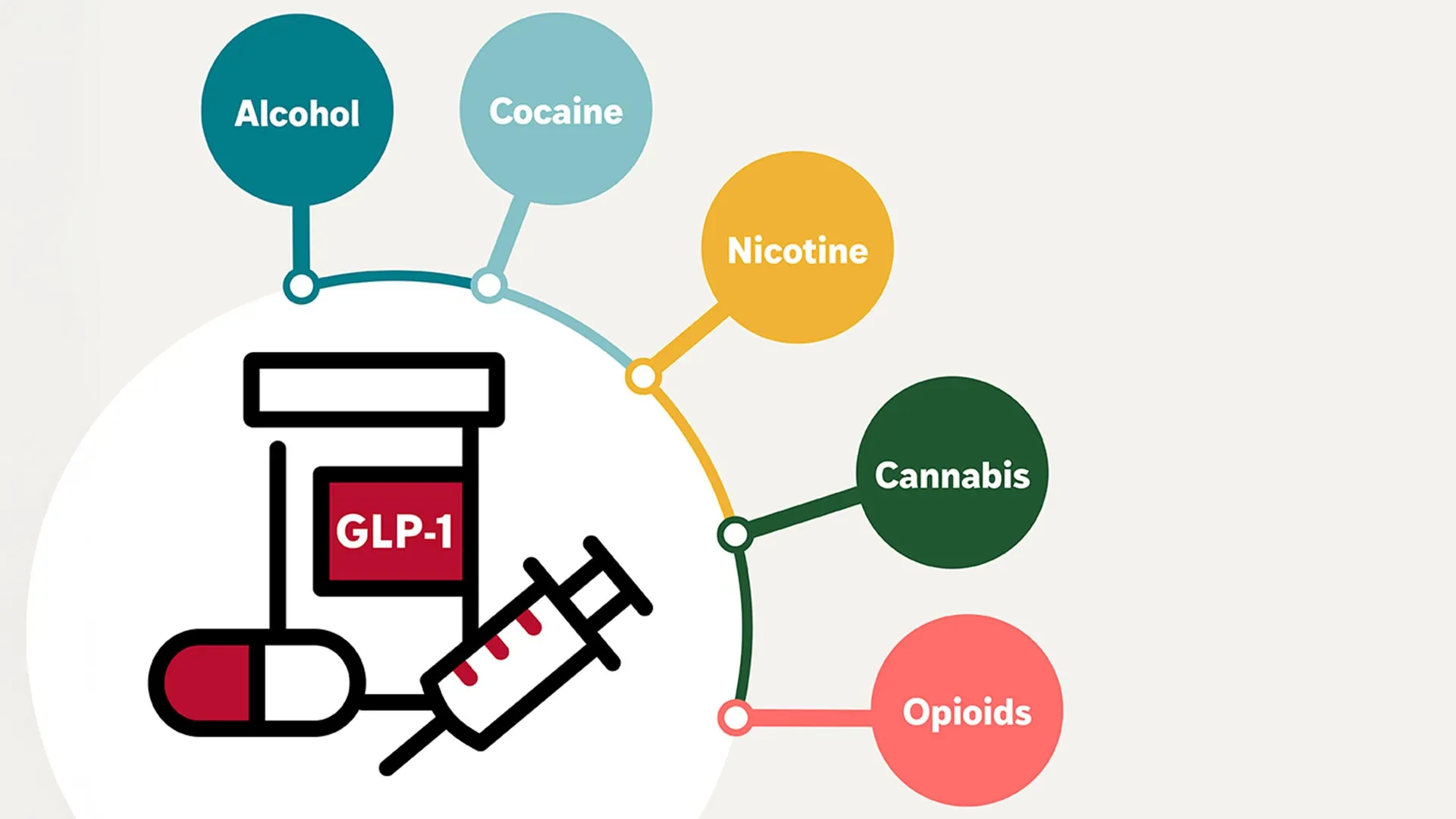
The protective effect was remarkably consistent across different types of substances:
- Alcohol: 18% lower risk.
- Cannabis: 14% lower risk.
- Cocaine: 20% lower risk.
- Nicotine: 20% lower risk.
- Opioids: 25% lower risk.
The researchers calculated that this translated to roughly seven fewer new substance use disorder diagnoses for every 1,000 patients treated with GLP-1s, suggesting a significant potential for primary prevention in high-risk populations.
The Therapeutic Effect: Reducing Harm
The findings were perhaps even more profound for the 81,617 participants who were already struggling with an addiction. In this cohort, GLP-1 usage acted as a buffer against the most severe outcomes of substance use. Over the three-year study period, those on GLP-1s saw a:
- 30% reduction in emergency department visits.
- 25% reduction in hospitalizations.
- 40% reduction in overdose events.
- 50% reduction in drug-related deaths.
Statistically, this equates to 12 fewer serious, life-threatening addiction-related events per 1,000 users—a statistic that holds immense weight in an era where drug-related mortality remains at crisis levels.
Unlocking the Biology of Craving
The scientific explanation for these results lies in the brain’s complex reward system. GLP-1 receptors are not localized solely in the pancreas or the gut; they are distributed throughout the central nervous system, including in the brain regions responsible for dopamine regulation and reward processing.
Dr. Ziyad Al-Aly, the senior author of the study, explains that the drugs are likely not "treating" alcohol or opioids specifically. Instead, they appear to be modulating the underlying neurobiology of craving itself. "In addiction medicine, a lot of treatments target just one thing," Dr. Al-Aly noted. "The revelation about GLP-1 medication is that it works across all major substances. It is likely acting against the craving itself. It blunts that urge that pulls people toward whatever they are addicted to."
This "cross-substance" mechanism is a holy grail in neuroscience. For conditions like methamphetamine addiction, for which there is currently no FDA-approved medication, the possibility that a drug could dampen the biological drive to use is transformative. By "quieting" the neural pathway that links an external stimulus to a compulsive behavioral response, these medications may be providing the cognitive space necessary for patients to regain control.
Implications for Public Health and Policy
The implications of these findings are vast, though they must be tempered with the necessity for further rigorous investigation. The medical community is now calling for clinical trials specifically designed to evaluate GLP-1 medications as a treatment modality for addiction. Such trials would move beyond observational data to establish direct causality and dosage protocols specifically tailored for addiction management.
Integrating Care
For patients living with chronic conditions like obesity or diabetes alongside a substance use disorder, the "dual benefit" potential is clear. Rather than managing complex, disjointed treatment regimens for metabolic and behavioral health, a single class of medication could potentially address both. This could improve medication adherence and reduce the systemic burden on the healthcare infrastructure.
The "Drug Noise" Paradigm
Dr. Al-Aly draws a compelling parallel between the "food noise" reported by weight-loss patients and the "drug noise" associated with addiction. For those with obesity, GLP-1s alleviate the constant, intrusive thoughts about food. For those with addiction, the drugs may be quieting the "relentless craving that drives addiction."
This paradigm shift—moving away from a substance-specific approach to one that targets a common biological signal—could herald a new era in addiction treatment. If a single drug can effectively turn down the volume on the "roar" of addiction, it would represent one of the most significant pharmacological advancements in the history of psychiatry and addiction medicine.
A Cautious Optimism
While the data from the VA study is robust, experts caution that this is not a panacea. Addiction is a multifaceted disease shaped by social, psychological, and environmental factors. Medication alone, however effective, is typically most successful when combined with behavioral therapy, social support, and lifestyle interventions.
Furthermore, as with any medication, GLP-1 receptor agonists come with side effects and accessibility challenges. The current cost of these drugs and the global supply shortages mean that wide-scale implementation as an addiction treatment is not yet a reality.
Nonetheless, the research provides a clear, evidence-based mandate for further study. As the U.S. continues to grapple with record-high rates of drug overdose and the ongoing complications of the obesity epidemic, the potential for these "metabolic" drugs to save lives in a completely different domain is a development that warrants the full attention of the global medical community.
As the study authors conclude, the findings from the veteran cohort are not just data points; they are a signpost toward a fundamentally different approach to human health—one where the biological roots of our most persistent cravings can finally be quieted.
Note: This research was funded by the U.S. Department of Veterans Affairs. The authors of the study maintain that the funders had no role in the study’s design, analysis, or interpretation. These findings do not represent the official policy or position of the U.S. Department of Veterans Affairs or the U.S. government.