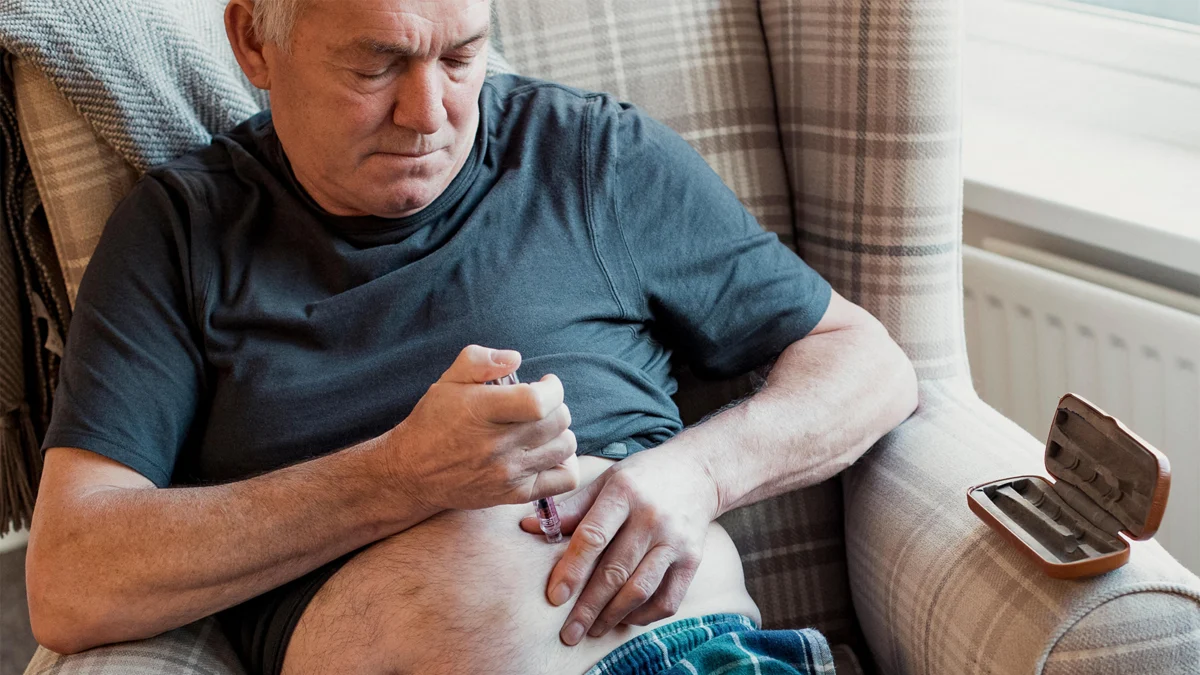
For millions of patients living with type 2 diabetes, the transition to insulin therapy represents a significant turning point in their disease journey. While insulin is undeniably effective at achieving glycemic control, it is often viewed by patients and clinicians alike as a "last resort" due to its inherent complexities: the requirement for multiple daily injections, the constant vigilance needed to monitor for hypoglycemia, the potential for weight gain, and the significant mental burden of daily dose adjustments.
In recent years, the meteoric rise of GLP-1 receptor agonists—such as semaglutide (Ozempic) and dulaglutide (Trulicity)—has sparked a clinical debate: Can these powerful weight-loss and glucose-lowering agents effectively allow patients to "get off" insulin?
A new, large-scale target trial emulation study, led by researchers at the Veterans Affairs Connecticut Healthcare System and published in the Annals of Internal Medicine, provides a sobering answer. The study suggests that, contrary to the optimism surrounding these drugs, adding a GLP-1 receptor agonist is not statistically more likely to facilitate the discontinuation of basal insulin therapy than using other glucose-lowering agents like SGLT2 or DPP-4 inhibitors.
Main Facts: The Myth of Easy Deprescribing
The study, led by Dr. Kasia Lipska and her colleagues, sought to determine if GLP-1 receptor agonists could serve as a "bridge to freedom" for patients struggling with the burden of daily insulin. By analyzing data from 8,869 matched sets of veterans, the researchers compared the discontinuation rates of basal insulin across three major drug classes.
The results were stark. Over a three-year follow-up period, the rate of insulin discontinuation remained remarkably consistent across groups:
- GLP-1 receptor agonist initiators: 16.7% discontinued insulin.
- SGLT2 inhibitor initiators: 17.9% discontinued insulin.
- DPP-4 inhibitor initiators: 17.1% discontinued insulin.
When researchers crunched the numbers, the differences were not statistically significant. The risk ratios—0.93 for GLP-1 versus SGLT2 inhibitors and 0.98 for GLP-1 versus DPP-4 inhibitors—indicated that none of these therapies held a clear, superior advantage in helping patients successfully cease insulin treatment.
Chronology: The Evolution of Diabetes Treatment
To understand the significance of these findings, it is essential to view them within the broader timeline of diabetes management:
- Pre-2010s: Insulin therapy was the standard, non-negotiable step for patients whose HbA1c remained elevated despite oral medications like metformin. Deprescribing was rare and often considered risky.
- 2018: The SUSTAIN-5 clinical trial provided early promise, demonstrating that once-weekly semaglutide could lead to a 15% reduction in total daily insulin doses. This fueled the clinical hope that significant reductions in insulin requirements might eventually lead to total cessation.
- 2020–2022: This period marked the massive expansion of GLP-1 usage, coinciding with increased public awareness of drugs like Ozempic. The study cohort for the current research was drawn from this exact window, capturing a "real-world" snapshot of how these drugs were prescribed during their peak popularity.
- 2025: The publication of the current findings in the Annals of Internal Medicine acts as a "reality check." It shifts the narrative from the idealized results seen in controlled clinical trials to the messy, complicated realities of everyday clinical practice.
Supporting Data: Why the "Miracle" Didn’t Materialize
While the physiological mechanisms of GLP-1 drugs—which include enhanced glucose-dependent insulin secretion, glucagon suppression, and delayed gastric emptying—are well-documented, the study highlights a disconnect between biological potential and clinical outcomes.
The Real-World Gap
The research team identified several factors that explain why the trial results differed from smaller, more controlled studies:
- Dosing Disparities: In clinical trials, patients are often titrated to the highest effective dose. In the real world, the study found that fewer than 10% of the veterans reached the maximum recommended dose of their GLP-1 medication.
- Patient Selection and Severity: The cohort consisted of patients with long-standing diabetes, 48% of whom had an HbA1c of 9% or higher. In such patients, beta-cell function may already be significantly exhausted, making the "withdrawal" of insulin a physiological impossibility, regardless of the efficacy of the GLP-1 agent.
- Treatment Crossover: The modern clinical landscape is fluid. Patients often switch between therapies or use them in combination due to formulary restrictions, cost, or side-effect profiles. This constant "churn" makes it difficult to isolate the specific impact of a single medication class on insulin discontinuation.
- Adherence and Access: Unlike a controlled trial, real-world data is subject to the nuances of patient compliance and access to care, which often dilute the efficacy of potent medications.
Official Responses: Clinical Implications
The consensus among the study authors is that while GLP-1 receptor agonists remain gold-standard treatments for cardiovascular protection, renal health, and weight management, clinicians should temper their expectations regarding insulin discontinuation.
"Although GLP-1 receptor agonists remain valuable for their cardiovascular, renal, and weight benefits, their initiation alone does not seem to drive basal insulin discontinuation beyond that observed with other glucose-lowering agents," noted Dr. Lipska.
For the primary care physician and the endocrinologist, the takeaway is clear: do not prescribe a GLP-1 agonist with the sole expectation that it will eliminate the patient’s need for insulin. Instead, these medications should be prescribed for their documented metabolic benefits, with insulin deprescribing treated as a secondary, highly individualized goal that requires close supervision.
Implications for Future Care
The findings have profound implications for clinical guidelines, insurance coverage, and the overall management of type 2 diabetes.
1. Cost and Resource Allocation
With the high cost of GLP-1 medications, the justification for their use based on "insulin savings" may be weaker than previously thought. If the primary goal of switching a patient is to remove the burden of insulin, clinicians must be aware that success rates are modest across the board, and no single class of non-insulin drugs is a "silver bullet."
2. The Need for Better Metrics
The reliance on electronic health record (EHR) and pharmacy claims data highlights a persistent challenge in diabetes research. Future studies need more granular data to distinguish between a patient who "chooses" to stop insulin and a patient who is "forced" to stop due to issues like hypoglycemia or supply shortages.
3. The Future of Incretin Therapy
The study leaves the door open for the next generation of treatments. As the researchers suggested, future research must investigate whether dual-incretin (GIP/GLP-1) or triple-incretin agonists—which have shown superior weight loss and glycemic efficacy compared to standard GLP-1s—might finally offer a pathway to more successful insulin withdrawal.
4. Patient Education
Clinicians must manage patient expectations more effectively. Many patients view the prospect of "stopping insulin" as the ultimate reward for adhering to a GLP-1 regimen. When that does not happen, it can lead to frustration and treatment non-compliance. Honest discussions about the chronic nature of insulin dependence, even in the era of new diabetes drugs, are essential for patient trust.
In conclusion, while the search for a way to reduce the "insulin burden" continues, the current evidence serves as a vital reminder that for many patients with long-standing type 2 diabetes, insulin remains a necessary, if demanding, component of their long-term health strategy. The focus, for now, should remain on optimizing the use of existing therapies rather than the premature discontinuation of life-sustaining treatment.