









The global success of mRNA vaccines during the COVID-19 pandemic did more than provide a shield against a viral pathogen; it revolutionized the landscape of modern medicine. By proving that synthetic messenger RNA could instruct human cells to manufacture specific proteins—thereby priming the immune system to recognize threats—scientists unlocked a platform with near-limitless potential. Today, that same Nobel Prize-winning technology is being pivoted toward the most formidable adversary in clinical medicine: cancer.
Experimental mRNA vaccines are currently moving through clinical trials, targeting a diverse array of malignancies, including melanoma, small cell lung cancer, and bladder cancer. However, as researchers race to refine these treatments, a critical question remains: How exactly do these vaccines orchestrate an anti-tumor immune response at the cellular level? A breakthrough study from the Washington University School of Medicine in St. Louis has recently provided an unexpected answer, revealing a biological redundancy that could redefine how future cancer therapies are designed.
The Mechanistic Foundation: How mRNA Trains the Body
At its core, mRNA vaccine technology is a sophisticated delivery system. It transports genetic "blueprints" into the body’s cells, commanding them to produce specific proteins. In the context of viral defense, these proteins mirror the surface spikes of a virus. In the context of oncology, the mRNA is engineered to encode tumor-specific antigens—proteins that are uniquely expressed by cancer cells but not by healthy tissue.
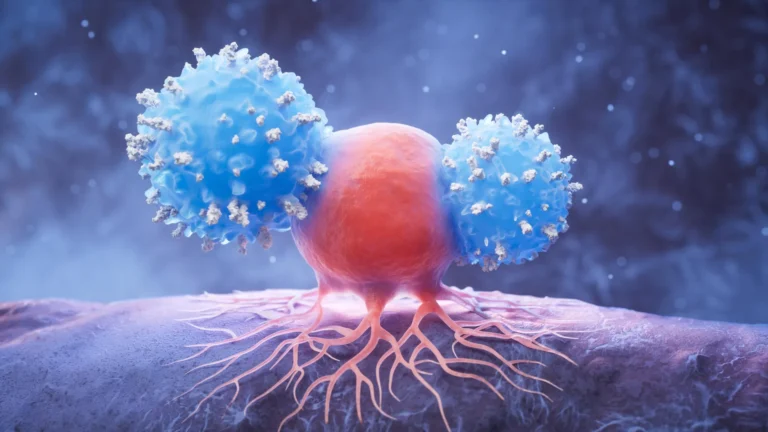
Once these antigens are produced, the immune system—specifically dendritic cells—acts as the bridge. Dendritic cells capture these protein fragments, process them, and "present" them to T cells, the "assassin" cells of the immune system. Once trained, these T cells become programmed to hunt down any cell carrying those specific tumor markers, effectively turning the body’s own defensive architecture against the malignancy.
The cDC1 Paradigm: A Long-Held Assumption
For years, the scientific consensus focused on a specific subtype of dendritic cell known as cDC1. In immunology, cDC1 cells are celebrated as the primary "coaches" for CD8+ T cells, which are the T cells most capable of killing virally infected or cancerous cells. Because of this well-established role, researchers assumed that cDC1 cells were the indispensable gatekeepers of the mRNA vaccine response.
The prevailing hypothesis was simple: if you want a powerful T cell response, you need cDC1 cells. However, this assumption had not been rigorously tested in the context of mRNA-based cancer vaccination until the team at Washington University, led by Dr. Kenneth M. Murphy and Dr. William E. Gillanders, decided to challenge it.
Chronology of the Discovery
The research team embarked on a multi-phase investigation using sophisticated mouse models to deconstruct the immune response.
- Phase I: The Depletion Study. The researchers created mouse models that lacked either cDC1 cells or a closely related subtype called cDC2 cells. This allowed them to observe what happened to the vaccine’s efficacy when one "key" player was removed.
- Phase II: The Challenge. The mice were vaccinated with an mRNA cancer vaccine and subsequently exposed to sarcoma tumors.
- Phase III: The Unexpected Result. Contrary to the hypothesis, mice lacking cDC1 cells still mounted a robust T cell response and successfully eliminated the sarcoma tumors.
- Phase IV: Pinpointing the Substitute. With cDC1 absent, the team turned their attention to the cDC2 population. They found that cDC2 cells were not merely bystanders; they were stepping into the role of primary T cell activators, compensating for the loss of their counterparts.
- Phase V: Molecular Fingerprinting. Further analysis revealed that the T cells activated by cDC1 and cDC2 exhibited different molecular signatures, suggesting that while both can initiate an attack, they may do so with distinct nuances.
Supporting Data and the "Cross-Dressing" Mechanism
The most striking finding was the process by which cDC2 cells achieve this activation. Unlike cDC1 cells, which typically produce the protein directly from the mRNA, cDC2 cells appear to utilize a more communal approach known as "cross-dressing."
In this scenario, other cells in the body take up the mRNA instructions and manufacture the tumor proteins. These cells then break the proteins into fragments and display them on their surface. Through the process of cross-dressing, these cells transfer the entire membrane complex—containing the protein fragment—to the cDC2 cells. Once the cDC2 cells are "dressed" in these fragments, they are able to present them to T cells to launch an immune assault.
This discovery is significant because it indicates that the immune system is far more resilient and adaptable than previously thought. The presence of two distinct pathways for antigen presentation provides a safety net, ensuring that even if one population of dendritic cells is suppressed by the tumor environment, the other can potentially maintain the momentum of the anti-tumor response.
Official Perspectives: Translating Findings to the Clinic
The study, published in the journal Nature, carries significant weight for the future of oncology. Dr. Kenneth M. Murphy, senior author and Eugene Opie Centennial Professor of Pathology & Immunology at WashU Medicine, emphasized the importance of dissecting these complex cellular interactions.
"There is a lot of interest in applying the mRNA vaccine approaches used during the COVID-19 pandemic to the problem of inducing anti-tumor immunity," Dr. Murphy stated. "By dissecting which immune cells are involved and how they coordinate the response, we’re offering vaccine developers some additional mechanistic insights to consider in their goal of optimizing these vaccines against tumor proteins."
Dr. William E. Gillanders, co-corresponding author and a surgical oncologist at Siteman Cancer Center, echoed this sentiment, highlighting the clinical potential. Dr. Gillanders, who has developed an investigational vaccine for triple-negative breast cancer, noted: "This work uncovers a new way mRNA vaccines engage the immune system—through both cDC1 and cDC2—which helps explain their power and gives researchers concrete targets for making future mRNA cancer vaccines more effective."
Implications for Future Oncology
The implications of this study are far-reaching. By identifying that both cDC1 and cDC2 are critical, researchers can now move toward "precision immunology." Here are the primary ways this knowledge may change the future of cancer treatment:
1. Improved Vaccine Formulation
Current vaccine designs often aim to stimulate the most common immune pathways. Knowing that both dendritic subtypes are involved allows scientists to create "dual-target" vaccines that optimize the stimulation of both cDC1 and cDC2 cells simultaneously, potentially creating a more potent and longer-lasting immune response.
2. Personalized Dosing and Patient Stratification
The study suggests that some patients may naturally have more active cDC1 or cDC2 populations. By analyzing a patient’s immune profile before vaccination, clinicians might be able to predict who will respond best to standard mRNA vaccines and who might require additional adjuvants to "boost" one of the two dendritic cell pathways.
3. Overcoming Tumor-Induced Suppression
Many cancers survive by actively suppressing the immune system, often by targeting dendritic cells. If a tumor successfully inhibits cDC1 cells, the knowledge that cDC2 cells can take up the slack provides a potential target for therapeutic intervention. Therapies could be designed to specifically protect or "supercharge" the cDC2 population when cDC1 cells are failing.
4. Broadening the Scope of Treatment
Because the study demonstrated the efficacy of this mechanism against sarcoma—a tumor type known for being notoriously difficult to treat—it provides a template for tackling other solid tumors. The fact that the immune response remains effective even when the "primary" cell type is absent suggests that mRNA vaccines may be more robust than we initially dared to hope.
Conclusion: A New Chapter in Immunotherapy
The research conducted at Washington University School of Medicine serves as a profound reminder of the complexity of the human immune system. What began as a question about a single cell type has evolved into a comprehensive understanding of how the body can be "taught" to defeat cancer.
As mRNA technology continues to mature, the focus is shifting from simply "does it work?" to "how can we make it work better for everyone?" By uncovering the cooperative roles of cDC1 and cDC2 cells, researchers have added a vital piece to the puzzle. This newfound mechanistic clarity is not just a triumph of basic science; it is a beacon of hope for patients facing diagnoses that were once considered terminal. As we move into the next phase of cancer vaccine development, the ability to fine-tune the immune system’s response promises a future where cancer is not just treated, but systematically and intelligently cleared by the body’s own defenses.