









In the landscape of modern fitness, the "plank" has long reigned supreme as the gold standard for core development. Yet, for millions of adults over the age of 60, the traditional plank—a move requiring significant wrist mobility, shoulder stability, and spinal endurance—often becomes a source of injury rather than a path to health. As the body ages, the focus of physical training must shift from high-intensity strain to functional, sustainable, and joint-friendly movement.
According to Andrew Menechian, Co-Founder and Head of Fitness at FitCommit, the secret to building a resilient core in your later years isn’t found on a gym floor, but rather in the comfort of your own bedroom. By utilizing the stability of a mattress, older adults can bypass the joint stress that often leads to burnout and injury, effectively rebuilding the "biological girdle" that protects the spine and powers daily life.
The Critical Role of Core Stability in Aging
Everyday movement is a complex chain reaction. Whether you are lifting a bag of groceries, navigating an uneven sidewalk, or simply rising from a seated position, your core acts as the transmission system of your body. It is responsible for transferring power between the upper and lower limbs while maintaining the structural integrity of the spine.
"A strong, stable core is not just about aesthetics," Menechian explains. "It is the prerequisite for independence." When the core weakens—a common byproduct of sedentary habits or age-related muscle loss—balance suffers, the risk of falls increases, and chronic lower back pain becomes a persistent shadow.
Traditional exercises like planks are excellent, but they carry a high barrier to entry. If an individual’s wrists, shoulders, or lumbar spine are compromised, the core muscles are often forced into a compensatory pattern, never receiving the intended stimulation. Bed-based training changes this dynamic by providing a supportive surface that allows the user to focus on deep-muscle engagement without the fear of falling or the pain of weight-bearing on sensitive joints.
Expert Insight: Why Bed-Based Training Wins
Menechian, who has spent over 12 years in the fitness industry and mentored more than 100 personal trainers, emphasizes the psychology of fitness as much as the physiology.
"I advocate for bed-based core work for older adults because it removes the intimidation factor and joint stress," he notes. "When you remove the need to support your body weight through your hands or shoulders, you can actually focus on the fundamentals: bracing, breathing, and controlled movement. For someone over 60, that shift in approach can be the difference between maintaining a consistent routine three times a week and quitting because the setup itself hurts."
By removing the "gravity load" on the upper body, these movements isolate the abdominal wall, obliques, and deep pelvic floor muscles, ensuring that the core is actually doing the work, rather than the joints acting as structural crutches.
The Four Pillars of Bed-Based Core Strength
To rebuild your foundation, Menechian suggests four fundamental movements that can be performed immediately upon waking or before retiring for the night.

1. The Breathing Brace
Before any movement can be effective, one must master control. The "Breathing Brace" is the foundation of all core stabilization.
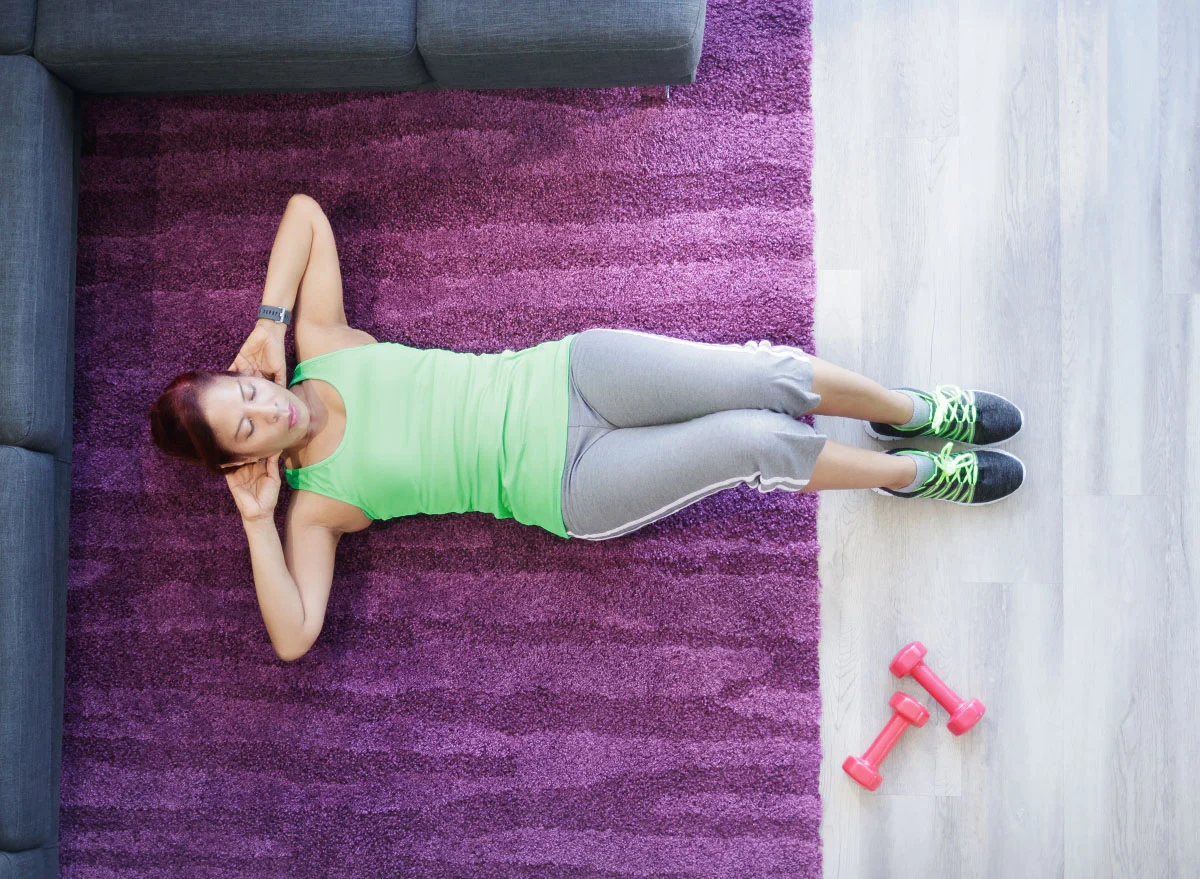
- The Technique: Lie flat on your back with your knees bent and feet flat on the mattress. Place your hands on your lower ribcage. Inhale deeply through your nose, feeling your ribs expand outward into your hands. As you exhale, imagine drawing your belly button toward your spine while simultaneously tightening your abdominal muscles as if you were bracing for a light punch.
- The Goal: This creates "intra-abdominal pressure," which acts as a natural corset for your spine. Perform this for 10 repetitions, focusing on the quality of the contraction rather than speed.
2. Heel Taps: Controlled Limb Movement
Once the brace is mastered, the goal is to move the legs without disturbing the stability of the spine.
- The Technique: From the same starting position, lift one leg so the knee is at a 90-degree angle. With your core braced, slowly lower the heel to tap the bed surface and return to the starting position. Alternate legs, ensuring your lower back remains pressed against the surface throughout the movement.
- The Goal: This exercise teaches the core to resist the tendency of the lower back to arch when the legs move, a crucial skill for preventing back strain during daily activities.
3. Bent-Knee Fall-Outs: Resisting Rotation
"This move trains the core to resist rotation, which is vital for walking, turning, and getting in and out of a vehicle," says Menechian.
- The Technique: Lie on your back, knees bent, feet together. Slowly let one knee fall out to the side as far as you can while keeping the opposite hip pinned firmly to the bed. Engage your core to bring the knee back to the center.
- The Goal: By resisting the urge to let your entire pelvis roll with your leg, you force the deep stabilizers of the core to activate, improving balance and pelvic stability.
4. Glute Bridges with Pause
While often considered a "glute" exercise, the bridge is, in fact, a full-trunk integration movement.
- The Technique: Lie on your back, knees bent, feet hip-width apart. Drive through your heels to lift your hips toward the ceiling. At the top of the movement, squeeze your glutes and maintain a "braced" core for three seconds before slowly lowering back down.
- The Goal: Bridges train the glutes and the trunk to work as a singular unit. This prevents the lower back from overcompensating during the lift, effectively strengthening the posterior chain which is essential for standing upright and maintaining good posture.
Implications for Long-Term Health
The implications of adopting a bed-based training routine extend far beyond the bedroom. Clinical data consistently shows that individuals with higher core strength exhibit better gait mechanics and a significantly lower incidence of falls.
Furthermore, the psychological benefit of "movement success" cannot be overstated. When a patient feels empowered to exercise without pain, they are statistically more likely to adhere to long-term health protocols. By integrating these four movements into a daily ritual, the over-60 demographic can reclaim their physical autonomy.
This approach serves as a bridge between a sedentary lifestyle and more vigorous activity. By mastering these movements, the individual prepares their body for the rigors of more advanced physical activity, creating a virtuous cycle of strength and mobility.
Conclusion: Start Small, Stay Consistent
The journey to a stronger core does not require a gym membership or expensive equipment; it requires only the commitment to show up for your body every single day. As Andrew Menechian suggests, the key is consistency over intensity. By focusing on the "Breathing Brace," "Heel Taps," "Bent-Knee Fall-Outs," and "Glute Bridges," you are building a structure that will support your mobility for years to come.
In the words of the fitness expert, the best exercise is the one you can perform comfortably, safely, and consistently. By starting your day with these simple, controlled movements, you are not just exercising; you are investing in the foundation of your future independence.