









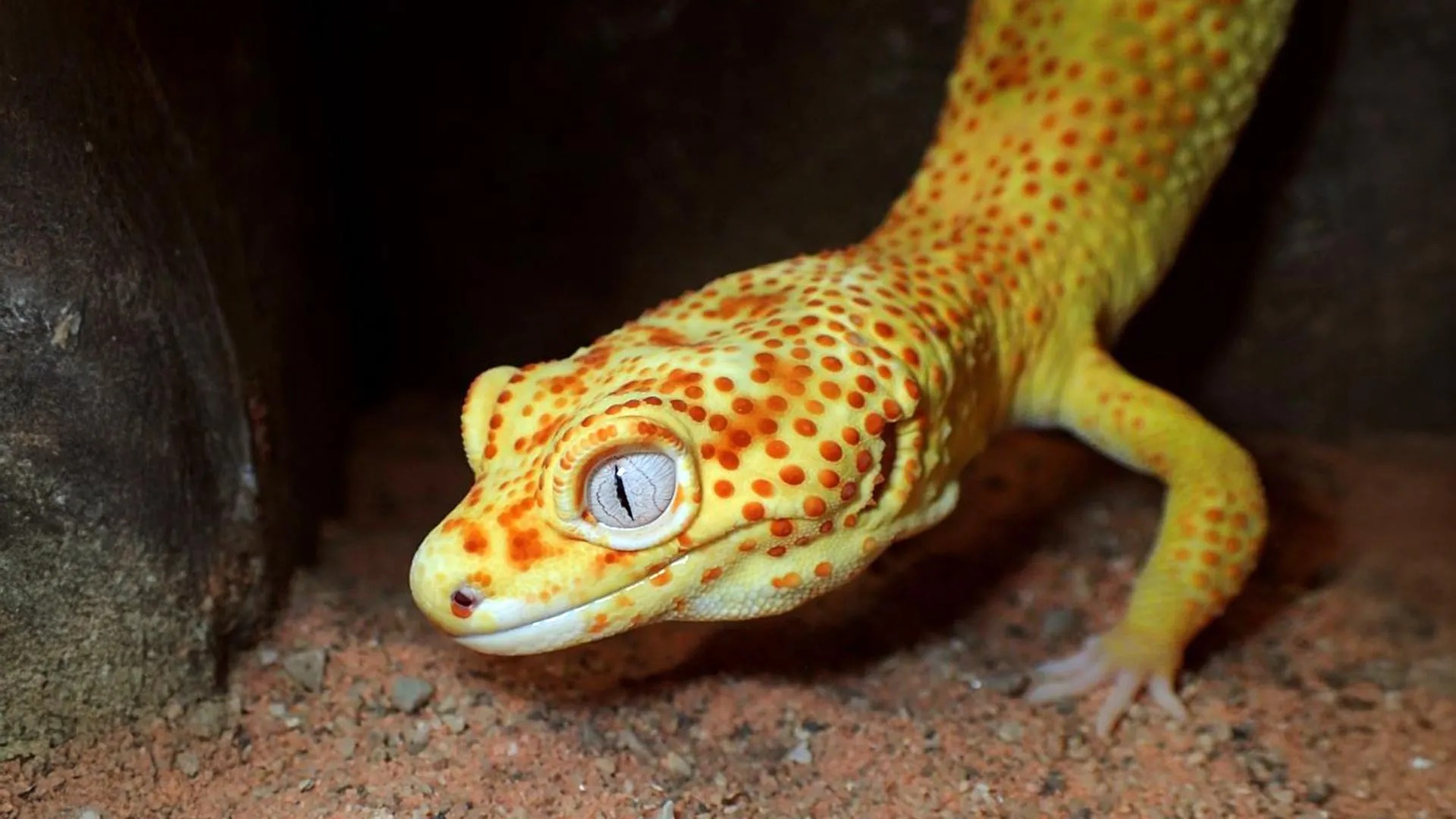
In the specialized world of reptile husbandry, the "lemon frost" leopard gecko is renowned for its striking, iridescent white-and-yellow aesthetic. However, beneath this vibrant exterior lies a biological narrative that has captured the attention of the global scientific community. A groundbreaking study, spearheaded by the University of Nottingham and published in the journal BMC Biology, reveals that this specific gecko morph possesses a naturally occurring, high-frequency susceptibility to cancer—a trait that may transform our understanding of tumor development, metastasis, and potential human therapies.
The Main Facts: An Unlikely Laboratory Model
For decades, cancer research has relied heavily on traditional models, primarily laboratory mice. While these animals have provided foundational knowledge, they often require researchers to artificially induce tumor growth through genetic engineering or chemical exposure. In stark contrast, the lemon frost leopard gecko offers a rare, natural alternative.
Research indicates that approximately 80% of individuals within this specific morph develop aggressive, malignant tumors at a relatively early age. Unlike the controlled, sterile environments of a lab, these geckos develop cancer spontaneously. The tumors, identified as iridophoromas, are highly aggressive and prone to metastasis—the process by which cancer cells spread to other parts of the body. By studying a species where cancer emerges as a natural byproduct of its genetic lineage, scientists gain a unique opportunity to observe the disease in a "real-world" biological context.
A Chronological Perspective: From Mutation to Medical Discovery
The history of the lemon frost gecko is a cautionary tale of selective breeding. The morph emerged from a spontaneous genetic mutation within a large commercial breeding colony. Breeders, drawn to the animal’s unique, glowing coloration, sought to replicate the trait through intensive selective breeding.
However, the unintended consequence of this aesthetic pursuit was the amplification of a genetic predisposition to cancer. As the lineage expanded, breeders and hobbyists began to notice a disturbing trend: a significant portion of these geckos were succumbing to tumors that grew rapidly and metastasized.
Recognizing the biological implications of this phenomenon, an international team of researchers—including experts from the University of Nottingham, the University of Birmingham, Marquette University, the University of Florida, and the University of Trieste—launched a comprehensive study. By analyzing the genome of these animals, the researchers successfully mapped the genetic architecture of the tumors, identifying the specific mutations that drive the malignancy. This work has bridged the gap between niche reptile genetics and high-level oncology, effectively turning a "pet trade error" into a biological goldmine.
Supporting Data: Genomic Parallels and Shared Pathways
The core of the study involved whole-genome sequencing, a process that allowed researchers to compare the DNA of cancerous tissues with healthy tissue taken from the same geckos. The results were striking. The genomic analysis revealed a recurring set of mutations that govern tumor growth in the lemon frost morph.
Crucially, many of these identified genetic pathways are evolutionarily conserved, meaning they function in much the same way in humans as they do in reptiles. The genes involved in cell cycle regulation, DNA repair, and programmed cell death—all of which are pillars of human oncology—were found to be disrupted in the geckos.
By utilizing bioinformatics tools traditionally reserved for human clinical data, the research team was able to confirm that the biological "machinery" driving the gecko’s cancer is eerily similar to that found in human patients. This confirms that the lemon frost gecko is not merely a medical curiosity, but a viable, high-fidelity model for testing new hypotheses about how tumors evolve, how they resist treatment, and how they achieve systemic spread.
Official Responses: The Scientific Community Weighs In
The study has drawn praise for its interdisciplinary approach and its emphasis on comparative biology. Dr. Ylenia Chiari, the lead researcher from the University of Nottingham, emphasizes the strategic importance of this discovery:
"By studying why some animals are so susceptible to cancer while others are remarkably resistant, we hope to uncover the different ways species have evolved to deal with cancer," Dr. Chiari stated. "Specifically, this gecko could become an incredible model in cancer research because tumors appear naturally at a relatively early age. Together, these natural strategies could inspire new ways of preventing, detecting, and treating cancer in humans."
Brandon Hastings, a PhD researcher and co-author of the study, highlighted the methodological significance of the work: "Overall, our paper demonstrates the importance of looking across the tree of life in search of answers that are needed to better understand diseases that can have a profound impact on human life, such as cancer. Methodologically, it also highlights that the variety of genomic software programs developed to analyze human cancers can be adapted to provide meaningful insights in diverse organisms."
Dr. Scott Glaberman, from the University of Birmingham, underscored the broader philosophical shift required in medical research: "We often look inward to solve human problems, but every species has something to teach us. By studying both animals that are vulnerable to cancer and those that resist it, we have far greater power to understand the disease itself. This is one of the many reasons why protecting biodiversity is so important."
Implications: The Future of Comparative Oncology
The implications of the lemon frost gecko study are manifold. First, it challenges the traditional reliance on synthetic models. If researchers can study a naturally occurring, aggressive cancer in a vertebrate, they can identify biomarkers of progression that may be missed in laboratory mice.
Second, this research invites a paradigm shift in how we perceive biodiversity. For years, environmental conservationists have argued for the protection of species based on ecosystem health. Now, there is a burgeoning medical argument for conservation: the "genomic library" of the natural world contains solutions to human health crises that we have yet to discover. The leopard gecko, a creature once valued only for its appearance, has proven that the secrets to longevity and disease resistance are scattered across the animal kingdom.
A New Frontier in Personalized Medicine
Furthermore, the study highlights the potential for "comparative oncology" to accelerate drug development. By testing therapies on tumors that share human genetic profiles, researchers may be able to fast-track the efficacy testing of novel compounds. If a treatment can effectively halt the progression of an iridophoroma in a gecko, it offers a compelling basis for human clinical trials.
Ethical Considerations
While the use of these geckos in research is promising, it also raises ethical questions regarding the pet trade. The lemon frost saga demonstrates the dangers of "aesthetic-first" breeding, where traits are selected without regard for the physiological health of the animal. Scientists hope that by shedding light on the genetic basis of the lemon frost cancer, they can help breeders avoid similar mistakes in the future, while simultaneously utilizing the existing population to further medical progress.
Conclusion: Lessons from the Tree of Life
The story of the lemon frost leopard gecko is a testament to the unpredictable nature of scientific discovery. What began as an issue of selective breeding in the private sector has evolved into a sophisticated study of human-like cancer mechanisms. As researchers continue to map the genetic landscape of this resilient, yet vulnerable, reptile, they are reminded of a fundamental truth: the answers to our most complex medical challenges are not always hidden in the lab—they are often hiding in plain sight, living within the biodiversity that surrounds us.
By integrating genomic data with ecological observation, the team led by the University of Nottingham has paved the way for a more diverse, nuanced, and effective approach to oncology. The lemon frost gecko, in its quiet, colorful way, may ultimately play a pivotal role in helping humanity conquer one of its most persistent and formidable enemies.