





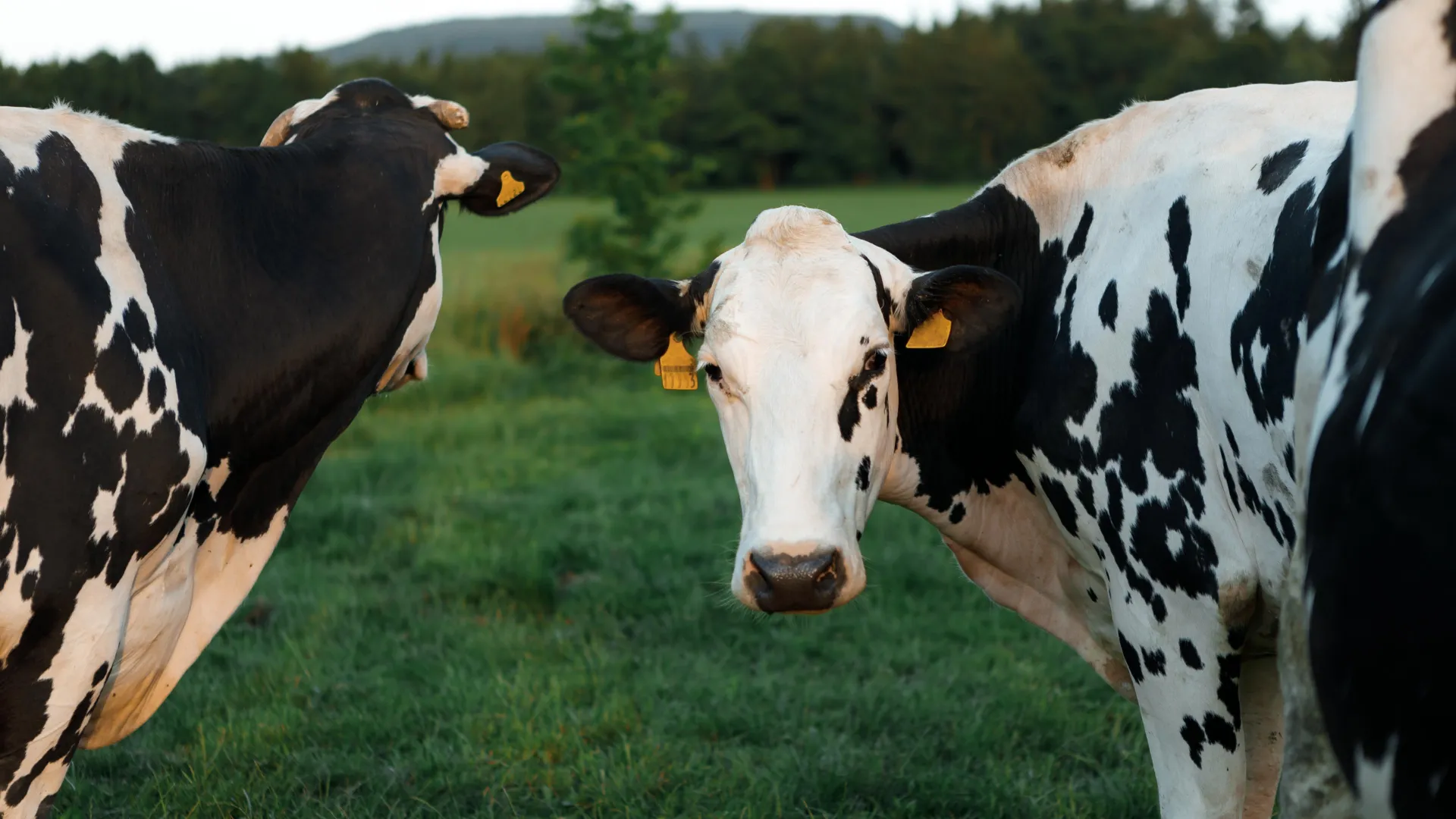
When the first reports of a mysterious illness began trickling out of the Texas Panhandle in early 2024, the veterinary community braced for the usual suspects. Dairy cows, known for their robust health, were suffering from a painful, inflammatory condition that halted milk production and left them lethargic. Veterinarians looked for the typical bacterial pathogens that cause mastitis, the standard "enemy" in milk-producing herds.
What they found instead was a biological curveball that would baffle scientists for months: Highly Pathogenic Avian Influenza (HPAI) H5N1.
The virus was behaving in a way that defied decades of influenza orthodoxy. It was not attacking the lungs, as respiratory viruses are "supposed" to do. Instead, it was concentrating its destructive force entirely in the mammary glands. Now, a groundbreaking study from the University of Pittsburgh School of Public Health, published in Science Advances, has finally unmasked the biological mechanism behind this anomaly, providing a roadmap for how we might predict the next zoonotic spillover.
The Chronology of an Unexpected Outbreak
The emergence of H5N1 in U.S. dairy cattle caught the global scientific community entirely off guard. Prior to 2024, the scientific consensus held that cattle were not significant hosts for avian influenza viruses.
Early 2024: The Initial Detection
The crisis began when dairy producers in Texas reported cows experiencing necrotizing mastitis. These animals exhibited thick, discolored milk and a sharp drop in overall milk yield. Because mastitis is typically bacterial, initial diagnostic efforts focused on common farm pathogens.
The Realization
When diagnostic labs confirmed the presence of H5N1, the veterinary world was stunned. "We hadn’t even remotely considered that cattle could be a host for H5N1," said Dr. Suresh Kuchipudi, chair of Infectious Diseases and Microbiology at Pitt Public Health. The virus had seemingly bypassed the respiratory tract entirely, moving instead through the milking process, as cows were exposed to contaminated equipment and close contact within milking parlors.
The Spread and Public Health Implications
As the virus jumped from herd to herd, the concern shifted from animal welfare to human occupational safety. Farm workers in direct contact with infected cattle were at risk of zoonotic transmission. Furthermore, the practice of feeding raw milk to domestic animals—such as farm cats—led to devastating outcomes, with reports of feline mortality linked to the consumption of infected milk. Dr. Kuchipudi has consistently emphasized that while pasteurization effectively kills the virus, the consumption of raw milk remains a significant, preventable public health risk.
Searching for the Biological "Why": The Science of Glycomics
To understand why the virus chose the udder over the lungs, researchers had to dive deep into the world of molecular biology. Influenza viruses do not simply enter cells; they must "dock" onto specific structures known as glycan receptors. These sugar-based molecules act as keys, allowing the virus to unlock the cell membrane and inject its genetic material.
The Discrepancy
Early research suggested that the "locks" required for flu viruses were abundant in the cow’s respiratory system. If these receptors were present in the nose and trachea, why were the cows not coughing?
"Glycan biology is very complex," Dr. Kuchipudi explained. "We realized that, to understand what was really going on, we would need to use more innovative technologies and map out the fine-detailed architecture that enables the virus to bind to cells."
The Methodology
To solve the puzzle, the Pitt team partnered with Dr. Lauren E. Pepi of Harvard Medical School, an expert in glycomics. By combining binding experiments with staining approaches and ultra-high-resolution imaging, the team began to map the molecular landscape of bovine tissues.
The team discovered that the virus was highly selective. It was not interested in the general glycans found in the respiratory tract. Instead, it was specifically targeting a subtype known as N-linked sialic acid receptors.
When the researchers mapped these specific receptors, they found a startling concentration in the mammary glands, while they were nearly absent in the airway tissue. The udder, it turned out, was the "perfect breeding ground" for the virus—a specialized, high-density environment that allowed the virus to replicate with terrifying efficiency.
Supporting Data: The Anatomy of Infection
The Science Advances paper presents a comprehensive look at the receptor distribution that dictates viral tropism (the ability of a virus to infect specific cells). The data clearly demonstrates:
- Tissue Tropism: While influenza typically favors the sialic acid-rich environment of the mammalian respiratory tract, H5N1 in cattle has undergone a shift in tissue preference.
- Receptor Density: High-resolution imagery revealed that the udder tissue provides a significantly higher density of the necessary N-linked sialic acid receptors compared to the bovine lung, explaining why respiratory disease was largely absent.
- Viral Shedding: The study confirms that the high viral load in the milk is a direct result of the virus’s successful replication in the mammary epithelial cells, turning the act of milking into a primary transmission vector between cows.
This study marks the first time that the "lock-and-key" mechanism has been clearly defined for H5N1 in cattle, settling the debate over why the virus ignored the respiratory system in favor of the mammary system.
Official Responses and Public Health Vigilance
The U.S. Department of Agriculture (USDA) and various public health agencies have been working in tandem to contain the spread. The USDA’s National Institute of Food and Agriculture played a critical role in funding this research, recognizing that understanding the mechanism of infection is the only way to develop effective vaccines or containment protocols.
Public health officials continue to stress:
- Pasteurization is Gold Standard: Commercial milk remains safe. The heat-treatment process of pasteurization is highly effective at inactivating the H5N1 virus.
- Biosecurity: Farms are being encouraged to implement strict biosecurity measures, including the isolation of sick animals and the disinfection of milking equipment.
- Monitoring: The findings from the Pitt study are now being integrated into surveillance programs to monitor for viral mutations that might shift the virus’s affinity back toward the respiratory system—a change that could significantly increase the risk of human-to-human transmission.
Implications: Predicting the Next Move
Perhaps the most significant aspect of this research is its predictive power. By understanding the glycan receptor requirements of H5N1, scientists can now perform "preemptive screenings" on other species.
"We can screen different species and different tissues within them for susceptibility," Dr. Kuchipudi noted. "If we know the receptor architecture of a potential new host, we can predict whether the virus will manifest as a respiratory infection, a neurological one, or something else entirely."
This shift in strategy moves the field from a reactive posture—where veterinarians were left scrambling to identify a "mystery" pathogen—to a proactive one. By mapping the vulnerability of animal populations, researchers can better anticipate where the virus might jump next and what form that infection might take.
A New Frontier in Virology
The Pitt Public Health study serves as a masterclass in how modern molecular biology can decode complex disease patterns. It highlights that viruses are dynamic, evolutionary entities that will exploit whatever biological niches are available to them.
The research team, which included experts from Pennsylvania State University, Harvard, and North Dakota State University, has provided more than just an answer to the "cow mystery." They have provided a template for future zoonotic research. As we look toward the future, the ability to predict the behavior of H5N1 will be essential to protecting both global food security and public health.
The story of H5N1 in cattle is a reminder that the natural world is full of biological surprises. However, through rigorous science and interdisciplinary collaboration, we are becoming better equipped to read the signals, identify the threats, and prevent the next pandemic before it gains a foothold.
The research was supported by Pitt Public Health and the U.S. Department of Agriculture’s National Institute of Food and Agriculture (Grant #FP00039373/AWD00010780).