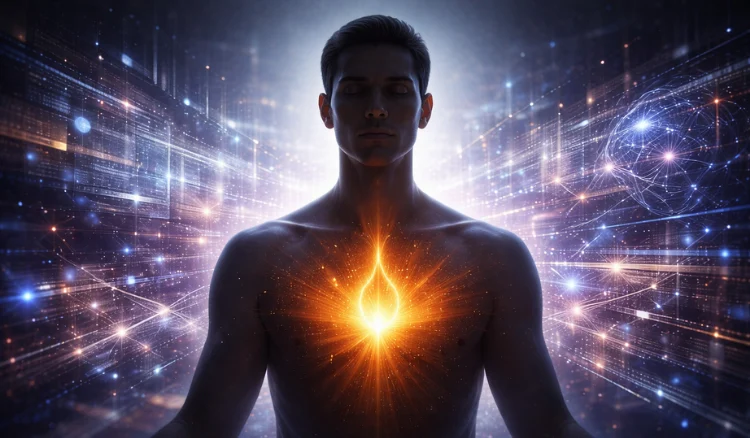












In the modern era, health is often reduced to clinical metrics: blood pressure, cholesterol levels, and caloric intake. Yet, for thousands of years, the Ayurvedic system has offered a more expansive, holistic framework—one that views the human body not merely as a biological machine, but as a microcosm of the entire universe. To understand Ayurveda is to understand the "Pancha Maha Bhutas," or the five great elements, and the profound journey of consciousness as it descends into matter.
The Foundations: Understanding the Five Great Elements
At the heart of Ayurvedic philosophy lies the concept that all creation—organic and inorganic—is composed of five fundamental elements: ether (space), air, fire, water, and earth. It is crucial to distinguish these from the elements found on the periodic table. In Ayurveda, these are not chemical building blocks, but states of matter and stages of existence.
- Ether (Akasha): The field in which matter appears. It represents potential, expansiveness, and the subtle space required for existence to manifest.
- Air (Vayu): The principle of movement. It facilitates growth, respiration, and the movement of impulses within the body and mind.
- Fire (Tejas): The transformative force. It governs digestion, metabolism, and the ability of the body to process information and nutrients.
- Water (Jala): The cohesive factor. It provides the fluid medium that holds structures together, lubricates, and facilitates circulation.
- Earth (Prithvi): The grossest form of matter. It provides structure, stability, and physical form to all things.
These elements exist on a spectrum of subtlety, with ether being the most refined and earth being the most tangible. When we look at a cucumber, for instance, we see these elements in action: earth provides its structure, water keeps it succulent, fire allows it to ripen, air facilitates its cellular growth, and ether provides the space within the fruit for these processes to occur.
The Law of Balance: Like Increases Like
Ayurveda operates on a fundamental natural law: like increases like, and opposites balance. This principle dictates how we interact with our environment. If an individual experiences excessive heat and burning sensations during the summer, they are manifesting an excess of the fire element. To restore balance, Ayurveda suggests consuming foods with "opposite" qualities—such as the cucumber, which is cooling, heavy, and moist. Conversely, consuming that same cooling cucumber during a cold, damp winter could be detrimental to someone already struggling with congestion or a runny nose.
This elemental classification extends to the six tastes—sweet, sour, salty, pungent, bitter, and astringent—each representing a specific combination of elements. By understanding the energetic potency, post-digestive effect, and the qualitative nature of substances, Ayurvedic practitioners can tailor diet and lifestyle to maintain the internal equilibrium required for optimal health.
The Evolutionary Journey: From Consciousness to Matter
The term Pancha Maha Bhuta derives from the Sanskrit root bhu, meaning "to become." This reflects the Sankhya philosophy, which describes the descent of consciousness into the physical world. This process mirrors the "Logos" or "Word" described in the Gospel of John, where primordial vibration acts as the spark for creation.
In Sankhya cosmology, creation begins at an incomprehensible, dimensionless point—a singularity. This singularity manifests as the primordial vibration, often identified as "Om" or the "Amen." From this vibration, the fabric of space-time is generated, condensing consciousness into three primary qualities known as the Gunas:
- Sattva (Transparency/Beingness): The state of clarity from which the observer and the mind arise.
- Rajas (Movement/Passion): The force that connects the observer to the observed.
- Tamas (Inertia/Matter): The state of density that forms the objective, physical world.
This process gives rise to Ahamkara (the ego or individual identity), a biological necessity that allows for the diversity of life forms. Through the senses, we interact with the objective world of Tamas, yet we retain the potential to return to the source.
The Ultimate State of Health: Swasthya
In the West, health is often defined as the absence of disease. In Ayurveda, the ultimate goal is Swasthya, which translates to "being situated in the Self." This is a state of expansive awareness where the mind is fully functional yet free from the fluctuations of ego and desire.
Much like a drop of water merging into the ocean, the individual human consciousness can align with the universal singularity. When the mind is emptied of content, it reflects the silence that serves as the substratum of the universe. This state of liberation, or enlightenment, is seen as the pinnacle of human existence, where the body becomes a mirror for pure being, intelligence, and bliss—Sat, Chit, and Ananda.
Chronology of Elemental Manifestation
To grasp how consciousness becomes physical matter, we must look at the progression of the elements:
- Ether (Sound): The first manifestation. We perceive it through the ears. It is the all-pervading "home" for the universe.
- Air (Touch): When vibration gains direction, it becomes air. We perceive this through the skin. It is mobile and dry.
- Fire (Vision): Movement creates friction, which generates heat and light. We interact with this through sight. It is sharp and transformative.
- Water (Taste): Radiant heat leads to the liquefaction of ethereal elements, creating a cooling, fluid state.
- Earth (Smell): As energy cools and consolidates, it crystallizes into the dense, solid form of earth, which we perceive through smell.
This evolutionary hierarchy explains why earth is considered the most "complete" manifestation—it contains the sensory potential of all preceding elements.
Supporting Data: Substance, Quality, and Action
Ayurvedic practice relies on the understanding that substance is an inseparable conjugation of quality and action. "Substance" is the essence of matter, but "quality" is its hidden potential energy. When we ingest a substance, we ingest its qualities, which in turn dictate the action performed within our physiology.
These qualities are not static; they are relative to the context of time and space. A chair, for example, is considered "stable" to a human sitting in a room, but to an observer on the moon, that same chair is moving at the speed of the Earth’s rotation. Thus, Ayurveda teaches that health is a dynamic, shifting process rather than a static goal. We must constantly calibrate our internal environment to match the changing external environment.
Clinical Implications and Modern Relevance
The implications of this system for modern medicine are significant. As chronic lifestyle diseases rise, the Ayurvedic emphasis on the "subtle" aspects of health—the mind, the senses, and the energetic impact of food—offers a necessary counterbalance to the strictly pharmacological approach.
- Preventative Care: By identifying an individual’s elemental constitution (Prakriti), practitioners can predict susceptibility to certain imbalances before they manifest as physical pathology.
- Sensory Integration: Modern science is only beginning to understand the impact of sensory environment on the nervous system. Ayurveda’s classification of the five Tanmatras (subtle elements) provides a roadmap for how sound, touch, light, taste, and smell influence our internal state.
- Mind-Body Connection: The Ayurvedic view that the mind is a subtle product of creation validates the necessity of meditation and mental hygiene in maintaining physical health.
Conclusion: A Philosophy of Gratitude
The Ayurvedic lens does not merely provide a diagnostic tool; it offers a profound perspective on the nature of existence. By recognizing that we are composed of the same elements that sustain the mountains, the oceans, and the stars, we foster a sense of connection with the cosmos.
As we navigate the complexities of modern life, the wisdom of the Pancha Maha Bhutas serves as a reminder that we are part of a larger, intelligent design. Whether through the food we eat or the silence we cultivate, we are constantly participating in the play of consciousness. In this light, health becomes an act of gratitude—a recognition of the compassion of the "Great Mother" in providing the elements that create, sustain, and eventually redeem our physical form.