











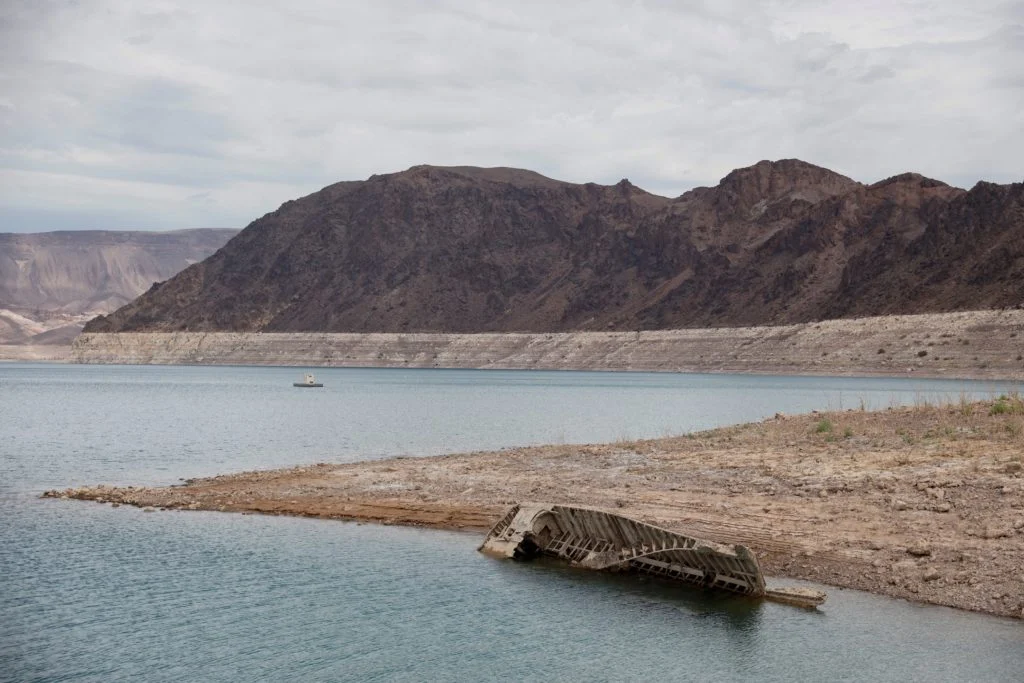
The Colorado River, once the lifeblood of the American West, is currently at a historic breaking point. Providing water to 40 million people across seven U.S. states and northwestern Mexico, the river system is buckling under the weight of a two-decade "megadrought" and a century of over-allocation. With negotiations between states stalled by decades of gridlock, the federal government has finally intervened, signaling an end to the era of voluntary cooperation and the beginning of a period of mandated, painful austerity.
This report, part of our Tipping Point series, examines why the West’s most vital artery is running dry and what the federal government’s new, unprecedented regulatory blueprint means for the future of the region.
The Roots of the Crisis: A 1922 Miscalculation
To understand why the Colorado River is failing, one must look back to 1922. The Colorado River Compact, signed that year, was intended to divide the river’s bounty among the Upper Basin (Colorado, Wyoming, Utah, New Mexico) and the Lower Basin (California, Arizona, Nevada).
The fatal flaw of this historic agreement was mathematical: it allocated 7.5 million acre-feet of water to each basin, based on data collected during an unusually wet period. The agreement treated these allocations as static numbers rather than percentages of the river’s actual flow. Consequently, the Compact promised water that simply did not exist in the long term.
Over the past 25 years, a climate-change-fueled drought has reduced the river’s annual flow by approximately 20 percent compared to the projections used a century ago. As the "pie" shrinks, the rigid, outdated legal framework of the 1922 Compact has left states in a perpetual state of conflict, unable to reconcile their legal entitlements with the physical reality of a drying basin.
Chronology: From Abundance to Emergency
- 1922: The Colorado River Compact is signed, partitioning the river based on historical overestimations of water flow.
- 1935: Completion of the Hoover Dam creates Lake Mead, the nation’s largest reservoir.
- 1963: The Glen Canyon Dam is completed, creating Lake Powell.
- 2000–2024: The onset of a multi-decadal "megadrought" begins, exacerbated by rising global temperatures, leading to record-low water levels in both Lake Mead and Lake Powell.
- 2022–2023: Federal patience expires as states fail to reach a voluntary consensus on significant consumption cuts.
- 2024: The Bureau of Reclamation releases a comprehensive environmental impact statement, establishing a 10-year management framework that grants the federal government unprecedented control over river discharge and reservoir management.
Supporting Data: The Shrinking Reservoir
The situation is best illustrated by the state of the two "plumbing" systems of the West: Lake Mead and Lake Powell. These reservoirs serve as the primary storage vessels for the entire system. When these levels drop, the ability of the federal government to generate hydroelectric power and deliver water to downstream users is severely compromised.
Current data highlights the following:
- Agriculture Dominance: Approximately 75 percent of the Colorado River’s water is consumed by the agricultural sector, specifically for water-intensive crops like alfalfa, which is often exported.
- Dependency Ratios: Municipalities are increasingly vulnerable. Phoenix, Arizona, relies on the Colorado River for 40 percent of its water; Tucson is 80 percent dependent; and Los Angeles draws 25 percent of its supply from the basin.
- Flow Reduction: The river now carries roughly 1.5 million acre-feet less water than it did when the Compact was first drafted, a structural deficit that is growing wider every year as average temperatures in the Southwest rise.
Official Responses and the Federal Pivot
For decades, the Bureau of Reclamation acted largely as a facilitator for state-led negotiations. However, the escalating crisis has forced a change in strategy. Under the new 10-year plan, the federal government will shift from a passive coordinator to an active manager.
"It is an unprecedented move," says Sarah Porter, director of the Kyl Center for Water Policy at Arizona State University. "We have never seen the federal government assert this level of authority over the river’s operations in the modern era. It signifies that the states have reached the limit of their ability to manage this crisis on their own."
The Bureau’s new blueprint allows for adaptive management. Instead of relying on rigid, historical water rights, the federal government will now adjust water releases based on real-time hydrology. If reservoir levels fall below critical thresholds, the government will mandate cuts to water deliveries, forcing states to decide who loses access to the supply.
The Political and Economic Implications
The most contentious aspect of this new reality is the inevitable clash between agricultural interests and urban population centers. The economic logic is increasingly shifting toward urban preservation.
As climate scientist Brad Udall of Colorado State University noted: "You have large municipalities like Phoenix, which is 40 percent dependent on Colorado River water, or Tucson, perhaps 80 percent dependent, or Los Angeles, 25 percent dependent, that, frankly, can’t take a back seat to agriculture. You can’t have 500 farmers taking water from five million people in Phoenix. It just won’t work politically. It makes no sense economically."
The Future of Western Agriculture
The reality for farmers is sobering. In many cases, "closing the gap" will not be solved by efficiency upgrades or drip irrigation alone. It will likely require a wholesale shift in the agricultural economy of the West. This includes transitioning away from water-intensive forage crops, land fallowing programs, and, in some cases, the permanent retirement of farmland.
The Legal Battleground
The move toward federal intervention is almost certainly a precursor to a protracted legal battle. States that feel their senior water rights are being infringed upon by federal mandates are expected to challenge the Bureau of Reclamation’s authority in the Supreme Court. The legal framework surrounding the Colorado River is a "litigation machine," and as the water grows scarcer, the stakes—and the legal fees—will only increase.
Conclusion: A New Era of Water Scarcity
The era of "whiskey is for drinking, water is for fighting over"—a sentiment famously attributed to Mark Twain—has never felt more relevant. The federal government’s intervention is not a cure, but rather a crisis-management measure. It acknowledges that the era of expansion in the American West is over, replaced by an era of contraction and managed decline.
As we look toward the next decade, the ability of the seven basin states to work within this new federal framework will determine whether the West can avoid a catastrophic collapse of its water supply. For now, the region waits for the full details of the plan, knowing that the days of guaranteed, abundant water are firmly in the past. The river is no longer just a resource to be divided; it is a finite, failing system that will dictate the economic and social survival of the entire region.