











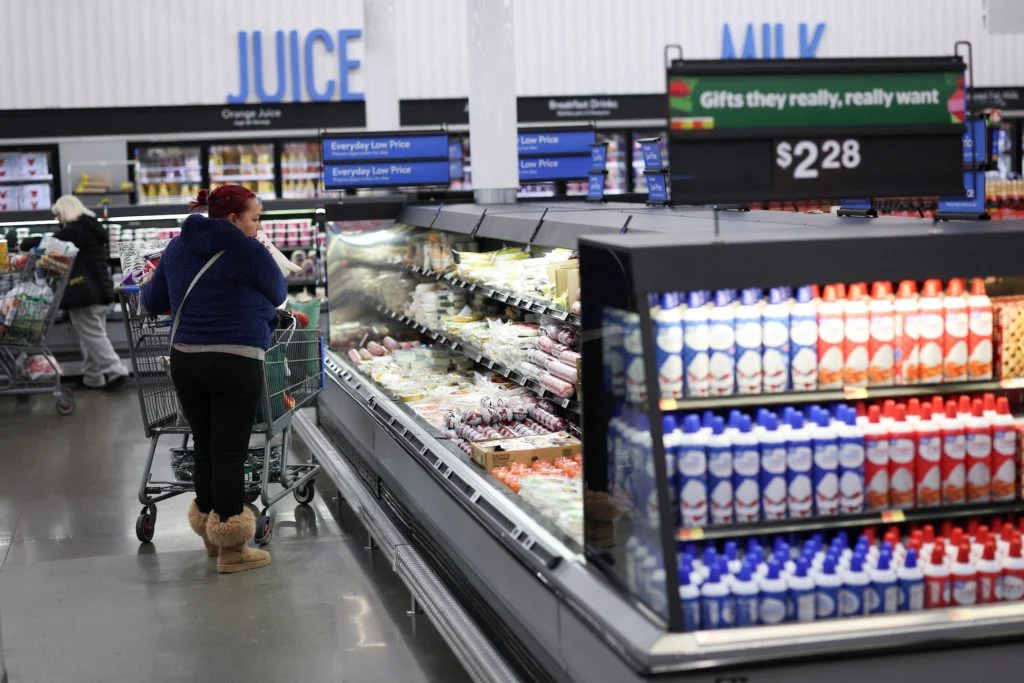
For decades, the average American consumer has stood in the grocery aisle, squinting at an array of cryptic phrases printed on food packaging: “sell-by,” “enjoy-by,” “best-by,” “freeze-by,” and “use-by.” What was intended to provide clarity has instead fostered a culture of uncertainty, leading millions of households to discard perfectly edible food under the mistaken assumption that it has spoiled.
However, a significant shift is underway. California has become the first state in the nation to enact legislation banning public-facing “sell-by” dates, setting a precedent that other states are now racing to follow. This legislative pivot, aimed at standardizing food labeling, is more than just a bureaucratic tweak; it is a critical strategy to address the staggering economic and environmental costs of food waste in the United States.
The Great Label Conundrum: A System Designed for Retailers, Not Consumers
The confusion surrounding food expiration dates is rooted in a fundamental misunderstanding of their purpose. According to industry experts, most of the dates currently found on grocery items were never intended to communicate safety to the end-user.
“A ‘sell-by’ date is actually meant for the retailer,” explains Sara Burnett, Executive Director of ReFED, a national nonprofit dedicated to ending food waste. “It is not actually an indicator for the consumer of consumer safety or anything else around the product.”
For retailers, these dates serve as inventory management tools, signaling when a product should be rotated off the shelf to ensure optimal turnover. When consumers interpret these as safety deadlines, they inadvertently participate in a cycle of waste. With over 50 different variations of date labels currently cluttering the marketplace, the lack of standardization has created a chaotic environment where shoppers often err on the side of caution, tossing out food that is perfectly safe to consume.
California’s Legislative Trailblazing
At the start of July, California implemented a landmark law designed to strip away this ambiguity. The legislation mandates a move toward a simplified, two-tier labeling system, effectively eliminating the confusing vernacular that has dominated the industry for years.
Under the new law, food manufacturers in the state must transition to only two labels:
- “Best if used by”: This label indicates a quality benchmark. It informs the consumer that the product is at its peak freshness, flavor, or texture before this date, but does not necessarily imply that it becomes unsafe or unpalatable immediately thereafter.
- “Use by”: This is the only safety-focused label in the new system. It serves as a definitive marker; if a product has passed its “use by” date, it should be composted or discarded to avoid potential foodborne illness.
This legislative shift is designed to empower consumers to make data-driven decisions rather than relying on guesswork. By narrowing the terminology, California hopes to remove the psychological barrier that leads to premature disposal.
A Nationwide Ripple Effect
California’s move has acted as a catalyst for legislative action across the country. In New York, a similar bill is currently awaiting the signature of Governor Kathy Hochul. Furthermore, states including Massachusetts, Maryland, and New Jersey are actively exploring similar policies. The momentum suggests that the United States is moving toward a long-overdue national standard, potentially ending the "Wild West" of food labeling that has persisted for decades.
The Staggering Cost of Misinformation
The implications of date label confusion extend far beyond the pantry. According to data provided by ReFED, date label confusion is a primary driver of food waste, contributing to approximately 3.5 million tons of discarded food annually—a volume with an estimated economic value of $19 billion.
The consequences are twofold. First, retailers and manufacturers are often discouraged from donating surplus food because they fear legal or reputational repercussions associated with passing "expired" goods to food banks. Second, the environmental toll is massive. When food is thrown into the trash, it eventually ends up in landfills, where it decomposes and releases methane—a potent greenhouse gas that significantly accelerates climate change.
The 31 Percent Reality
The United States Department of Agriculture (USDA) estimates that 31 percent of all food—from farm to store to plate—is wasted. To visualize the severity of this figure, consider this analogy: if you were to walk out of a grocery store with three bags of food, one entire bag would be destined for the landfill before it is ever consumed.
“We are the number one source of food waste in the United States,” says Burnett. “It happens in our own homes, to the tune of about $750 worth of products that we dispose of per person per year.” In an era of rising food costs and inflation, this level of waste represents a significant, preventable drain on the American household budget.
Best Practices: Beyond the Label
While standardized labeling will help clear the air, experts emphasize that consumer behavior remains the most important variable in the food waste equation. Carla Schwan, a researcher at the University of Georgia, argues that proper handling and storage are far more critical to food safety than the printed date on a package.
The Science of Storage
Schwan emphasizes that temperature control is the first line of defense against spoilage.
- Refrigeration: The internal temperature of a refrigerator should always be kept below 40 degrees Fahrenheit.
- Freezing: If you are freezing foods, the freezer should maintain a temperature of zero degrees Fahrenheit or lower.
“Handling your food and storing your food—all of those things are super, super important,” Schwan notes. “I would say they are as much, or even more important, than those dates on the package.”
How to Detect Spoilage
When a product reaches its date, instead of relying on the label, consumers should utilize their senses and look for physical indicators of degradation. Schwan recommends checking for:
- Visible Mold: Any fuzzy or discolored growth on the surface of the food.
- Packaging Integrity: A swollen or bulging can is a major red flag, often indicating the presence of harmful bacteria like Clostridium botulinum.
- Physical Damage: Dents, leaks, or rust on canned goods, which can compromise the vacuum seal.
However, consumers should be wary of the "sniff test" for certain products. "We are not good at all at detecting pathogens or microorganisms that could make you sick," warns Schwan. While milk that smells sour is clearly off, many dangerous foodborne pathogens do not alter the smell or appearance of the food. When in doubt, if a product has exceeded a "use-by" safety date, it is safer to discard it than to risk illness.
The Path Forward: Implications for the Future
The move to simplify food labeling is a vital step toward a more sustainable food system. By removing the confusion, regulators are effectively returning the power of judgment to the consumer, backed by clearer information.
The potential benefits are profound:
- Economic Savings: Households will see a reduction in the $750-per-person annual waste, allowing for better allocation of household budgets.
- Environmental Impact: Reducing the volume of food entering landfills will lower methane emissions, aligning with broader climate goals.
- Food Security: By standardizing labels, food manufacturers and retailers may feel more confident in donating products near their "best by" date to charitable organizations, potentially increasing the availability of nutritious food for vulnerable populations.
As states like California, New York, and others lead the charge, the message is clear: the era of "best-by" confusion is ending. By combining smarter legislation with improved consumer education on food safety and storage, the United States is beginning to address the massive, systemic problem of food waste. It is a transition that requires not only policy changes but a fundamental shift in how we view the food in our refrigerators—from a liability to be discarded to a resource to be managed.