











For nine seasons on The Office, Craig Robinson’s portrayal of warehouse foreman Darryl Philbin was a study in unflappable cool. As the steady, sarcastic, and reliable backbone of Dunder Mifflin, Darryl was the guy everyone went to when they needed a reality check—or just a reprieve from the chaos of Michael Scott’s antics. Today, Robinson is channeling that iconic, relatable persona into a new venture, but his most significant project isn’t found on a television set. It is found in his own mirror.
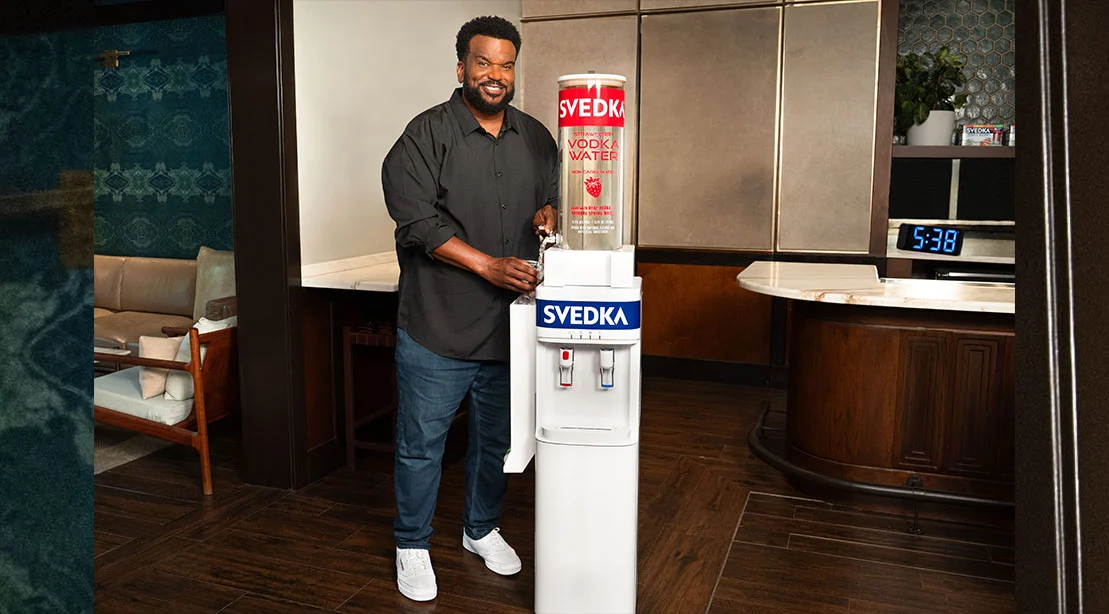
Following a transformative journey that has seen him shed 50 pounds through a philosophy of incremental change, Robinson is now partnering with Svedka for the launch of "Svedka Water" and a limited-edition "Svedka Vodka Water Cooler." It is a clever, adult nod to the office gathering spots of yesteryear, blending his professional legacy with his current, healthier lifestyle.
The Intersection of Legacy and Lifestyle
The five-foot-tall Svedka cooler is more than just a marketing gimmick; it is a cultural touchstone. Designed to function as a traditional water dispenser, the unit houses a concealed tap that serves chilled Svedka vodka for post-work relaxation. For Robinson, the collaboration feels like a natural evolution of his brand.
"It’s super cool," Robinson told Muscle and Fitness. "Being a part of The Office, this kind of adds onto that legacy. It’s centered around the workplace. It’s water-cooler talk, and it’s familiar. So, it just kind of goes with my brand."
While the cooler represents a lighthearted connection to his past, Robinson’s relationship with alcohol—and his body—has shifted dramatically. The Chicago native, once known for a more indulgent lifestyle, has spent the last year refining his habits. His happy hour, if it exists at all, is now a minimalist affair, a far cry from the days when his consumption was, by his own admission, "out of control."
A Wake-Up Call on the Scale
Robinson’s transformation did not begin with a high-priced celebrity trainer, a grueling boot camp, or a viral diet trend. It began in a sterile doctor’s office, staring at a number that defied his own internal assessment.
"I was mad overweight," Robinson reflects. "I thought I was at this peak weight. I knew where I was, and I was over that." The reality was that he was approximately 30 pounds heavier than he had estimated. That delta—the gap between his perception and his physical reality—served as the catalyst for a total reevaluation of his health.
The Path Not Taken
In a moment of vulnerability, Robinson admits he briefly considered the modern "quick fix." He had secured a prescription for Ozempic and was prepared to spend $1,000 to initiate the medical weight-loss route. However, while standing in line to finalize the purchase, a sudden clarity washed over him.
He didn’t want to rely on a crutch. He wanted to see if he could claim ownership of his health through discipline and behavioral shifts. He walked away from the counter and, in doing so, stepped toward a more sustainable, self-driven future.
The Anatomy of Incremental Change
Robinson’s approach to weight loss is a masterclass in behavioral psychology, specifically the concept of "minimum viable effort." He understood that the human brain often rebels against drastic, overnight changes. Instead of attempting to bench-press his body weight or overhaul his pantry in a single weekend, he started with a target so small it was impossible to fail.
"I just started doing three minutes a day on the treadmill," Robinson says. "Then the next month it was six minutes, and the next month, nine."
The "Wash, Rinse, Repeat" Methodology
This steady, slow-burn approach allowed his body and mind to adapt without the burnout that plagues most fitness initiates. Once the treadmill routine was cemented, he layered in intermittent fasting. This, he noted, was a transformative step in his dietary control.
"One of the hardest and easiest things to do is to not eat," Robinson explains. "It’s hard because you’re not eating, and it’s easy because you don’t have to do anything."
By restricting his eating window, Robinson found that he naturally regulated his caloric intake. Moreover, by finishing his last meal several hours before bed, he improved his sleep quality, which in turn boosted his energy levels for his demanding career. His philosophy is now a streamlined, cyclical process: "You fast, you work out, you eat right, you get your rest, get your water—wash, rinse, repeat."
Navigating the Non-Linear Path
Perhaps the most relatable aspect of Robinson’s journey is his honesty regarding failure. Transformations are rarely a straight line, and Robinson is the first to admit that the end of last year saw him slipping back into old patterns. The lure of pizza, gumbo, and soda became difficult to resist during the holiday season.
"If I’m 100 percent honest, I have fallen off," he says. "I started allowing things back in my life."
Rather than spiraling into guilt or abandoning his progress entirely, Robinson treated these lapses as data points. He recognized the pattern, reassessed, and course-corrected. He has moved away from the "all or nothing" mentality, favoring a strategy of intentionality. Today, he doesn’t view junk food as a forbidden fruit, but as a scheduled treat. He might reserve pizza for October or a slice of cake for a November celebration, effectively removing the power these foods hold over his daily decisions.
The Ripple Effect: Energy, Performance, and Confidence
The physical changes Robinson has undergone have had a profound impact on his professional life. With a schedule that includes acting, voice work for Toy Story 5, stand-up comedy, and piano-driven musical performances, the demands on his stamina are immense.
Recently, during a series of performances in Los Angeles, Robinson experienced an "aha" moment that validated his hard work. Catching his reflection in the mirror before hitting the stage, he saw a leaner, more vibrant version of himself.
"I was like, ‘Oh, there he is,’" Robinson recalled. "It just lifted me, man. It made everything—the notes felt brighter. I was singing and playing, and I just felt more playful."
This surge in confidence has made him a more dynamic performer, allowing him to experiment with new material and engage more deeply with his audience. He is no longer just a character actor; he is an artist operating at a higher frequency.
Expert Perspective: Why Small Habits Win
Robinson’s strategy aligns with current sports science and behavioral health research. The "Three-Minute Rule"—or any variation of ultra-low-barrier entry—is highly effective because it bypasses the amygdala’s "fight or flight" response to perceived stress. By keeping the activity duration manageable, the individual prevents the mental friction that typically leads to procrastination.
Implications for Long-Term Health
For those looking to replicate Robinson’s success, the takeaway is clear: stop searching for the perfect program and start building a perfect system.
- Start Small: Whether it is one pushup or three minutes on a treadmill, choose a task so easy that "I don’t have time" is never a valid excuse.
- Prioritize Consistency Over Intensity: Robinson’s progress was defined by his monthly adherence, not his daily intensity.
- Practice Self-Compassion: A lapse in diet is not a failure of character; it is a temporary deviation. The ability to return to the routine is the true measure of a successful transformation.
- Identify Triggers: By observing when he reached for comfort foods, Robinson was able to create "necessary distance" between himself and those habits.
The Road Ahead
Craig Robinson is not done yet. He describes himself as a "work in progress," with plans to integrate more formal strength training into his regimen. His journey serves as a powerful reminder that while we often look for the "secret" to health in pills or expensive programs, the answer is usually found in the mirror—and in the patience we afford ourselves while building a better life.
As he continues to balance his high-profile career with his newfound vitality, Robinson remains a grounded figure. He isn’t selling a miracle; he is selling the idea that everyone, regardless of their starting point, can reclaim their health if they are willing to take that first, three-minute step.
"Start with something so low, something you can definitely do, something you can definitely control," Robinson concludes. "Then just let that build every month. Give yourself patience. Allow yourself to become consistent."
In a world obsessed with immediate gratification, Craig Robinson’s steady climb is a refreshing reminder that the most memorable conversations—and the most memorable transformations—are the ones that take time to build.