









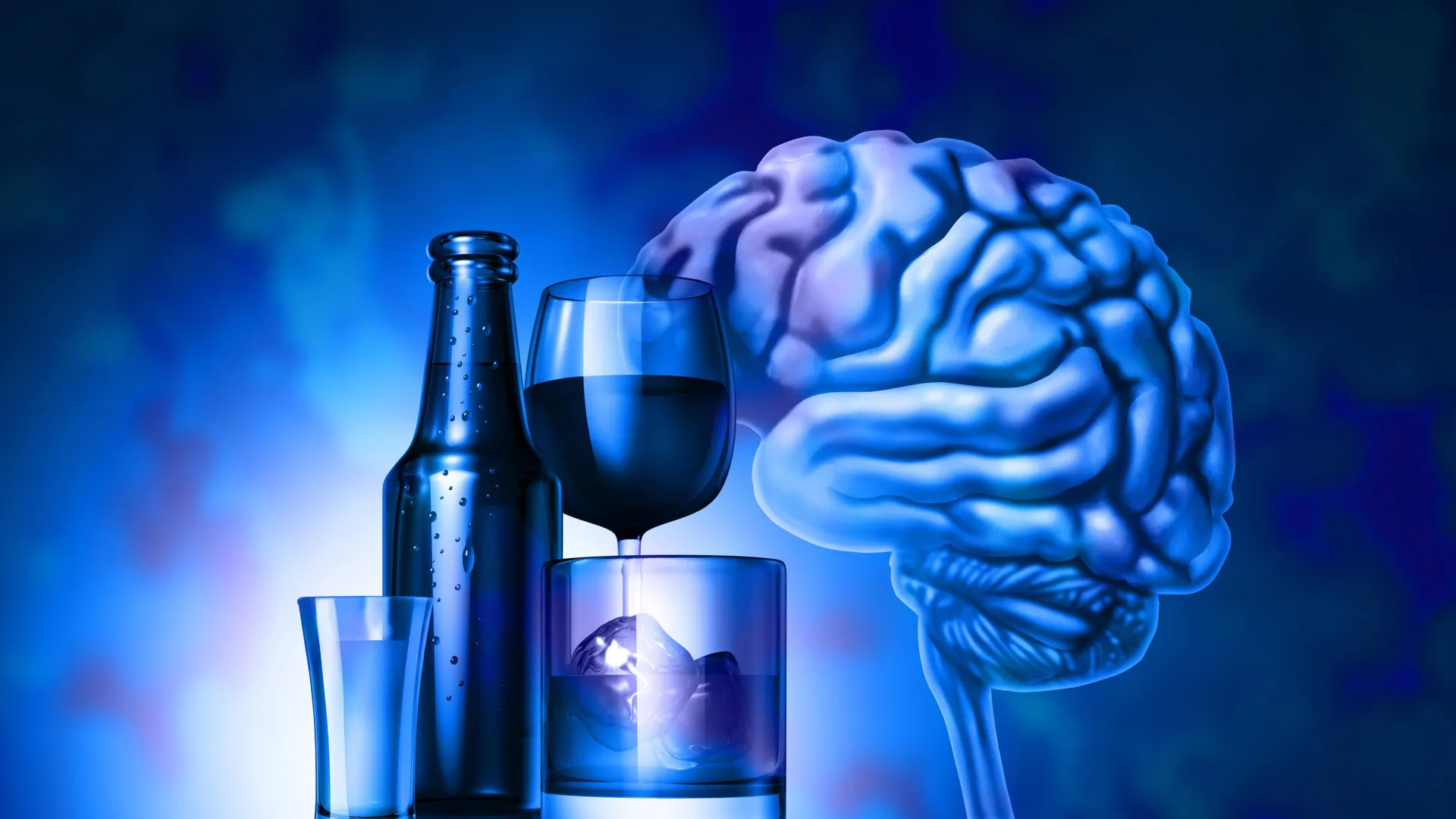
Recent research from the University of Massachusetts Amherst has unveiled a sobering reality regarding the long-term impacts of alcohol consumption. A study published in the journal Alcohol Clinical and Experimental Research suggests that using alcohol as a coping mechanism for stress during early adulthood creates lasting, perhaps permanent, alterations in brain circuitry. These changes, which persist even after years of sustained sobriety, do not merely represent a psychological hurdle; they appear to manifest as physiological damage that surfaces by middle age, diminishing mental flexibility and mirroring the early cognitive decline associated with dementia and Alzheimer’s disease.
The Vicious Cycle: When Stress and Alcohol Collide
For decades, the scientific community has understood that stress and alcohol consumption operate within a feedback loop. Alcohol is frequently utilized as a pharmacological "bandage" for stress, providing temporary relief by blunting the nervous system’s response to environmental pressure. However, this relief is deceptive. Repeated exposure to alcohol weakens the brain’s endogenous ability to regulate its own stress response.
As the brain’s natural resilience mechanisms atrophy, individuals often find themselves caught in a cycle of escalation: they must consume larger quantities of alcohol more frequently to achieve the same sense of equilibrium. Simultaneously, heavy drinking often leads to poor decision-making—financial strain, interpersonal conflict, or professional instability—which in turn generates further stress.
"We all know that drinking can often lead to poor decision-making," says Elena Vazey, associate professor of biology at UMass Amherst and the study’s senior author. "But we wondered how early adulthood drinking combined with stress affects that circuitry, especially as we grow older. If we can figure out how alcohol and stress change the brain’s circuitry, then we can help figure out how best to help people."
Methodology: Tracing the Neurological Footprint
To investigate these long-term effects, the UMass Amherst team, with support from the National Institute on Alcohol Abuse and Alcoholism (NIAAA), utilized a mouse model. Because the neurocircuitry governing stress and decision-making in mice closely mirrors that of humans, they serve as a critical proxy for human neurological development.
The researchers exposed the subjects to scenarios involving both alcohol and chronic stress during their developmental equivalent of early adulthood. Following this period, the subjects were subjected to a long period of complete abstinence. The results were stark: the combination of stress and alcohol had a synergistic effect, causing significantly more profound neurological damage than either stress or alcohol could produce in isolation.
The study observed that these subjects were substantially more likely to relapse into alcohol consumption when reintroduced to stressful stimuli in middle age, even after prolonged sobriety. This finding suggests that the "memory" of stress-drinking is encoded into the brain’s physical architecture, creating a biological vulnerability that persists long after the individual has ceased drinking.
Cognitive Flexibility and the "Middle-Age Cliff"
One of the most revealing findings of the study was the specific nature of the cognitive impairment. Contrary to what one might expect, the mice did not necessarily show a universal decline in learning capacity or memory. Instead, the primary deficit was in cognitive flexibility—the brain’s ability to pivot, adjust strategies, and make new decisions when environmental circumstances change.
"Middle age is when problems start to add up," Dr. Vazey explains. "We know that alcohol is a risk factor for early cognitive decline, and we saw that this alcohol-stress combination creates the kind of trouble adapting to changing situations that also happens in the early stages of dementia."
In a complex world, cognitive flexibility is the bedrock of executive function. It allows humans to navigate unforeseen crises, manage complex projects, and maintain emotional regulation. When this flexibility is compromised, an individual’s ability to "roll with the punches" is diminished, making the stressors of middle age—such as caregiving, career transitions, and health concerns—significantly more overwhelming.
The Locus Coeruleus: A Key Point of Failure
To understand the mechanics behind these deficits, the research team focused on a tiny but critical region of the brainstem: the locus coeruleus (LC). The LC is the brain’s primary source of norepinephrine, a neurotransmitter that modulates arousal, attention, and adaptive decision-making.
In a healthy brain, the LC serves as a high-precision thermostat. It activates during periods of stress to sharpen focus and help the individual manage the challenge, then returns to a baseline state once the stressor is resolved. In the study’s test subjects, however, the combination of alcohol and chronic stress caused the LC to lose its "off switch."
The researchers discovered that the molecular machinery required to quiet the LC was essentially stripped away. Consequently, the brain remained in a state of persistent, low-level physiological dysregulation. Furthermore, the team detected high levels of oxidative stress—a form of cellular "rust" that damages DNA and proteins—within the LC. This is the same type of cellular degradation observed in the brains of patients with Alzheimer’s disease. Even after a long period of abstinence, the LC showed little to no signs of repair, suggesting that the damage had become chronic and self-sustaining.
Implications for Treatment and Policy
The findings from the UMass Amherst lab represent a paradigm shift in how we approach alcohol use disorder (AUD) and cognitive health. Historically, treatment protocols have been heavily focused on behavioral modification and detoxification—essentially, the "willpower" approach to sobriety. However, Dr. Vazey’s research suggests that for many individuals, the issue is not a failure of character, but a fundamental alteration in the brain’s "wiring system."
1. Moving Beyond Detoxification
If the brain’s decision-making centers have been physically damaged by oxidative stress and disrupted circuitry, traditional talk therapy or group support may be insufficient on their own. Future treatment strategies may need to incorporate neuro-regenerative therapies or medications specifically designed to repair the LC and mitigate oxidative damage.
2. Redefining Cognitive Health
The study links early-life behaviors to late-life cognitive decline, suggesting that we should view alcohol-related brain damage as a progressive condition rather than a temporary impairment. This has significant implications for public health messaging, suggesting that the "work hard, play hard" culture of early adulthood may carry a biological "tax" that is not paid until decades later.
3. Addressing the Relapse Cycle
The persistence of the relapse mechanism in middle age—even after years of abstinence—explains why many individuals struggle to stay sober during mid-life transitions. Understanding that this is a biological vulnerability rather than a lack of motivation could help reduce the stigma surrounding relapse and encourage more compassionate, medically informed support systems.
Conclusion: A Call for Neurological Awareness
The research led by Dr. Vazey and her team underscores that the brain is not a static organ, but a dynamic system shaped by its environment and choices. The "lasting effects" observed in this study suggest that early adulthood is a critical window of vulnerability. By recognizing that the interplay between stress and alcohol causes deep-seated, persistent damage to the brain’s decision-making centers, we can begin to pivot toward treatments that acknowledge the biological reality of recovery.
The message is clear: when we use alcohol to navigate the storms of early adulthood, we may be inadvertently altering the navigation system for the rest of our lives. As science continues to map the precise nature of these changes, the goal is to develop interventions that don’t just ask patients to stop drinking, but that offer the neurological support required to repair the damage and restore the brain’s innate capacity for resilience and flexibility.