










Published: August 3, 2026
In the modern landscape of physical wellness, yoga has long been touted as the ultimate antidote to the "digital hunch"—that persistent, gravity-induced posture resulting from hours spent hunched over laptops, smartphones, and steering wheels. Among the myriad of restorative postures, Puppy Pose—scientifically known as Anahatasana or "Melting Heart"—stands out as a primary candidate for counteracting thoracic stiffness. However, as contemporary yoga pedagogy evolves, experts are beginning to question whether the standard approach to this pose is missing its mark.
While there is rarely a singular "correct" way to perform an asana, a growing consensus among mindful practitioners suggests that the way we currently teach Puppy Pose may be inadvertently bypassing the very areas that need the most relief. By shifting our focus from passive surrender to active engagement, we can transform this pose from a generic backbend into a precision tool for spinal health.
The Anatomy of the Hunch: Why Our Spines Need Help
To understand the necessity of this adjustment, one must first understand the modern physiological reality. The human spine is designed for movement, yet the lifestyle of the 21st century forces it into a static, kyphotic curve—a forward-rounding of the upper back and a collapse of the chest.
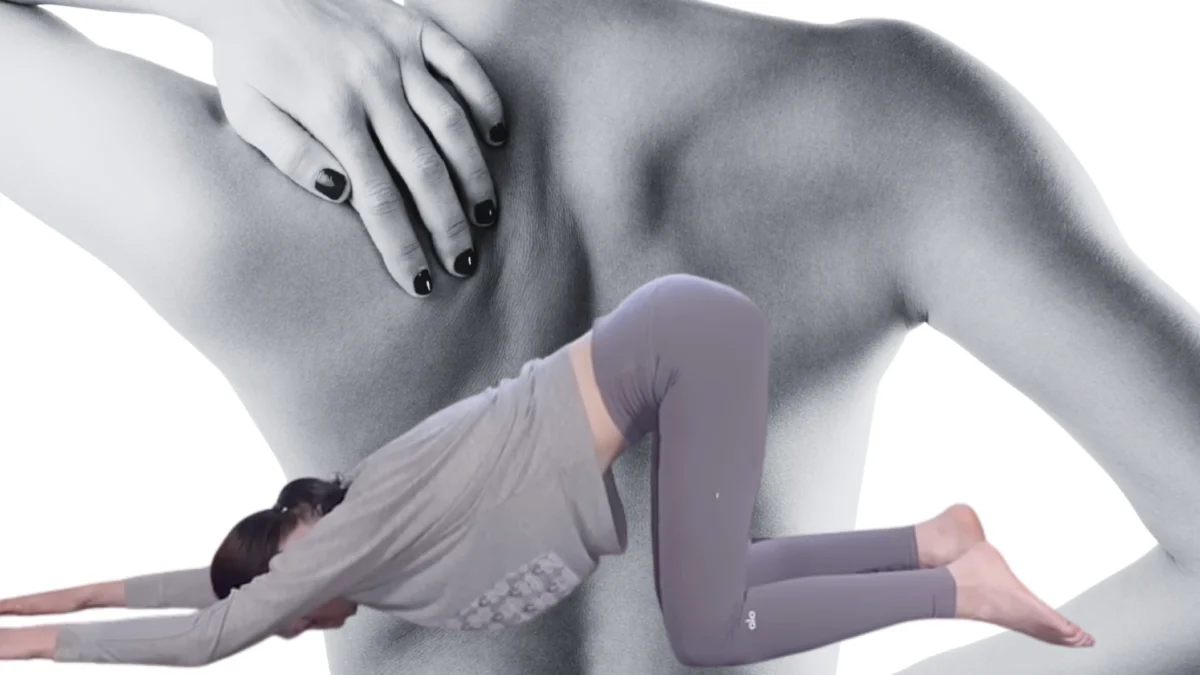
When we experience tightness in the chest and shoulders, the body naturally seeks the path of least resistance. In a standard Puppy Pose, where the practitioner walks their hands forward and allows the chest to melt toward the floor, the body instinctively dumps weight into the lower lumbar spine. Because the lumbar spine is inherently more flexible than the thoracic (mid-back) region, it "takes the hit" for the rest of the body. While this creates a satisfying, albeit superficial, stretch, it fails to address the thoracic immobility that causes chronic neck and shoulder pain.
Chronology of the Practice: From Traditional Roots to Modern Refinement
Historically, Anahatasana was categorized as a heart-opening posture designed to encourage vulnerability and expansion. Traditionally, practitioners were taught to let gravity do the work, surrendering the belly and heart toward the earth. This approach was effective in an era where practitioners generally had more active daily lives and fewer repetitive stress injuries related to screen use.
However, as yoga migrated from ashrams to high-stress urban environments, the "surrender" model began to reveal limitations.
- The Early 2000s: Yoga became popularized in the West, with a heavy emphasis on "releasing" and "stretching." The goal was often to achieve the "shape" of the pose rather than the functional outcome.
- The Mid-2010s: The rise of desk-bound occupations led to a surge in practitioners seeking relief from "tech neck." Teachers began noticing that standard cues were not providing the intended thoracic opening.
- The Current Era (2026): A shift toward functional movement and biomechanical awareness. Practitioners and instructors are now questioning the "let it all go" philosophy, advocating for "active tension"—a method where specific muscles are engaged to stabilize the spine while others are stretched.
Supporting Data: The Mechanics of the Mid-Back
The core of the issue lies in the anatomical difference between the lumbar and thoracic vertebrae. The lumbar spine is built for stability and weight-bearing, while the thoracic spine is built for rotation and controlled extension.
When a practitioner allows their belly to drop toward the mat during Puppy Pose, they enter a state of hyperextension in the lumbar spine. According to orthopedic physical therapy principles, when the lumbar spine reaches its end-range of motion, the body effectively "locks out," preventing the thoracic spine from achieving its own end-range.
By engaging the lower abdominals—pulling the navel toward the spine—the practitioner stabilizes the lumbar region. This creates a "fixed point" of leverage. With the lumbar spine stabilized, the energy of the stretch is forced upward into the thoracic spine and the latissimus dorsi muscles. This is not merely a stylistic preference; it is a biomechanical necessity for those who wish to correct postural kyphosis.
The Expert Perspective: Rethinking the "Melting" Myth
"We have been conditioned to believe that ‘melting’ is the ultimate goal of yoga," says Yoga With Kassandra, a prominent voice in modern vinyasa pedagogy. "But when it comes to the mid-back, melting is exactly what we don’t want. If you don’t engage your core, your lower back will always do the work for you because it’s the easiest place to bend. To reach the heart center, you have to support the base."
This sentiment is echoed by physiotherapists who observe that many students attending yoga classes for back pain actually exacerbate their condition by over-stretching the lumbar spine. The "new" way to practice Puppy Pose involves a subtle, almost invisible contraction of the abdominal wall. This change requires a higher degree of proprioception, or body awareness, moving the practice from a passive stretch to an active engagement.
Official Recommendations: How to Practice with Precision
To effectively target the thoracic spine, follow this refined sequence:
1. The Foundation
Begin on your hands and knees in a tabletop position. Ensure your hips remain stacked directly over your knees. This is critical; if your hips drift forward or backward, you lose the vertical alignment necessary to isolate the mid-back.
2. The Extension
Slowly walk your hands forward until your arms are fully extended. Rather than dropping the chest immediately, keep a slight engagement in your core. Think of pulling your ribs gently toward your spine.
3. The Adjustment
Lower your forearms to the mat, bending at the elbows. Here is the pivot point: instead of letting your belly collapse, draw your navel toward your spine. You will feel an immediate increase in the sensation across your shoulders and the area between your shoulder blades.
4. The Breath
Maintain this engagement for 5 to 10 deep, slow breaths. The goal is to breathe into the upper back, feeling the expansion between the ribs, while maintaining the steady, quiet support of the abdominal wall.
Implications for the Future of Yoga
The implications of this shift in technique are significant for the yoga community. As the industry moves toward more inclusive and medically informed practices, the "one-size-fits-all" approach to asana is becoming obsolete.
This refined Puppy Pose serves as a microcosm for a larger movement in the fitness world: the integration of functional anatomy with traditional movement. It reminds us that yoga is not just about the shape we create, but about how we occupy that shape. By choosing engagement over passive surrender, we empower ourselves to address the specific physical imbalances caused by modern life.
Ultimately, the goal of Anahatasana remains the same—to open the heart and alleviate the weight of the day. But by being mindful of our lumbar stability, we ensure that our "melting heart" doesn’t come at the expense of our lower back. The next time you find yourself on your mat, challenge the instinct to surrender. Engage, stabilize, and discover the difference that a little bit of tension can make in your path to true release.
Whether you are a seasoned yogi or a novice looking to improve your posture, this minor adjustment acts as a reminder: sometimes, the most profound changes in our practice don’t come from pushing further, but from becoming more aware of how we hold ourselves together.