











For fitness enthusiasts and bodybuilders alike, the triceps brachii—the three-headed muscle group responsible for the majority of upper arm mass—is the holy grail of aesthetic development. Achieving a "horseshoe" shape requires more than just standard pushdowns; it demands exercises that challenge the long head of the triceps through a full, deep stretch. Traditionally, the overhead triceps extension has been the go-to movement for this purpose. However, a growing cohort of athletes is finding that the vertical load associated with overhead work can be a double-edged sword, leading to lumbar strain and shoulder instability.
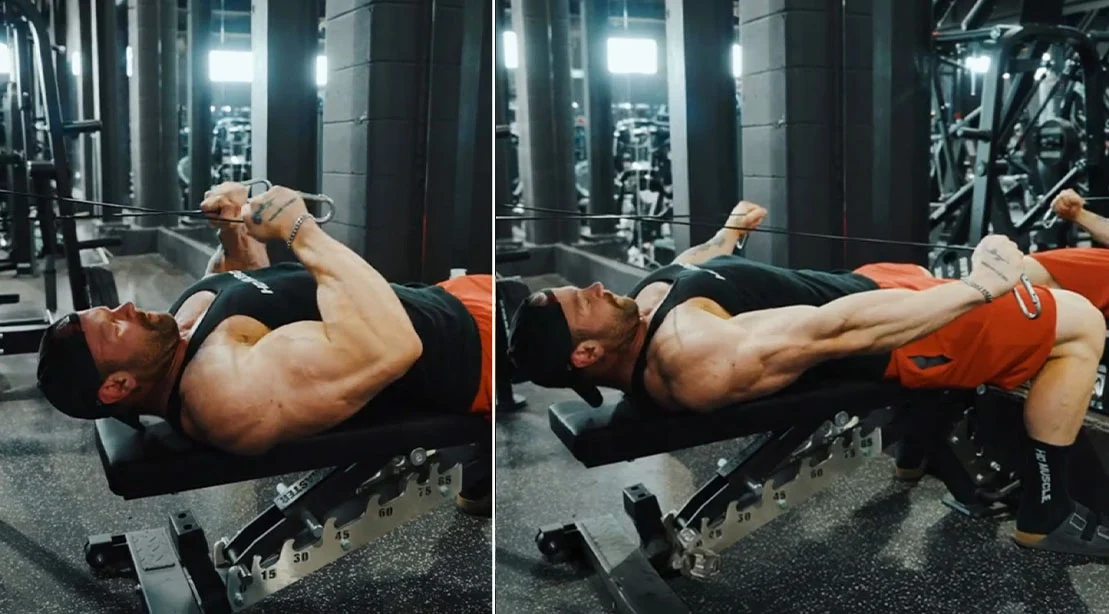
Enter Travis Smith, a renowned fitness and transformation coach, who has recently championed a biomechanically superior alternative: the Lying Triceps Cable Crossover. By shifting the exercise from a vertical to a horizontal plane, Smith argues that athletes can eliminate spinal stress while simultaneously maximizing muscular hypertrophy.
The Main Facts: Why Your Overhead Extensions Might Be Failing You
The triceps brachii consists of three distinct heads: the lateral, medial, and long head. The long head is unique because it crosses the shoulder joint, meaning it is most effectively stimulated when the arm is positioned overhead. This is why trainers have long pushed for overhead movements; it places the long head in a position of maximum mechanical stretch.
However, the physics of standing or seated overhead extensions presents a significant hurdle. As the weight increases, the athlete must fight to maintain a neutral spine. Often, the lower back compensates for the weight, arching to stabilize the body—a movement pattern that frequently leads to chronic pain or acute injury. Even when performed seated, the vertical compressive force on the spinal discs remains a concern for those with pre-existing back issues.
Smith’s intervention centers on the concept of Stability-Driven Hypertrophy. He posits that when the body is not forced to expend energy stabilizing the torso, it can allocate 100% of its neuromuscular effort toward contracting the target muscle group. By lying supine on a bench, the athlete effectively "locks" the torso, removing the spine from the equation entirely.
Chronology of a Training Evolution
The progression of triceps training has evolved through three distinct eras:
- The Era of Isolation (1970s–1990s): Dominated by the standard cable pushdown and the French press (skull crushers). While effective, these movements often neglected the specific long-head elongation that only overhead work could provide.
- The Era of Overhead Intensity (2000s–2020s): Coaches began prioritizing the overhead extension, emphasizing the "stretch-mediated hypertrophy" of the long head. This era brought about massive gains but coincided with an uptick in reports of lower back discomfort and elbow tendonitis among gym-goers.
- The Current Era of Biomechanical Optimization (2024–Present): Led by coaches like Travis Smith, this shift focuses on maintaining the benefits of the stretch while mitigating the risks of vertical loading. The "Lying Cable Crossover" represents the zenith of this approach, blending the mechanical advantage of cable tension with the safety of a supine position.
Supporting Data: The Case for Horizontal Loading
To understand why this variation is gaining traction, we must look at the data regarding "Energy Leakage." In sports science, energy leakage occurs when the force generated by the primary movers (the triceps) is dissipated by the stabilizing muscles (the core and lower back).
When you perform an overhead extension, your core must work overtime to prevent your ribcage from flaring and your back from hyperextending. This is energy that could have been used to drive more forceful triceps contractions.
Furthermore, the Cable Advantage cannot be overstated. Unlike free weights (dumbbells or EZ-bars), which have a fixed resistance curve that often results in "dead spots" where the muscle is not under load, cables provide constant tension throughout the entire range of motion. By crossing the cables over, Smith creates a convergence point that mimics the natural movement of the human arm, ensuring the triceps are under maximum load at both the peak of the contraction and the bottom of the stretch.
Official Responses and Expert Insights
Travis Smith’s recent Instagram demonstration has sparked a broader conversation among biomechanics experts. The consensus is largely positive, particularly regarding the mitigation of elbow pain—a common byproduct of the traditional EZ-bar "skull crusher."
"Stability is one of the most underrated variables for muscle growth," Smith stated in his demonstration. "The less energy spent stabilizing movement, the more you can put into the target muscle. Add in the constant tension from the cable, and you’ve got an exercise that loads the triceps through almost the entire range of motion."
Regarding the elbows, Smith notes that the fixed nature of a barbell often forces the wrists and elbows into an unnatural, static path. By using individual cables, the athlete allows their joints to follow a path of least resistance, which can alleviate the shearing forces that typically cause inflammation in the olecranon bursa (the fluid-filled sac at the tip of the elbow).
How to Perform the Lying Triceps Cable Crossover: A Step-by-Step Guide
For those looking to integrate this movement into their current training split, Smith provides a straightforward protocol:
1. Setup
Position a flat utility bench directly in front of a double-cable pulley station. Set the pulleys to a height that aligns with or is slightly above your head when lying down.
2. The Grip
Cross the cables over—the left hand grabs the right pulley handle, and the right hand grabs the left. This "crossover" setup is critical; it creates an inward force vector that allows you to squeeze the triceps more effectively at the bottom of the movement. Use carabiner-style handles or rope attachments for a better range of motion.
3. The Execution
Lie back on the bench. Start with your elbows bent and your fists held near your forehead. Slowly extend your arms, straightening them toward the ceiling (or slightly behind your head, depending on your shoulder mobility). As you lower the weight, focus on the deep stretch in the long head of the triceps.
4. The Tempo
Maintain a controlled tempo. Avoid using momentum. Aim for a 2-second eccentric (lowering) phase and a powerful, explosive concentric (lifting) phase.
5. Training Volume
Smith recommends 2 to 3 sets of 8 to 12 repetitions. This rep range is scientifically recognized as the "sweet spot" for hypertrophy—enough volume to induce metabolic stress without crossing into the realm of excessive fatigue that could degrade form.
Implications for Future Training Paradigms
The rise of the Lying Triceps Cable Crossover signifies a broader shift in the fitness industry toward longevity-focused bodybuilding. In the past, the mantra was "no pain, no gain," often at the expense of joint health. Today, the focus has shifted toward "smart gain"—finding ways to stimulate maximum muscle growth while preserving the integrity of the connective tissues and the spine.
Implications for Back Health
For the aging athlete or the office worker who spends eight hours a day sitting at a desk, the Lying Cable Crossover is a game-changer. By removing the vertical load, this exercise allows individuals with spinal compression issues or lumbar instability to continue training their arms hard without aggravating their backs.
Implications for Shoulder Health
By allowing the cables to dictate the path of the movement, the shoulders are no longer locked into a rigid, potentially damaging arc. This exercise is an excellent addition for those who find that traditional barbell work creates "clicking" or discomfort in the glenohumeral joint.
The "Constant Tension" Effect
Perhaps the most significant implication is the shift away from the "swinging" motion common in poorly performed overhead extensions. Because the cable tension is constant, there is no place to hide. Every inch of the movement is productive. This increased "time under tension" is a primary driver of sarcoplasmic hypertrophy, the process by which muscles increase in size due to an increase in the volume of fluid and glycogen within the muscle cell.
Conclusion: A New Standard for Arm Day
Travis Smith’s variation of the triceps extension is more than just a gym hack; it is a refined approach to resistance training that respects both human anatomy and the principles of physics. By prioritizing stability and leveraging the constant tension of cables, Smith has provided a solution that allows lifters to push their triceps to total failure without the collateral damage to the spine or elbows.
As we move forward, it is likely that we will see more movements transitioning to the horizontal plane. When you remove the struggle to balance, you gain the freedom to grow. For your next arm session, consider swapping out the standing overhead extension for this lying variation. Your triceps will feel the difference, and your lower back will certainly thank you.
To follow Travis Smith on Instagram for more biomechanical tips and training insights, click here.