







For decades, the medical community has grappled with the complexities of sleep architecture. While we spend nearly a third of our lives unconscious, the ability to "optimize" that time without the use of heavy sedatives or invasive surgical implants has remained a "holy grail" of neuroscience. Now, a breakthrough from the University of Texas (UT) at Austin is poised to change that narrative.
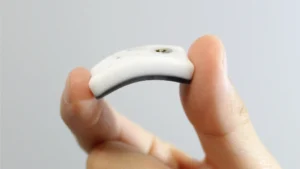
Researchers have unveiled NEUSLeeP, a soft, wearable bioelectronic patch that uses gentle ultrasound waves to stimulate deep brain regions. By targeting the precise neurological pathways responsible for Rapid Eye Movement (REM) sleep, this noninvasive device has demonstrated the ability to help users enter this critical phase of rest significantly faster—and stay there longer—than they would naturally.
Main Facts: The NEUSLeeP Innovation
The NEUSLeeP device is a paradigm shift in sleep science. Unlike traditional sleep trackers that merely monitor activity, NEUSLeeP is an active intervention tool. It is a skin-attached bioelectronic patch that functions through two primary mechanisms:
- Ultrasound Neuromodulation: The device emits low-intensity, focused ultrasound waves. These waves are capable of penetrating the scalp and skull to reach specific deep-brain structures that govern the sleep-wake cycle. Because ultrasound can be focused with high precision, it avoids the "blanket" stimulation often associated with electrical currents, which can cause discomfort or unintended side effects.
- Real-Time Monitoring: Integrated electrodes constantly track brain activity, allowing the device to adapt its stimulation in real time based on the user’s specific sleep stage. This "closed-loop" system ensures that stimulation is only provided when the brain is physiologically ready to transition into REM, avoiding the disruption of other sleep stages.
The result is a portable, comfortable, and drug-free solution that brings clinical-grade sleep therapy into the home environment.
The Chronology of Discovery
The journey toward NEUSLeeP began with a fundamental question: Can we influence the brain’s internal clock without invasive hardware?
- Early Phase (The Concept): The team at UT-Austin, led by principal investigator Huiliang “Evan” Wang, began investigating the intersection of flexible electronics and neuroengineering. The goal was to create a "second skin" that could bridge the gap between heavy, laboratory-bound EEG equipment and simple, inaccurate consumer wearables.
- Engineering the Patch: Researchers focused on developing a biocompatible, soft material that could maintain stable contact with the skin throughout the night, even as the user tosses and turns.
- The Pilot Trial: In a landmark study of 28 participants, researchers tested the device’s efficacy. The trial included a diverse group of both "healthy sleepers" and individuals suffering from self-reported sleep difficulties.
- Verification: The findings, published in the prestigious journal Nature Communications, confirmed that the device significantly reduced the "sleep onset latency" for REM—the time it takes to enter the stage—by an average of 43 minutes.
- Commercialization Phase: With the success of the initial study, the team has transitioned to working with UT’s commercialization unit, Discovery to Impact. Patent applications have been filed, and the team is currently mapping out the regulatory and manufacturing path to bring the device to market.
Supporting Data: By the Numbers
The data emerging from the Nature Communications study provides compelling evidence that REM sleep enhancement is not just a dream, but a measurable biological outcome.
- REM Acceleration: On average, participants reached REM sleep 43 minutes faster than in control nights without the device.
- Increased REM Duration: Once in the REM phase, participants experienced an average of 16 minutes of additional REM time. This is a significant increase, as REM cycles are typically fragmented in people with sleep disorders.
- Safety Profile: Through extensive reporting, participants indicated the device was comfortable, with minimal adverse effects reported. No instances of skin irritation or psychological distress were recorded, marking a major win for the noninvasive design.
- Physiological Benefits: Beyond just "getting more sleep," the device improved heart rate variability (HRV) in healthy participants. HRV is a gold-standard metric for cardiovascular health and the body’s ability to handle stress. Elevated HRV suggests that the brain-body connection is functioning more efficiently following the stimulated REM sessions.
Official Responses: The Scientific Perspective
The team behind NEUSLeeP emphasizes that this is not just about feeling rested—it is about emotional regulation and cognitive health.
Kai Wing “Kevin” Tang, Lead Researcher:
“This is the first time we’ve been able to noninvasively target deep brain regions involved in REM sleep, while simultaneously monitoring brain activity. The ability to do this outside of a clinical setting is what makes this a game-changer.”
Huiliang “Evan” Wang, Principal Investigator:
“Our skin-attached NEUSLeeP patch opens up new possibilities for understanding sleep and treating sleep disorders in home settings. We are essentially giving the brain a nudge to enter its most restorative state when it needs it most.”
Dr. Gregory Fonzo, Dell Medical School:
“REM sleep is not just about dreaming—it’s about emotional reset and stress adaptation. By enhancing REM, we may help people better cope with stress and improve their overall well-being. We see this as a potential tool for resilience, especially in high-stress populations.”
Dr. Vincent Mysliwiec, UT Health San Antonio:
“Our vision is a future where patients with mental health disorders can optimize their sleep with a noninvasive and safe treatment. This technology could help millions of people get the restorative sleep they need without the systemic side effects of pharmaceuticals.”
Implications: The Future of Sleep Medicine
The potential implications for NEUSLeeP extend far beyond the average person who simply wants to wake up feeling more refreshed. The medical community has long recognized that REM sleep deprivation is a precursor to—and a symptom of—severe psychiatric conditions.
1. Treating Mental Health Disorders
Disrupted REM sleep is a hallmark of depression, generalized anxiety disorder, and post-traumatic stress disorder (PTSD). Patients with PTSD, in particular, often suffer from fragmented sleep, which prevents the brain from processing traumatic memories. By normalizing REM cycles, NEUSLeeP could serve as a non-pharmacological adjunctive therapy for these conditions.
2. Neurodegenerative Research
Recent studies have linked sleep architecture, particularly the timing and duration of REM sleep, to the onset of neurodegenerative diseases such as Alzheimer’s. If NEUSLeeP can help maintain "cleaner" and more efficient sleep patterns throughout the lifespan, it may one day be used as a preventative measure for cognitive decline.
3. Personalized Sleep Therapy
The "one-size-fits-all" approach to sleep medication (such as benzodiazepines or Z-drugs) often leads to dependency, grogginess, and altered sleep architecture. NEUSLeeP offers a personalized path. Because the device is an active monitor, it can learn an individual’s unique brainwave patterns and adjust stimulation parameters to provide the exact amount of support needed, essentially providing "bespoke" sleep therapy.
4. Accessibility and Scalability
Perhaps the most important implication is the shift in location. By moving this technology from the hospital to the bedroom, the researchers are democratizing access to neuro-stimulation. No longer do patients need to undergo expensive, uncomfortable overnight sleep studies in a lab to get actionable data and treatment. This portability could drastically reduce the burden on healthcare systems currently overwhelmed by the global rise in insomnia cases.
Conclusion: A New Era for the Rested Mind
As the researchers at UT-Austin move toward larger, multi-site trials, the promise of NEUSLeeP looms large. While the technology is still in the development and commercialization pipeline, the success of its initial trials provides a beacon of hope for the millions suffering from chronic sleep deprivation.
The ability to safely "tune" the brain’s internal rhythm represents a monumental step forward for bioelectronics. By bridging the gap between deep-brain stimulation and comfortable, wearable technology, the team has not only created a new device but has also pioneered a new approach to mental health.
In a world where sleep is increasingly commodified—sold in the form of blue-light glasses, melatonin gummies, and white-noise machines—NEUSLeeP stands apart. It does not mask the symptoms of a tired brain; it actively facilitates the biological processes that allow the brain to heal itself. As the team works with Discovery to Impact to navigate the complexities of bringing this innovation to the public, the message is clear: the future of sleep is not in a pill, but in a patch.