











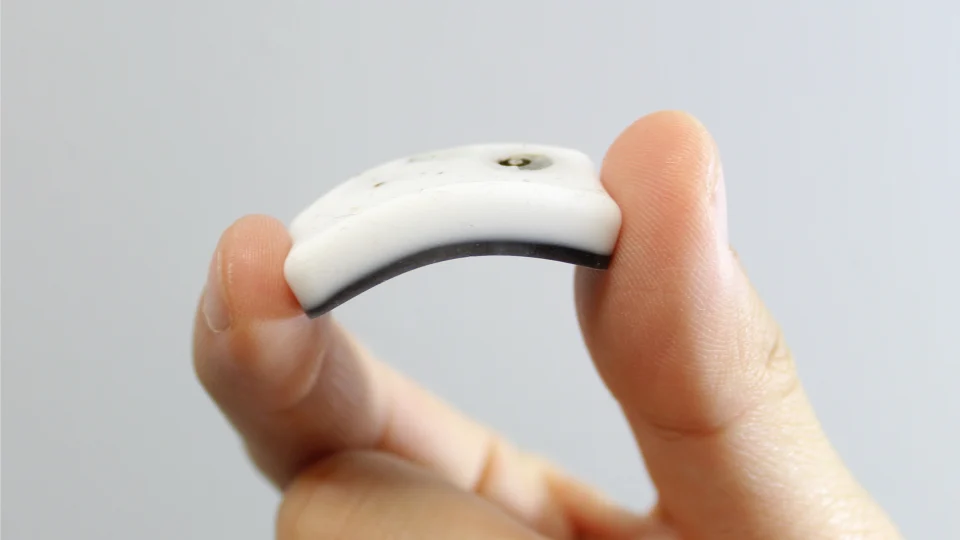
Researchers at the Georgia Institute of Technology have unveiled a pioneering advancement in neuro-monitoring technology: a soft, wireless, and non-invasive wearable device capable of tracking physiological markers linked to brain health within the comfort of a patient’s own home. By bridging the gap between sophisticated clinical diagnostics and accessible personal health monitoring, this innovation promises to reshape our understanding of the brain’s "nightly cleaning" process.
Main Facts: The Intersection of Sleep and Neurological Integrity
At the core of this research is the glymphatic system—a macroscopic waste clearance pathway that utilizes a peri-arterial network to flush metabolic byproducts out of the brain. During our waking hours, the brain functions at high metabolic intensity, resulting in the buildup of waste products, including neurotoxic proteins like amyloid-beta. When we enter deep sleep, this glymphatic system kicks into high gear, clearing away these toxins and facilitating cognitive restoration.
The new device developed at Georgia Tech serves as a bridge to understanding this vital process. Unlike traditional neurological monitoring, which requires bulky, tethered equipment found only in specialized sleep labs or hospital wards, this wearable is a flexible, soft-circuit sensor. It utilizes near-infrared spectroscopy (NIRS)—a method that employs light to measure changes in tissue oxygenation and fluid dynamics—to observe the subtle shifts in brain water content that signify glymphatic activity.
By removing the "white coat" effect—the stress and discomfort often associated with clinical sleep studies—the device allows for the collection of data in a naturalistic environment. This is critical, as sleep quality is notoriously difficult to replicate in the clinical setting, potentially skewing the very data researchers seek to capture.
Chronology: The Path to Wireless Neuro-Monitoring
The journey toward this wearable device is the culmination of years of interdisciplinary research at the intersection of mechanical engineering, semiconductor physics, and neuroscience.
- Foundational Research: Initial studies into the glymphatic system, largely pioneered by researchers at the University of Rochester and others, established the link between sleep deprivation and the buildup of metabolic waste in the brain. This laid the groundwork for the hypothesis that long-term glymphatic dysfunction contributes to neurodegenerative conditions such as Alzheimer’s and Parkinson’s.
- The Development Phase: Under the guidance of W. Hong Yeo, the Peterson Endowed Professor in the Woodruff School of Mechanical Engineering at Georgia Tech, the team began conceptualizing a device that could mimic the diagnostic capabilities of an MRI without the prohibitive costs or the need for a stationary patient.
- Engineering the Wearable: The team focused on material science to create a "soft" device—a flexible, skin-like electronic patch that conforms to the forehead. This required overcoming significant hurdles in signal-to-noise ratios, as optical sensors are notoriously sensitive to ambient light and physical motion.
- The Science Advances Milestone: The team’s findings were formally published in Science Advances in 2024, marking a shift from theoretical design to a functional, validated prototype. This paper demonstrated the system’s ability to wirelessly transmit brain-related fluid data to a smartphone or computer, validating its performance against existing baseline metrics.
Supporting Data and Technical Mechanics
The device operates on a sophisticated, yet streamlined, technical framework. It utilizes LEDs to emit near-infrared light through the skull and into the underlying brain tissue. As this light travels, it is absorbed and scattered by the cerebral fluid and blood flow. A high-sensitivity photodetector placed on the skin captures the reflected light, which is then digitized and transmitted via Bluetooth.
Challenges and Mitigations
The research team is candid about the hurdles involved in home-based optical monitoring. Measurements of this nature are susceptible to "noise" from various physiological and environmental factors:
- Breathing Depth: Fluctuations in intrathoracic pressure during deep breathing can alter cerebral blood volume, which the sensor might detect.
- Mechanical Interference: Even minor shifts in forehead pressure, body positioning, or movement during sleep can distort the optical path.
- Thermal Drift: Changes in ambient temperature can affect the sensitivity of the semiconductor components within the wearable.
To address these, the researchers focused on identifying longitudinal trends rather than relying on instantaneous, absolute measurements. By analyzing data over the course of several hours of sleep, they can filter out transient motion artifacts and extract a clearer signal of glymphatic clearance. They acknowledge that the data reflects a composite of skin, scalp, and cerebral signals, which represents a new frontier in "big data" analysis for neurology.
Official Responses and Expert Perspectives
"This paper introduces the first soft, wireless, and noninvasive wearable near-infrared spectroscopy system capable of continuously monitoring brain water and glymphatic clearance dynamics in a natural home sleep environment," says Dr. W. Hong Yeo, who also serves as the director of the Wearable Intelligent Systems and Healthcare Center.
Dr. Yeo’s commentary emphasizes the "overcoming" of traditional barriers. In the past, assessing the brain’s waste-clearing system required MRI scans, which are not only expensive and stationary but also require the subject to remain perfectly still in a noisy, claustrophobic environment—the antithesis of a natural sleep cycle.
The research community has reacted with cautious optimism. By democratizing access to neuro-physiological data, this device could potentially shift the paradigm of neurology from reactive treatment to proactive, data-driven prevention. The Korea Kiat-Georgia Tech semiconductor electronics center, which collaborated on the development, highlighted the potential for scaling this technology into mass-market, affordable health trackers.
Implications: The Future of Home-Based Brain Health
The implications of this technology extend far beyond sleep clinics.
1. Early Detection of Neurodegeneration
If researchers can track how effectively an individual’s brain clears waste over several years, they may be able to identify early biomarkers of neurodegenerative disease long before clinical symptoms appear. If a patient’s "glymphatic signature" begins to weaken, interventions—such as sleep therapy or dietary changes—could be implemented sooner.
2. Personalized Sleep Medicine
Current sleep trackers measure heart rate, movement, and oxygen saturation. While useful, they are essentially proxies for sleep quality. This Georgia Tech device measures the functional result of sleep: the physiological maintenance of the brain. This could allow for highly personalized adjustments to sleep environments, lighting, or habits to optimize cognitive restoration.
3. A New Paradigm for Clinical Trials
Pharmaceutical companies testing drugs for Alzheimer’s or sleep disorders often face the problem of "site-specific bias." Testing a drug in a controlled hospital environment may yield different results than how it performs in a patient’s real life. This wearable allows for remote, longitudinal monitoring of drug efficacy without requiring patients to travel or stay in a facility.
4. Accessibility and Equity
The prohibitive cost of MRI and polysomnography creates a health disparity. Patients in lower-income areas or rural locations often lack access to these diagnostic tools. A low-cost, wearable alternative could provide high-level health insights to a broader demographic, helping to bridge the gap in neurological healthcare access.
Conclusion
The work of the Georgia Tech research team represents a significant leap toward a future where our most complex organ—the brain—is as easy to monitor as our heart rate. While the device is currently a research-grade tool navigating the complexities of optical signal processing, the progress made in the Science Advances study marks a transformative moment.
By turning the home into a laboratory, we are no longer limited by the snapshots provided by clinical appointments. Instead, we are entering an era of continuous, longitudinal, and non-invasive brain health monitoring. As the technology matures, it will undoubtedly provide the data necessary to unlock the mysteries of the glymphatic system and, ultimately, protect the cognitive longevity of an aging global population. The path ahead requires further refinement of signal processing to account for individual anatomy, but the framework is now firmly in place: the brain’s secrets are no longer locked behind the heavy doors of a clinic, but are becoming accessible through the power of soft, wireless, and intelligent wearables.