





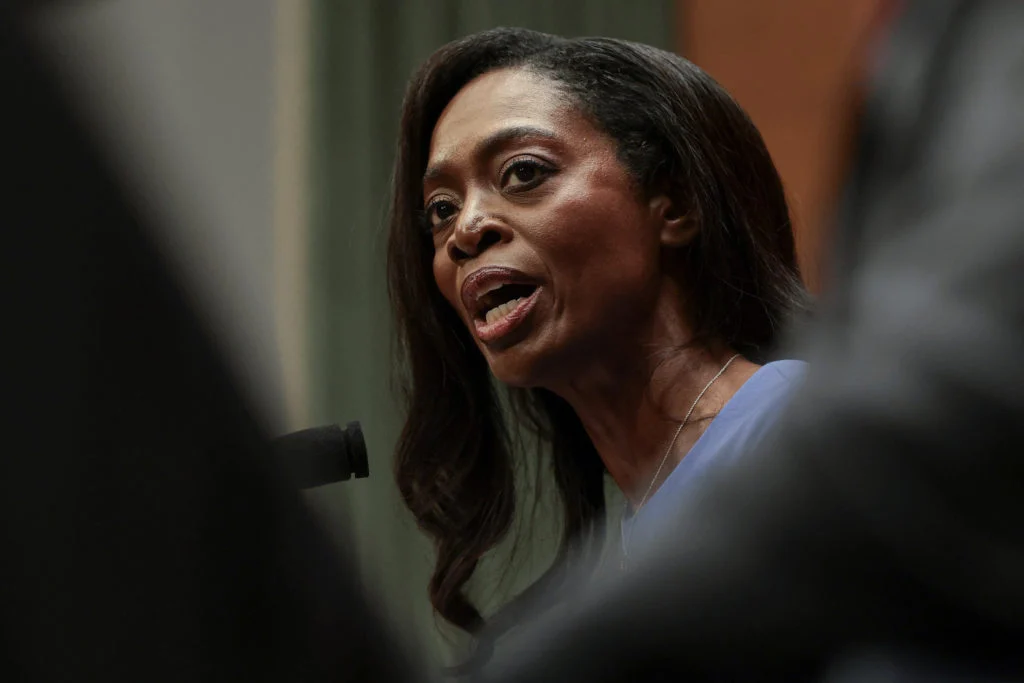
WASHINGTON, D.C. — In a pivotal moment for the nation’s public health infrastructure, the United States Senate confirmed Dr. Erica Schwartz as the director of the Centers for Disease Control and Prevention (CDC) on Wednesday. The 51-44 vote concludes a grueling year-long leadership vacuum at the Atlanta-based agency, which has been reeling from a combination of high-level resignations, political friction, and a mass exodus of its veteran workforce.
Dr. Schwartz, 54, steps into the role as the 22nd director in the agency’s history. Her appointment marks a critical attempt to restore stability to a federal institution that has struggled to maintain its scientific mandate amidst the crosscurrents of the Trump administration’s public health agenda.
The Path to Confirmation: A Test of Independence
The road to the CDC director’s office was anything but smooth for Dr. Schwartz. Her nomination, introduced in April, initially faced intense skepticism from both sides of the aisle. During a Senate Health, Education, Labor and Pensions (HELP) Committee hearing last month, legislators pressed her on the central dilemma of her potential tenure: how to preserve the CDC’s scientific integrity under the oversight of Health and Human Services (HHS) Secretary Robert F. Kennedy Jr.
Kennedy, a prominent figure in the anti-vaccine movement, has been a lightning rod for controversy since taking the helm at HHS. Senators, including the committee chairman, Sen. Bill Cassidy (R-La.), specifically questioned whether Dr. Schwartz would possess the fortitude to defy directives from the Secretary that might contradict established medical science or public health best practices.
"The core of the agency’s mission is data-driven, evidence-based policy," Cassidy remarked during the confirmation process. "We needed assurance that the next director would not be a rubber stamp for political agendas, but a defender of the institutional autonomy required for public health."
Following the hearing, Dr. Schwartz engaged in a series of private consultations with committee members. According to Sen. Cassidy, these off-the-record dialogues were instrumental in swaying the vote. By the time the nomination reached the floor, the apprehension that had previously clouded her path had dissipated enough to secure the narrow 51-44 majority.
A Chronology of Instability: 18 Months of Upheaval
The confirmation of Dr. Schwartz is the culmination of a chaotic 18-month period for the CDC, defined by the rapid turnover of leadership and a shift in the agency’s political orientation.
- The Weldon Withdrawal (March 2025): The administration’s first attempt to fill the post was Dr. David Weldon, a former Florida congressman. His nomination was withdrawn abruptly just one hour before his scheduled Senate hearing. Sources indicated that the White House realized it lacked the necessary support within the chamber to move him forward, signaling the first of many hurdles for the administration’s health appointments.
- The Short Tenure of Susan Monarez: Following the failure of the Weldon nomination, the administration turned to Susan Monarez, who had been serving as the acting director. While she managed to secure Senate confirmation, her tenure was shockingly brief. Within less than a month, she was terminated by the administration, with officials citing a lack of alignment with President Trump’s evolving health agenda.
- The Era of Acting Directors: Following Monarez’s ouster, the agency entered a state of bureaucratic limbo. A revolving door of HHS officials rotated through the acting director role, leaving the CDC without a permanent, confirmed leader to navigate the challenges of agency-wide morale and long-term strategic planning.
- The Appointment of Schwartz (April 2026): By the spring of 2026, the administration looked for a candidate with a more technocratic pedigree. Dr. Schwartz, with her background in the U.S. Coast Guard and as a former deputy surgeon general, was presented as a stabilizing figure.
Institutional Decay: The Human Cost of Political Meddling
The crisis at the CDC extends far beyond the director’s office. The agency has suffered a staggering loss of talent, with over 3,000 employees—roughly one-quarter of its total workforce—departing due to layoffs, early retirements, or resignations in protest.
Public health experts have repeatedly sounded the alarm regarding the "hollowing out" of the CDC. The departure of career scientists, epidemiologists, and public health analysts has left a void in institutional knowledge that cannot be easily replaced. Compounding this issue is the influx of political appointees into the agency’s front office—personnel who often lack the medical or public health training required to manage a global health security institution.
The decline in staff has manifested in the agency’s performance. Recent data highlights rising cases of preventable illnesses, such as measles, which have already eclipsed the total number of cases recorded in all of 2025. These metrics serve as a sobering reminder of the consequences of an agency that is under-resourced and politically constrained.
Supporting Data: The Trust Deficit
The erosion of the CDC’s internal structure has been mirrored by a collapse in public confidence. Recent polling data indicates that only half of U.S. adults trust the CDC’s public health recommendations. This decline in public trust is particularly concerning, as the agency’s efficacy relies heavily on the public’s willingness to follow its guidance during outbreaks.
The combination of shifting political messaging, the prominence of anti-vaccine rhetoric at the highest levels of the HHS, and the constant turnover in leadership has created a "trust gap." Analysts suggest that Dr. Schwartz’s primary challenge will not only be managing the agency’s internal operations but also launching a massive public-facing campaign to rehabilitate the CDC’s image as an objective, scientific authority.
Implications for the Future of Public Health
Dr. Schwartz’s confirmation brings an end to the period of "temporary" leadership, but it opens a new chapter of uncertainty. The implications for the remainder of the current administration are profound:
- Scientific Autonomy vs. Political Agenda: The central question remains whether Dr. Schwartz will be permitted to exercise the autonomy required to protect the nation from future health threats. Her background in the U.S. Coast Guard, known for its emphasis on discipline and structure, may serve her well, but the political environment remains highly volatile.
- Workforce Stabilization: One of the most urgent tasks for the new director will be to halt the "brain drain" at the CDC. Retaining remaining talent and attempting to recruit top-tier experts will require a culture shift that re-prioritizes science over ideological conformity.
- Cross-Agency Cooperation: As the leader of the CDC, Dr. Schwartz will need to navigate a strained relationship with the FDA and the office of the Surgeon General, both of which have also faced their own leadership vacancies and pressures. The ability of these agencies to act in concert is essential for a unified national health policy.
- Legislative Oversight: The Senate, having finally confirmed a director, will likely maintain a vigilant watch over the agency. Sen. Cassidy and other committee members have signaled that they expect regular briefings and transparency, effectively positioning the legislative branch as a safeguard against any future attempts to bypass scientific standards.
Conclusion
Dr. Erica Schwartz takes on a role that is arguably one of the most difficult in the federal government. She inherits an agency that is a shadow of its former self, hampered by internal attrition and external skepticism. While her confirmation provides a much-needed sense of permanence, the true measure of her success will be whether she can insulate the CDC from political volatility and restore its role as the world’s gold standard for public health.
As she moves into the Atlanta headquarters, the eyes of the medical community and the public remain fixed on the CDC. For a nation facing emerging health challenges and a fragmented public health landscape, the stakes could not be higher. Dr. Schwartz’s tenure will be defined by her ability to balance the demands of her political superiors with the solemn oath she holds to protect the health and safety of the American people.