




For many men, the transition past age 55 brings with it a quiet, often overlooked physiological shift: sarcopenia, or the age-related loss of muscle mass. While the conventional wisdom once suggested that muscle atrophy was an unavoidable consequence of aging, modern sports science has flipped the script. Research consistently demonstrates that men over 55 possess a remarkable capacity to not only maintain but actively build muscle, provided they implement a consistent, sustainable training signal.
The secret does not lie in grueling, multi-hour gym sessions that leave the joints inflamed and the nervous system depleted. Instead, it lies in the "minimum effective dose"—a strategic approach to strength training that emphasizes movement quality, consistency, and functional application. By focusing on five foundational movement patterns, men can preserve their metabolic health, improve their mobility, and ensure that their bodies remain as capable at 70 as they were at 40.
The Science of Muscle Maintenance: Why Consistency Trumps Intensity
To understand why a refined, simplified routine is superior for the over-55 demographic, we must look at the physiological markers of aging. After age 50, the body’s hormonal environment and protein synthesis rates begin to change. However, as noted in studies published by the National Center for Biotechnology Information (NCBI), the motor units in our muscles remain responsive to mechanical tension.
The Myth of the "Marathon" Workout
The most common mistake men make when attempting to re-engage with fitness is the "all-or-nothing" approach. They attempt to replicate the high-volume, high-intensity workouts of their youth, often leading to injury, burnout, and a complete cessation of training. Professional programming now favors a "practical training" model. This approach prioritizes movements that mimic the demands of daily life: pushing, pulling, hinging, lunging, and bracing. By integrating these patterns, we provide a systemic stimulus that keeps the body resilient without exceeding the capacity for recovery.
The Core Five: A Structural Framework for Strength
The following five exercises have been selected because they offer the highest "return on investment" (ROI). They require minimal equipment, are easily scalable, and hit every major muscle group in a single, efficient session.
1. The Push-up: The Foundation of Upper-Body Power
The push-up remains the gold standard for assessing upper-body integrity. It is a closed-chain kinetic exercise, meaning the hands are fixed to the floor, which engages the chest, shoulders, triceps, and—crucially—the core.
- Why it matters: As we age, the ability to support our own body weight is a primary indicator of longevity.
- Execution: Maintain a straight line from heels to head. If you struggle to complete six reps with perfect form, elevate your hands on a sturdy bench or box (the incline push-up).
- Programming: 2 to 3 sets of 6–12 reps. Focus on a slow, controlled descent (the eccentric phase) to maximize muscle fiber recruitment.
2. The Dumbbell Walking Lunge: Reclaiming Lower-Body Symmetry
Unilateral (single-leg) training is non-negotiable for men over 55. As we age, our bodies naturally develop imbalances—one leg often compensates for the other, leading to knee pain and gait instability.
- Why it matters: Walking lunges train the quads, glutes, and calves while simultaneously forcing the core to stabilize against shifting weight. This directly translates to better balance on stairs and uneven terrain.
- Execution: Take a controlled step forward, keeping the front knee aligned with the toes. Avoid "slamming" the back knee into the ground.
- Programming: 2 to 3 sets of 8–10 reps per leg. Start with body weight until the movement feels fluid before adding dumbbells.
3. Bent-Over Rows: Counteracting the "Desk Posture"
Modern life, characterized by prolonged sitting and screen time, pulls the shoulders into a perpetual state of forward rotation. This leads to weakened rhomboids and traps.
- Why it matters: The bent-over row acts as the antidote to sedentary slouching. It pulls the shoulders back, opens the chest, and strengthens the posterior chain.
- Execution: Hinge at the hips, keeping the spine neutral. Pull the weight toward your ribcage while squeezing your shoulder blades together. Keep the elbows tucked close to your torso.
- Programming: 2 to 3 sets of 8–12 reps. If lower back fatigue occurs, transition to a chest-supported row variation.
4. The Kettlebell Deadlift: The Ultimate Functional Hinge
The deadlift is often misunderstood as a "back exercise," but it is actually the ultimate hip-dominant movement. It teaches the body to lift using the powerful muscles of the posterior chain (glutes and hamstrings) rather than the fragile structures of the lower spine.
- Why it matters: This movement is the cornerstone of picking up groceries, luggage, or grandchildren. It is the most effective way to build raw, functional strength.
- Execution: Place the kettlebell between your feet. Push your hips back as if closing a car door with your glutes. Keep the weight centered.
- Programming: 2 to 3 sets of 8–10 reps. Prioritize a neutral spine over the amount of weight used.
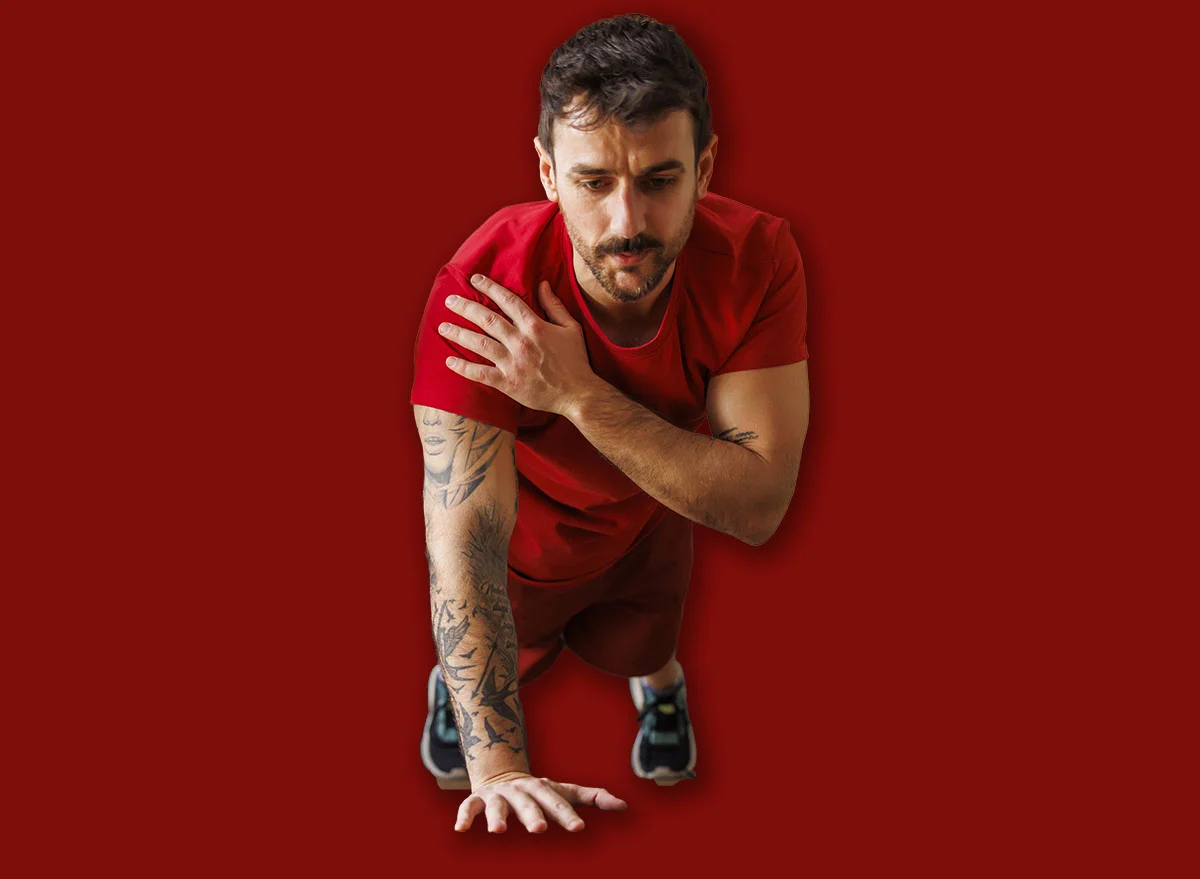
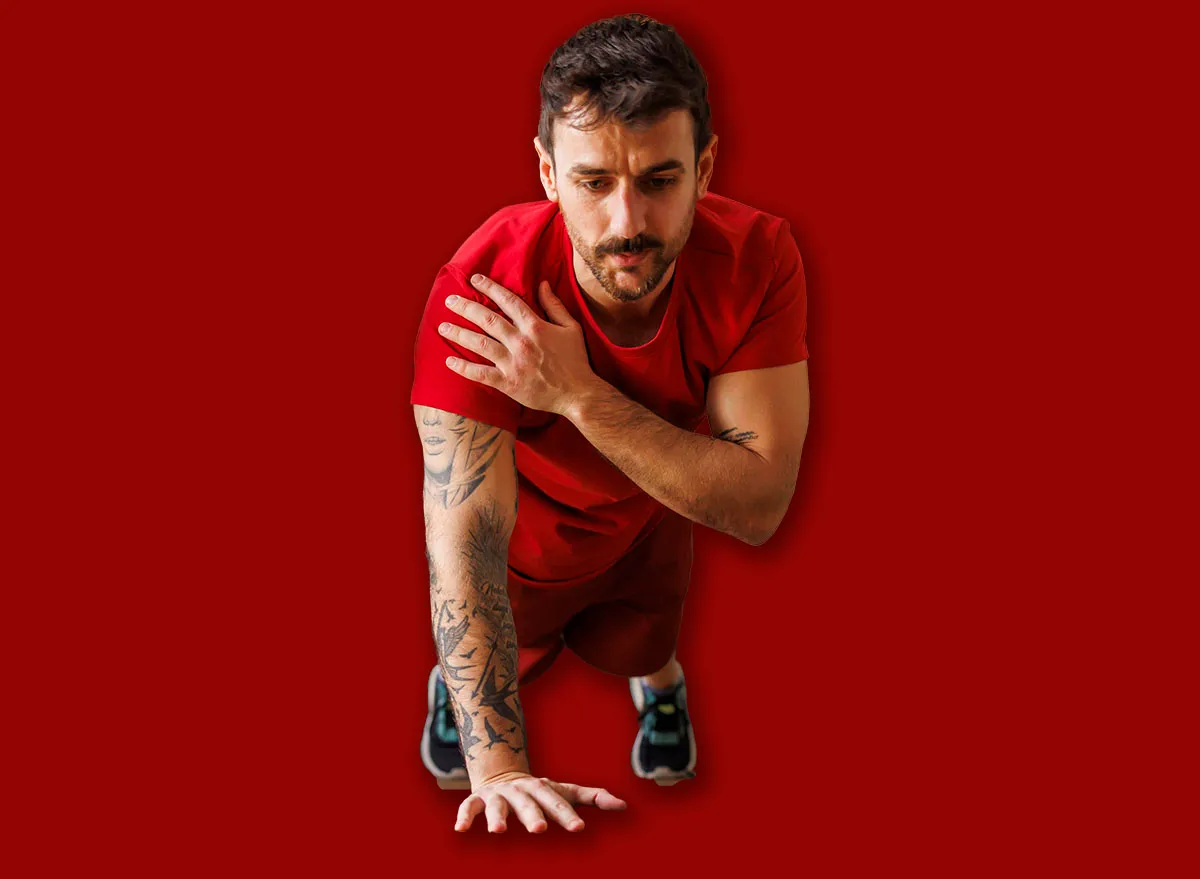
5. Plank with Shoulder Taps: Active Core Stability
A static plank is fine for beginners, but adding a shoulder tap introduces an anti-rotational challenge. Your core must work to prevent your torso from twisting as you shift your weight from one hand to the other.
- Why it matters: This exercise bridges the gap between static strength and dynamic movement, protecting the lumbar spine during everyday activities.
- Execution: Hold a top-of-pushup position. Slowly lift one hand to touch the opposite shoulder. Keep the hips perfectly still.
- Programming: 2 to 3 sets of 6–10 taps per side. If the hips rock, widen your stance.
Supporting Data: The Impact of Strength on Healthspan
The medical community has reached a consensus: strength is a vital sign. A 2024 study published in PubMed highlights that older adults who engage in resistance training at least twice weekly experience a 40% lower risk of all-cause mortality. This is attributed not just to muscle mass, but to the secondary effects of strength training: improved insulin sensitivity, increased bone mineral density, and enhanced metabolic rate.
When you train for strength, you aren’t just sculpting muscle; you are optimizing your body’s ability to process glucose and handle physiological stress. This is the "implied benefit"—the idea that by training the muscles, you are essentially "future-proofing" your organs and skeletal system.
Official Responses and Clinical Perspectives
Geriatric specialists and physical therapists are increasingly moving away from the "rest more" advice that was prevalent in the 1990s. The current clinical consensus is that "motion is lotion."
According to leading researchers in sports medicine, the biggest risk for a man over 55 is not the stress of lifting a weight, but the fragility of a sedentary lifestyle. Clinical protocols now recommend that unless there is a specific orthopedic contraindication, men should seek out a degree of resistance that makes the last two reps of any set feel "challenging but achievable." This is the threshold where the biological signal for growth is strongest.
Implications for Your Daily Routine
To make this stick, you must treat your training like a professional commitment. You don’t need to be a "gym rat," but you do need to be a "regular."
- Frequency: Aim for 3 to 5 sessions per week.
- Intensity Calibration: Treat 80% of your sessions as "maintenance"—focus on perfect form and controlled tempo. On the remaining 20% of days, when you feel particularly energized, increase the load or the intensity.
- The Recovery Factor: Remember that the muscle grows during the rest period, not during the workout. Prioritize protein intake (aim for roughly 1.6 grams per kilogram of body weight) and ensure you are getting 7–8 hours of quality sleep.
Summary
The journey to maintaining muscle after 55 is not a sprint, nor is it a complex science project. It is a commitment to the basics. By mastering these five movements, you are providing your body with the necessary information it needs to stay strong, mobile, and independent. The goal is simple: to make your training a sustainable habit that supports your life, rather than a burden that disrupts it. Start today, keep it controlled, and let the results follow.