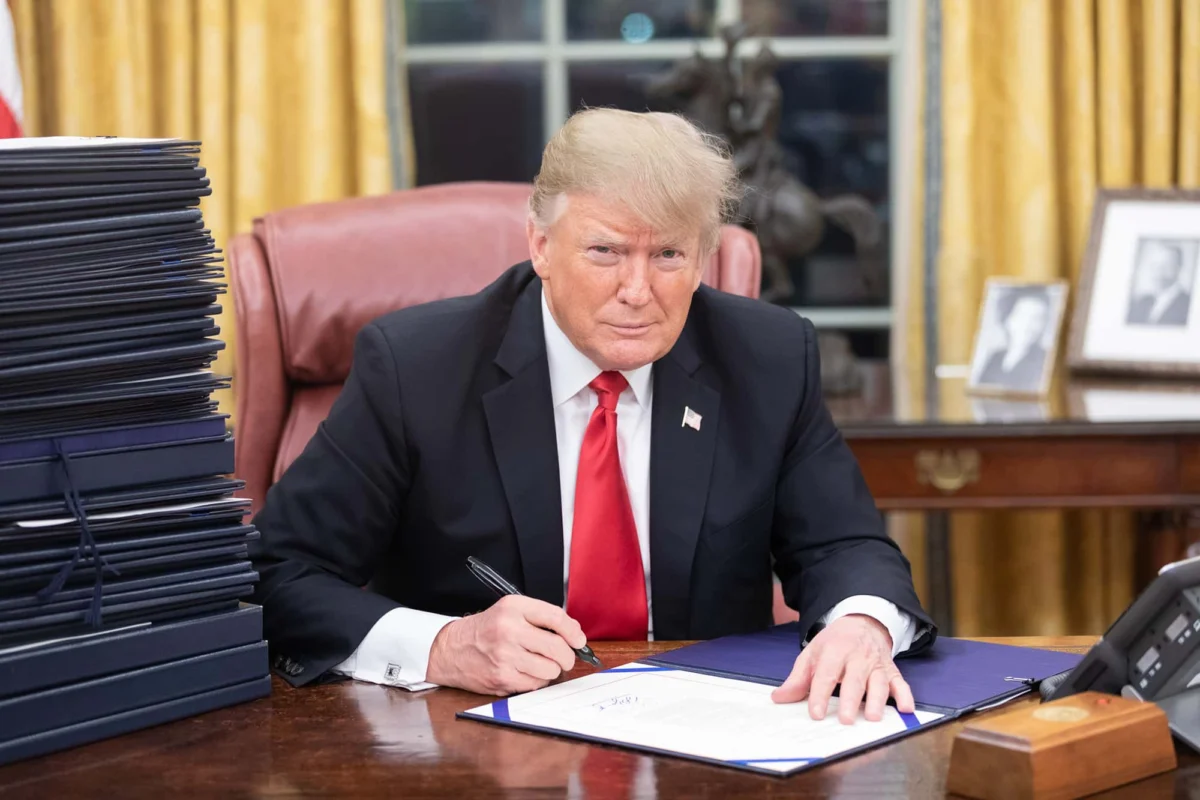
In a move that has sent shockwaves through the American public health infrastructure, President Donald J. Trump has issued a sweeping executive order intended to fundamentally restructure the national childhood immunization schedule. The directive, which the White House characterizes as a "gold standard" approach, seeks to limit the number of core vaccinations and mandates a logistical overhaul of how common inoculations—specifically the MMR (measles, mumps, and rubella) vaccine—are administered to infants and young children.
This policy shift arrives at a precarious moment for American public health, as the nation grapples with its highest number of measles cases since 1991. While the administration frames these changes as a common-sense measure to protect children, the medical community has responded with profound concern, citing the lack of scientific basis for the claims underpinning the order and the practical impossibility of executing several of its mandates under current market conditions.
The Core Mandates of the Executive Order
The executive order outlines a tiered approach to vaccination that deviates significantly from the current guidelines established by the Centers for Disease Control and Prevention (CDC) and the American Academy of Pediatrics (AAP).
Under the new directive, the government recognizes only 11 "core" vaccinations as essential for all children. An additional six vaccines are recommended only for specific high-risk cohorts, while a further six are designated for "shared clinical decision-making," a framework that shifts the burden of risk assessment more heavily onto individual parents and their pediatricians rather than relying on standardized public health mandates.
The most controversial component of the order is the directive regarding the MMR vaccine. President Trump has called for the immediate separation of the three-in-one shot into distinct vaccinations, administered across three separate appointments. During the announcement, the President expressed concerns that the combined delivery of these vaccines might be "quite lethal," a claim that directly contradicts the established scientific consensus that has governed pediatric medicine for decades.
A Chronology of the Policy Shift
The path toward this executive order has been marked by a long-standing skepticism expressed by President Trump regarding the prevailing vaccine schedule.
- Pre-2026: Throughout his political career, the President has repeatedly linked the timing and number of childhood vaccinations to the rising rates of autism spectrum disorder (ASD). Despite extensive, multi-decade studies involving millions of children that have consistently failed to find any causal link between vaccines and autism, these claims have remained a consistent feature of his public discourse.
- Early 2026: The administration began signaling an intent to review federal health guidelines, focusing on "vaccine safety" and "parental choice."
- Mid-2026: As measles outbreaks surged across the United States, the White House intensified its rhetoric, culminating in the formal drafting of the executive order.
- August 2026: The official fact sheet is released, outlining the "gold standard" recommendations and calling on state legislatures to align their school entry requirements with the new federal schedule.
Supporting Data and the Scientific Consensus
To understand the friction caused by this order, one must examine the depth of the existing data. For over half a century, the American medical establishment has relied on a "combined" vaccination schedule to ensure children receive protection against life-threatening diseases as early as possible.
The Myth of the "Soda-Bottle" Dose
During the announcement, President Trump remarked on the visual scale of vaccines, suggesting that the volume of medicine being injected into children at a single visit is excessive. "I’ve seen proof of where they have a vaccination thing that looks like the size of a bottle of soda and pour it into a little child’s body," the President stated.
Public health experts have spent the days following the order correcting this misconception. Modern vaccines are highly concentrated, and the total volume of liquid injected is biologically negligible compared to the immune response the body manages daily through environmental exposure to viruses and bacteria.
The MMR Logistics Problem
Perhaps the most significant hurdle to the executive order is a structural one: the vaccines simply do not exist in the format the President is demanding. Merck, the primary manufacturer of MMR vaccines in the United States, ceased production of individual monovalent vaccines in 2009.
Dr. Celine R. Gounder, a clinical associate professor of medicine at NYU Grossman School of Medicine, highlighted this absurdity in a recent interview with CBS News. "There is no currently licensed version in this country, no company has said they are building one, and the order only takes effect once those products exist," Gounder noted. The order essentially mandates a procedure that is physically impossible to perform under current medical supply chains.
Official Responses and Expert Pushback
The medical community’s response has been swift and unified. Organizations ranging from the American Academy of Pediatrics to the Vaccine Integrity Project have issued statements urging parents to ignore the administration’s rhetoric and adhere to evidence-based schedules.
Dr. Michael Osterholm, Executive Director of the Vaccine Integrity Project, took to social media to emphasize that a political directive does not overwrite the biological reality of immunology. "Today’s Executive Order does not change the underlying scientific evidence supporting childhood immunization," Osterholm stated. "That data has been built over decades through large clinical trials, real-world effectiveness studies, and continuous safety monitoring involving millions of children."
Critics argue that the administration’s attempt to politicize the vaccine schedule risks eroding the "herd immunity" that prevents mass outbreaks. By encouraging parents to space out vaccines or opt out of specific inoculations, experts fear a return to the prevalence of diseases that had been effectively eradicated in the U.S. for generations.
Implications for Public Health and State Law
The implications of the executive order are profound, particularly regarding the relationship between federal guidance and state authority.
The Pressure on State Legislatures
The White House has explicitly called on states to update their school vaccination laws to reflect the new "gold standard." In the United States, school vaccination requirements are determined at the state level. If states choose to follow the federal recommendation, it could lead to a patchwork of immunity levels across the country. States with more stringent requirements may see stability, while those that align with the new federal schedule could see a dramatic increase in susceptibility to outbreaks.
The Erosion of Trust
Perhaps the most lasting impact of this order is the potential damage to the doctor-patient relationship. Pediatricians across the country are now bracing for an influx of concerned parents who may demand delayed schedules or individual vaccinations that are currently unavailable. This places clinicians in the difficult position of having to reconcile federal political guidance with their own medical ethics and the best interests of their patients.
Public Health Risks
The timing of this order is particularly ironic given the resurgence of measles. Measles is one of the most infectious diseases known to humanity; it requires a vaccination rate of approximately 95% within a community to maintain herd immunity. Any policy that encourages parents to deviate from the established schedule—or that suggests the standard schedule is "lethal"—risks driving vaccination rates below the threshold required to protect vulnerable populations, such as infants too young to be vaccinated and those who are immunocompromised.
Conclusion: A Nation at a Crossroads
The executive order issued by the White House represents a fundamental departure from the scientific consensus that has kept American children safe for decades. By focusing on unsubstantiated theories regarding the timing of vaccines and mandating logistical changes that the current medical supply chain cannot support, the administration has introduced significant uncertainty into the nation’s public health landscape.
As the debate continues, the scientific community remains steadfast. The evidence, they argue, is not a matter of political opinion but of empirical observation. The path forward remains clear to those in the medical field: continued reliance on rigorous, large-scale clinical trials and the adherence to evidence-based practices that have saved countless lives. For parents, the message from the leading medical societies is one of caution and consultation: talk to your pediatrician, review the decades of data, and rely on the established medical consensus that has successfully navigated the complexities of human immunology for generations.
The coming months will likely see a battle in state houses and medical boards, as the reality of the healthcare system clashes with the mandates of the executive order. Whether this results in a shift in public behavior or a reaffirmation of current medical standards remains to be seen, but the stakes—the health and safety of the nation’s children—could not be higher.