The Democratic Republic of Congo (DRC) is currently grappling with an unprecedented public health catastrophe. With the death toll from the current Ebola outbreak surpassing 2,000, the crisis has officially cemented its status as the fastest-moving transmission event in the history of the virus. While global health experts have honed their response strategies over decades of managing viral outbreaks, the unique combination of a rare viral strain, extreme geopolitical volatility, and profound community distrust has created a "perfect storm" that is currently outpacing international containment efforts.
As of Tuesday, Congolese health authorities confirmed 4,381 cases, with 2,011 deaths. The velocity of this outbreak is harrowing; the current death toll was reached nearly three times faster than the 2014–2016 West Africa epidemic, which remains the deadliest in history. The virus is not merely moving through bodies; it is moving through a landscape defined by conflict, poverty, and misinformation, rendering traditional containment strategies largely ineffective.
The Chronology of an Escalating Emergency
The origins of this outbreak are shrouded in a period of silent transmission. According to recent disclosures from the World Health Organization (WHO), the outbreak began in February, though it was not officially recognized or declared until mid-May. This delay, compounded by the fact that the virus was initially misidentified, provided the pathogen with a critical head start.
- February: The virus begins circulating in remote, under-resourced communities in eastern Congo.
- Mid-May: The outbreak is officially declared after lab tests finally confirm the presence of the virus.
- Summer/Autumn: The virus spreads rapidly across five provinces. The WHO acknowledges that the virus is "ahead of us," as Dr. Mohamed Yakub Janabi, WHO regional director for Africa, noted in a recent briefing.
- Current Status: With 60% to 70% of new cases now occurring outside of tracked contact lists, the virus has moved into a phase of uncontrolled community transmission.
A Rare and Elusive Adversary: The Bundibugyo Strain
The complexity of this response is fundamentally tied to the specific pathogen involved. Unlike the Zaire ebolavirus, which is more commonly encountered and for which diagnostic protocols are well-established, this outbreak is driven by the Bundibugyo virus.
The strain’s rarity contributed to a dangerous delay in the early weeks of the response; laboratories were initially testing for the more common Zaire strain, leading to false negatives and a sense of false security among local authorities.
Ebola, by nature, is a brutal disease. It is highly contagious, transmitted through direct contact with the bodily fluids of an infected person—including blood, vomit, and semen—as well as through contaminated surfaces like bedding and clothing. The clinical presentation is severe, characterized by rapid-onset fever, debilitating muscle pain, vomiting, diarrhea, and, in advanced stages, systemic hemorrhaging.
Because traditional burial customs—which involve the washing and preparation of the deceased by grieving family members—are primary vectors for transmission, the WHO and local health teams have had to implement strict, safe-burial protocols. These restrictions have been met with intense community pushback, as they strike at the heart of cultural and religious mourning rituals, fueling the anger and suspicion that health workers face daily.
Volatility in the Heart of the Crisis
The containment of any epidemic requires a stable, trusting environment. Eastern Congo, however, offers the opposite. The outbreak is unfolding in a region that has been the epicenter of decades of armed conflict.
Humanitarian workers and medical responders are operating under the constant threat of violence. In cities like Goma, which serves as a major humanitarian hub, the presence of rebel groups and a highly mobile, displaced population has created a logistical nightmare.
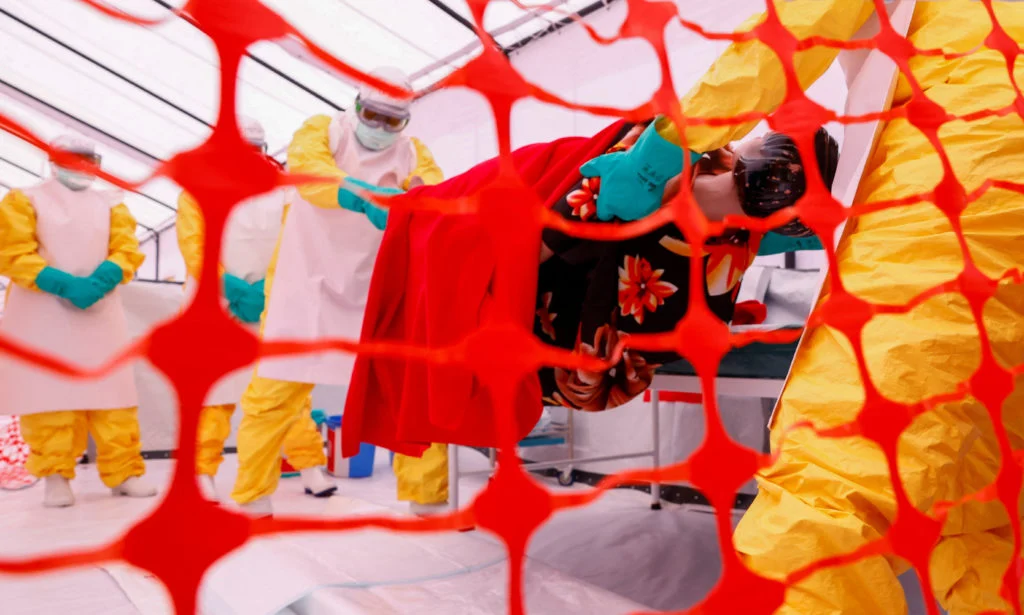
The social fabric in these provinces is frayed by long-term trauma. When outsiders arrive in hazmat suits to manage "safe burials" or quarantine families, they are often viewed not as healers, but as agents of an oppressive system or participants in a "scam." Misinformation has proliferated, with some locals claiming that Ebola is a fabrication designed to exert control over their land and people. This distrust has led to direct attacks on treatment centers, forcing health teams to operate with security escorts and often in secret.
Supporting Data: The Cost of Limited Care
The disparity between the 2014-2016 epidemic and the current situation is illuminated by the lethality rates. While the Zaire strain is often cited as the most deadly, this Bundibugyo outbreak is killing a higher percentage of those infected. The reason is not necessarily the virulence of the strain, but the lack of timely, supportive care.
The infrastructure of the healthcare system in eastern Congo has been decimated by years of civil unrest. As a result, many patients arrive at treatment centers too late to be saved. Furthermore, a secondary crisis has emerged: fear of the virus is causing the public to avoid hospitals entirely. Expectant mothers are choosing to give birth in unsanitary home conditions rather than enter clinics, leading to a rise in maternal and neonatal mortality that is not officially linked to Ebola but is directly caused by the fear surrounding it.
Compounding this is the precarious state of the labor force. The Congolese government has struggled to provide consistent pay to the frontline responders—the researchers, drivers, gravediggers, and nurses who put their lives on the line daily. Recent labor strikes by these essential workers have forced the closure of some treatment facilities, creating dangerous gaps in the containment net. While some have returned to work under the promise of future payment, the fragility of the workforce remains a significant vulnerability.
Official Responses and the Quest for Treatment
The international community is currently mobilizing in a desperate bid to turn the tide. The WHO has acknowledged that "chasing the virus" is no longer a sustainable strategy; the response must be proactive.
In a significant development, researchers have launched a clinical study in the Ituri province to test two potential pharmaceutical interventions:
- Remdesivir: Originally developed by Gilead Sciences as a broad-acting antiviral and widely used during the COVID-19 pandemic, lab tests suggest it may have efficacy against the Bundibugyo virus.
- MBP134: An experimental cocktail of antibodies engineered by Mapp Biopharmaceutical specifically to target various Ebola strains, including Bundibugyo.
The WHO has structured this study to ensure that all participants receive the "best standard of care" while being randomized into treatment groups. However, the UN body has cautioned that results are not immediate. It could take months and a cohort of up to 1,000 participants to definitively determine if these treatments can lower mortality rates.
Implications for Global Health Security
The implications of this outbreak extend far beyond the borders of the DRC. The region is adjacent to Uganda, Rwanda, and South Sudan. Given the highly mobile nature of the population, particularly those fleeing conflict, the risk of international spread is a constant, looming threat.
The crisis serves as a stark reminder of the limitations of modern medicine when faced with the realities of geopolitical instability. Vaccines and antivirals, no matter how sophisticated, are only as effective as the systems that deliver them. When a healthcare system lacks the trust of the community it serves, and when health workers are forced to strike for their own survival, the virus is granted the freedom to spread unchecked.
As the international community continues to pour resources into the region, the primary challenge remains: how to bridge the gap between scientific intervention and community reality. Without a concerted effort to address the root causes of the instability, the misinformation, and the lack of basic infrastructure, the world may find itself witnessing a tragic, avoidable recurrence of this cycle. The fight against the Bundibugyo virus is not just a medical challenge; it is a profound test of international solidarity and the ability to operate in the world’s most difficult spaces.