








The Cancer Research Institute (CRI), the world’s leading non-profit organization dedicated exclusively to harnessing the immune system to cure cancer, has officially unveiled the recipients of its prestigious 2026 Scientific Achievement Awards. This year’s honors celebrate two titans of immunology whose work has fundamentally recalibrated the scientific community’s understanding of how the body detects, tracks, and destroys malignant cells.
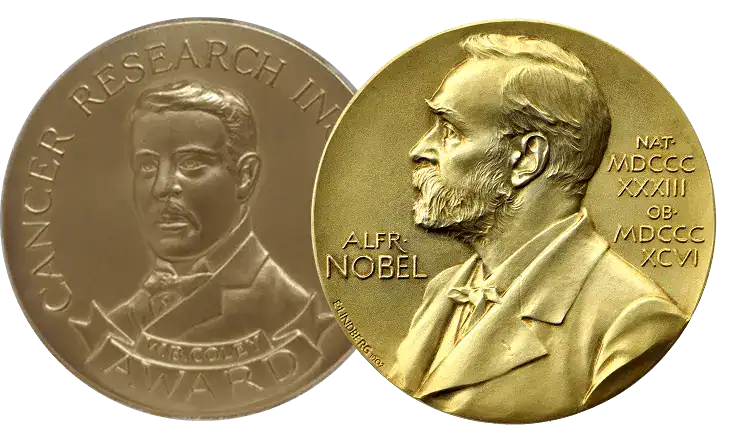
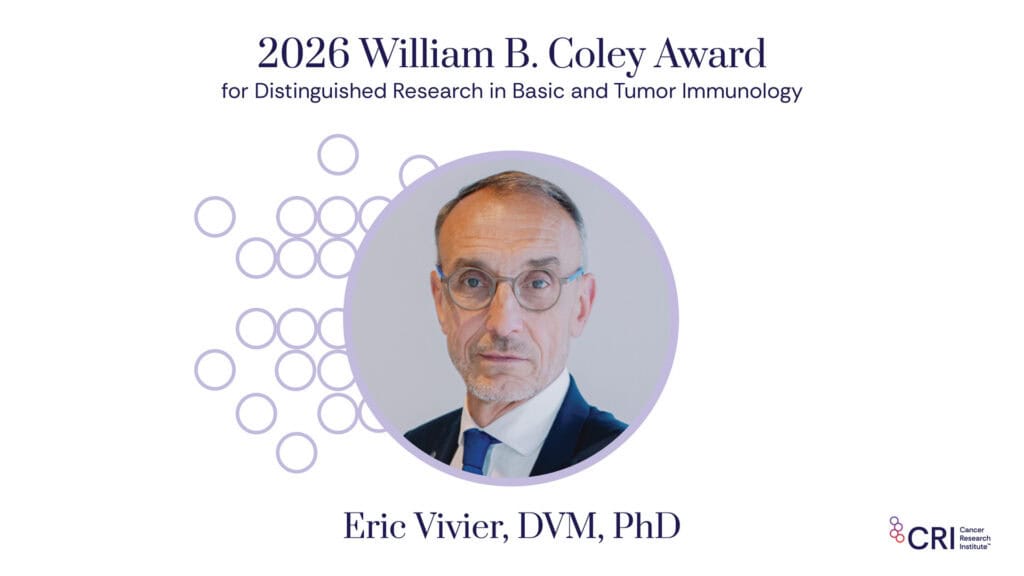
Dr. Eric Vivier, DVM, PhD, has been named the recipient of the William B. Coley Award for Distinguished Research in Basic and Tumor Immunology, while Dr. Joseph Sun, PhD, has been awarded the Frederick W. Alt Award for New Discoveries in Immunology. These accolades, which represent some of the highest honors in the field of cancer immunotherapy, will be formally presented during the CRI’s Annual Awards Gala on Tuesday, October 20, 2026, at the historic Guastavinos in New York City.
The Pillars of Modern Immunology: The 2026 Laureates
Eric Vivier: The Architect of Innate Immunity
Dr. Eric Vivier’s recognition with the William B. Coley Award is a testament to his decades-long dedication to unraveling the complexities of natural killer (NK) cells. As a Professor of Immunology at Marseille Medical School and the head of the Innate Lymphoid Cells laboratory at the Centre d’Immunologie de Marseille-Luminy, Dr. Vivier has occupied the vanguard of innate immunity research.
His career has been defined by the pursuit of a single, monumental question: How does the innate immune system recognize and eliminate cancer? His findings have moved beyond theoretical framework, helping to establish innate immunity as a cornerstone of modern cancer immunotherapy. Beyond the laboratory bench, Dr. Vivier has demonstrated a rare commitment to the translational pipeline, most notably as a co-founder of Innate Pharma, a biotechnology company that has bridged the gap between academic discovery and clinical reality.
Joseph Sun: Redefining Immunological Memory
The Frederick W. Alt Award for New Discoveries in Immunology goes to Dr. Joseph Sun, a researcher whose work has effectively blurred the lines between the two branches of the immune system. A Member of the Immunology Program at Memorial Sloan Kettering Cancer Center and Professor and Director of the Immunology and Microbial Pathogenesis Program at Weill Cornell Medical College, Dr. Sun has been instrumental in characterizing the "memory" of immune cells.
Dr. Sun’s research challenges the long-held dogma that innate immune cells are purely reactive. His work has demonstrated that NK cells possess adaptive features—most notably the capacity for clonal expansion and the formation of long-lived memory after exposure to pathogens. By mapping the molecular pathways that govern these processes, Dr. Sun has opened new doors for the design of next-generation therapies that aim to provide more durable, long-term anti-tumor responses.
A Chronology of Discovery: From Fellow to Laureate
The journey of these two scientists underscores the importance of long-term investment in basic research.
The Evolution of Dr. Vivier’s Impact
Dr. Vivier’s trajectory has been marked by consistent, high-impact contributions. Since 2015, he has been recognized as a Highly Cited Researcher, reflecting the foundational nature of his work on NK cell activation and inhibition. His election to the French National Academy of Medicine and the European Molecular Biology Organization (EMBO) reflects his status as a pillar of European science. His research into innate lymphoid cells (ILCs) has evolved from basic biological inquiry into a therapeutic landscape that now includes novel antibody treatments and cellular engineering strategies.
The Trajectory of Dr. Sun’s Career
Dr. Sun’s career is a poignant success story for the Cancer Research Institute. As a CRI Irvington Postdoctoral Fellow from 2007 to 2009, he conducted his formative research in the laboratory of Dr. Lewis Lanier at UCSF. It was during this period that Dr. Sun first identified the adaptive-like qualities of NK cells—a discovery that would define his career. Nearly two decades later, his elevation to the status of Alt Award recipient serves as a full-circle moment for both the researcher and the Institute that supported his early potential.
Supporting Data and Scholarly Influence
The weight of these awards is grounded in the sheer volume of influence these researchers have exerted on the global oncology community.
- Clinical Translation: Dr. Vivier’s work has been instrumental in the development of checkpoint inhibitors and novel therapies targeting NK cell receptors. His leadership at Innate Pharma has allowed for the transition of complex biological mechanisms into Phase II and Phase III clinical trials, directly impacting patient care options for patients with refractory tumors.
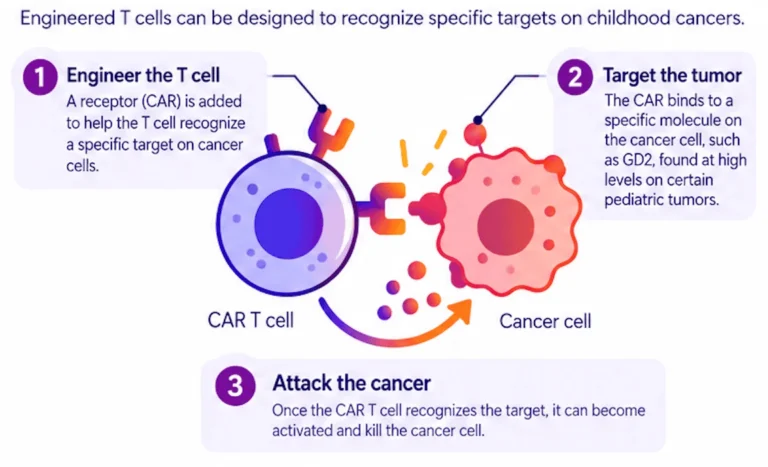
- Molecular Mapping: Dr. Sun’s research has utilized advanced genomic sequencing and single-cell analysis to map the transcriptional landscape of T cell and NK cell memory. His findings are currently being leveraged to engineer "smarter" CAR-T cells and NK cell-based therapies that are less prone to exhaustion in the tumor microenvironment.
Official Responses: A Community of Excellence
The announcement has been met with widespread acclaim from the scientific community, particularly from those who have followed the careers of these two individuals closely.
Dr. Lewis Lanier, a distinguished member of CRI’s Scientific Advisory Council and the mentor who oversaw Dr. Sun’s postdoctoral work, expressed his pride in the selection: "Dr. Sun has been an absolute leader in his field, and I’m so happy that we’re going to acknowledge him as being one of the superstars that launched their careers with his CRI Irvington Fellowship. His ability to challenge long-standing orthodoxies in immunology has been nothing short of transformative."
The Cancer Research Institute emphasized that these awards are not merely acknowledgments of past work, but investments in the future of the field. By honoring these researchers, the CRI reaffirms its commitment to the "basic-to-bedside" philosophy that has saved countless lives through the advancement of cancer immunotherapy.
The Future Implications: What Comes Next?
The implications of the work done by Dr. Vivier and Dr. Sun are far-reaching. As the field of oncology shifts toward personalized, multi-modal immunotherapy, the need to understand how the innate and adaptive systems communicate becomes paramount.
Advancing the "Innate" Revolution
Dr. Vivier’s upcoming Coley Lecture, scheduled for Sunday, November 8, 2026, at the Society for Immunotherapy of Cancer (SITC) Annual Meeting in Phoenix, Arizona, is expected to provide a roadmap for the next decade of NK cell research. His work suggests that by modulating the innate immune response, we may be able to prime the tumor microenvironment, making it more susceptible to traditional T-cell therapies.
Sustaining the Memory Response
Dr. Sun’s ongoing research into the longevity of immune memory provides a critical clue in the fight against cancer relapse. If clinicians can learn to program "memory" into therapeutic immune cells—forcing them to behave more like the resilient cells Dr. Sun has identified in his research—the rate of sustained remission could increase dramatically.
Conclusion
The 2026 Scientific Achievement Awards represent a celebration of intellectual rigor and perseverance. By honoring Dr. Eric Vivier and Dr. Joseph Sun, the Cancer Research Institute is highlighting the vital importance of basic science in the quest to conquer cancer. Their work, while distinct in its focus, converges on a singular, hopeful objective: to turn the human immune system into an impenetrable shield against malignancy.
As the global scientific community gathers in New York this October, the focus will not only be on the awards themselves but on the future pathways these researchers have carved. In the landscape of modern medicine, these two scientists have ensured that the future of cancer immunotherapy is not just brighter, but significantly more durable. The CRI’s recognition of their achievements serves as a catalyst for the next generation of researchers to continue asking the hard questions, pushing the boundaries of what is known, and ultimately, moving humanity closer to a world without cancer.