LOS ANGELES — When Natalia Castillo walked across the commencement stage at the University of California, Los Angeles (UCLA) in the summer of 2026, the diploma in her hand represented more than the completion of a double major in Cognitive Science and Art History. For Castillo, a mental health advocate and survivor, the walk was a public testament to survival. In a landscape where collegiate mental health is often discussed in terms of statistics and crises, Castillo’s journey offers a profound case study in how individual resilience, when bolstered by institutional support and community intervention, can transform trauma into a blueprint for systemic change.
Main Facts: A Journey of Survival and Advocacy
Natalia Castillo’s narrative is one of intersectional challenges and triumphs. Throughout her tenure at UCLA, she navigated a complex web of obstacles, including suicidal ideation, the aftermath of sexual assault, and significant financial hardship. However, rather than allowing these experiences to remain private burdens, Castillo integrated them into her academic and extracurricular identity, eventually serving as a pivotal leader in UCLA’s mental health landscape.
As the former Executive Director of UCLA’s Active Minds chapter and a representative on the UCLA Suicide Prevention Committee, Castillo was instrumental in the development and launch of the "Hope Connects Us" campaign. This campus-wide initiative aims to move beyond traditional reactive measures, focusing instead on a holistic approach to student well-being. Castillo’s work emphasizes a core philosophy: hope is not an individual commodity but a collective responsibility.
Her story highlights a critical shift in the mental health discourse—from focusing solely on clinical intervention to recognizing the power of "active hope" and peer-led advocacy. By the time of her graduation, Castillo had helped secure a legacy of preparedness and protection for future Bruins, proving that students with lived experience are the most vital architects of campus safety nets.
Chronology: From Crisis to Commencement
The path to Castillo’s graduation was neither linear nor guaranteed. To understand the significance of her 2026 graduation, one must look back at the decade of struggle that preceded it.
The Early Years: Survival as a Foundation
Castillo’s battle with mental illness began long before she set foot on the UCLA campus. During her high school years, she survived her first suicide attempt. In the immediate aftermath, she credits the presence and love of her younger sisters as the primary catalyst for her continued survival. This early experience established a pattern that would define her life: the realization that personal survival is often tethered to the relationships we hold with others.

The UCLA Years: Navigating Trauma and Hardship
Upon entering UCLA, the pressures of high-level academics were compounded by external traumas. Castillo faced a second suicide attempt and the devastating impact of sexual assault. During this period, the intersection of financial instability and mental health struggles created a "perfect storm" of vulnerability.
However, it was during this nadir that Castillo began to engage with Active Minds, a national organization dedicated to student mental health advocacy. Through this community, she began to process her grief and mental illness not as deficits, but as the raw materials for advocacy.
Senior Year: Institutional Impact
By her senior year, Castillo had transitioned from a student seeking help to a leader providing it. She was appointed to represent undergraduate students on the UCLA Suicide Prevention Committee. This role allowed her to bridge the gap between the student body and the administration, working alongside clinicians, faculty, and staff to refine crisis preparedness and coordinated care efforts. This culminated in the 2026 launch of the "Hope Connects Us" campaign, marking a milestone in UCLA’s history of student care.
Supporting Data: The State of Collegiate Mental Health
Castillo’s experiences reflect a broader, more urgent trend within American higher education. According to the Healthy Minds Study, which surveys thousands of college students annually, nearly 44% of students report symptoms of depression, and 37% report anxiety. More alarmingly, the rate of suicidal ideation among college-aged individuals has seen a steady increase over the last decade.
The Role of Peer Support
Data from Active Minds suggests that students are significantly more likely to turn to a peer than a professional during a mental health crisis. This "peer-first" reality underscores the importance of the work Castillo led. Programs that train students to recognize signs of distress—often referred to as "gatekeeper training"—have been shown to increase the likelihood of students seeking professional help by over 30%.
The Intersection of Art and Cognitive Science
Castillo’s academic focus on Art History and Cognitive Science provided a data-backed framework for her recovery. Research in neurobiology suggests that engaging with art can lower cortisol levels and improve cognitive flexibility. For Castillo, studying how artists throughout history transformed memory and conflict into beauty was not just an academic exercise; it was a form of clinical "re-framing," a cognitive-behavioral technique that allows individuals to view their trauma through a lens of growth rather than permanent damage.

Official Responses and Collaborative Efforts
The "Hope Connects Us" campaign, which Castillo helped spearhead, represents a formalized institutional response to the needs of students like herself. UCLA administration has highlighted the campaign as a "turning of collective insight into campus action."
The Four Pillars of "Hope Connects Us"
The campaign is built upon four strategic areas designed to create a "safety web" rather than just a "safety net":
- Promotion: Increasing awareness of mental health resources and destigmatizing the act of seeking help.
- Prevention: Implementing early intervention strategies and peer-to-peer support networks.
- Protection: Enhancing campus safety protocols and reducing access to lethal means.
- Preparedness: Training faculty, staff, and students to respond effectively to mental health crises.
UCLA officials have noted that the inclusion of student voices like Castillo’s was essential for the campaign’s authenticity. "We cannot design solutions for students without students," noted a representative from the UCLA Mental Health Advocacy Institute. "Natalia’s ability to translate her lived experience into policy recommendations has fundamentally changed how we approach crisis preparedness."
Furthermore, Castillo’s advocacy has been supported by the national Active Minds organization. Her work as a member of the Mental Health Advocacy Institute allowed her to scale her efforts, moving from local campus change to broader advocacy for historically marginalized and underserved youth.
Implications: A New Model for Resilience
The implications of Natalia Castillo’s journey extend far beyond the gates of UCLA. Her story challenges the traditional "resilience narrative" which often portrays the survivor as a lone hero who overcomes adversity through sheer willpower. Instead, Castillo’s experience posits that resilience is a communal product.
Moving Beyond the "Damaged" Label
One of the most significant implications of Castillo’s work is the rejection of labels. In her writing, she emphasizes that survivors of trauma do not need to be "fixed" or "rewritten." Instead, they need a space where they can remain "unfinished and imperfect, while still being worthy of being seen." This shift from a deficit-based model to a worth-based model is crucial for the mental health of marginalized students who may already feel "othered" by systemic barriers.

Advocacy for Marginalized Youth
Castillo’s future work focuses on youth who have been stereotyped or denied opportunities due to circumstances beyond their control. This highlights a growing movement within mental health advocacy to address "social determinants of health"—the idea that financial stability, racial equity, and social support are just as important as clinical therapy in preventing suicide and promoting long-term wellness.
The "Quiet Poetry" of Care
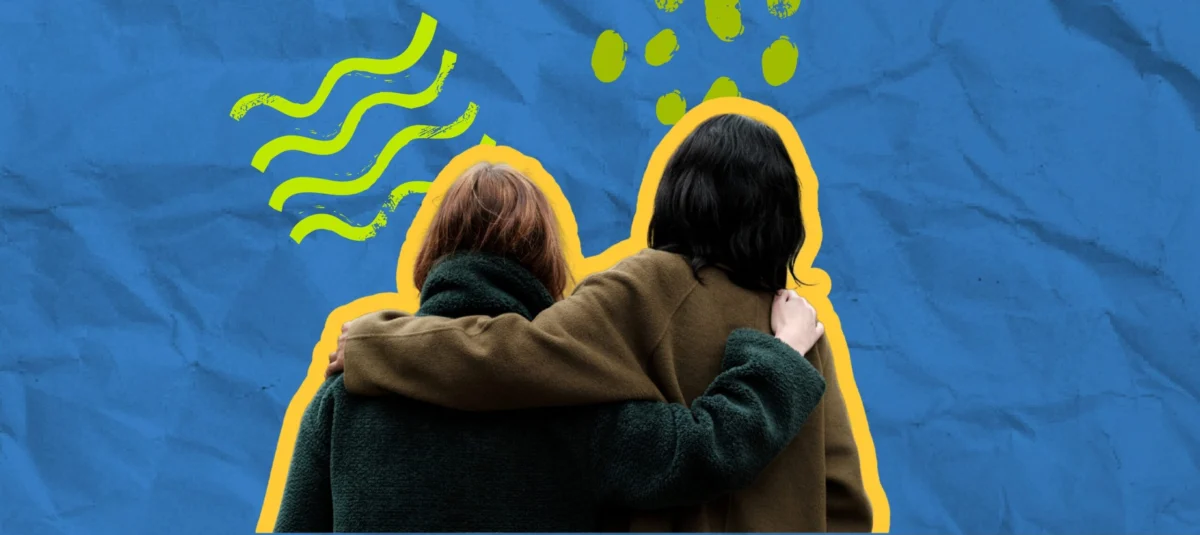
As Castillo moves into the next phase of her career, she leaves behind a philosophy of "quiet hope." She argues that hope does not always arrive with "loudness and certainty." Sometimes, it is found in the simple act of a friend sitting beside a person in pain, or a student choosing to "stay for one more tomorrow."
In the professional journalistic view, Castillo’s graduation is not the end of a story, but the beginning of a new standard for campus culture. By integrating art, science, and advocacy, she has shown that the most effective way to hold hope is to share the weight of it with others. Her legacy at UCLA serves as a reminder to academic institutions nationwide: when students are given the platform to turn their pain into purpose, the entire community becomes more resilient.
About the Subject: Natalia Castillo (they/she) continues to work as a mental health advocate, focusing on the intersection of cognitive science and social justice. They remain a vocal proponent for the mental health rights of underserved populations, ensuring that the next generation of students does not have to carry their burdens alone.
If you or someone you know is struggling or in crisis, help is available. Call or text 988 or chat 988lifeline.org in the US and Canada, or call 111 in the UK. These services are free, confidential, and available 24/7.