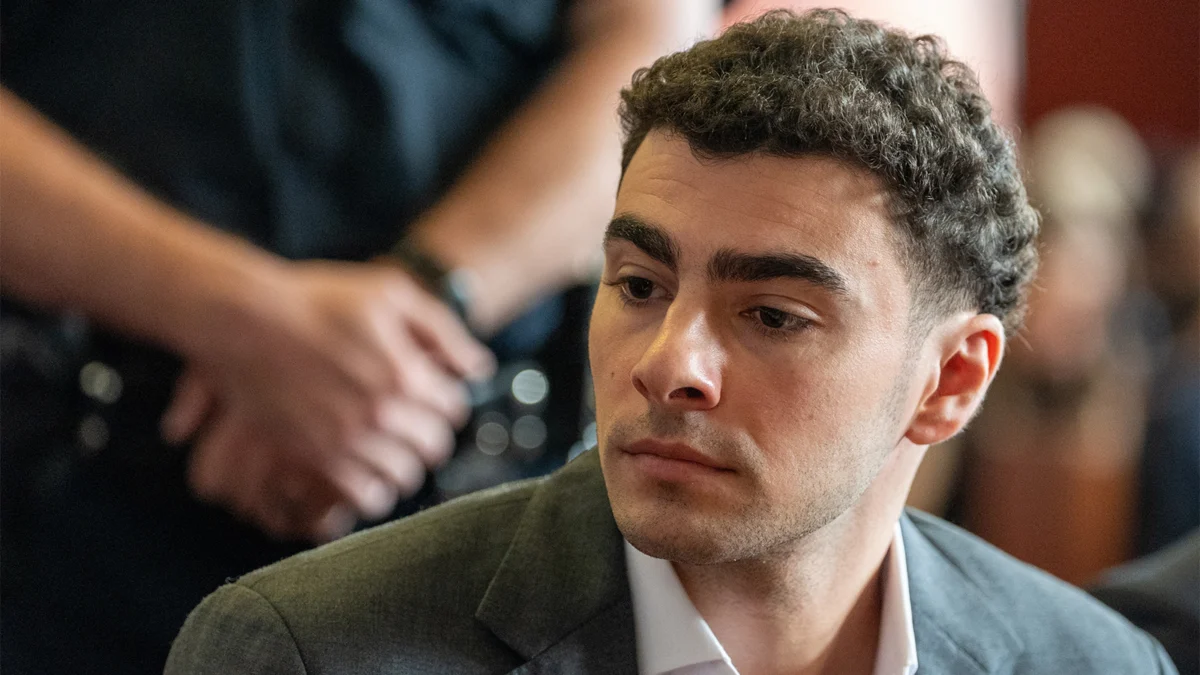
In a development that has sent shockwaves through the American judicial and corporate landscapes, Luigi Mangione, the 28-year-old accused of the brazen assassination of UnitedHealthcare CEO Brian Thompson, is reportedly poised to enter a guilty plea in federal court as early as Friday. According to individuals familiar with the proceedings, the shift signals a potential end to a complex, dual-track prosecution that has captivated the public and sparked a heated debate regarding the intersection of healthcare industry critiques and violent vigilantism.
While the prospect of a plea deal remains fluid—with sources cautioning that the defendant could reverse course at the eleventh hour—the sudden scheduling of a federal hearing has underscored the immense pressure surrounding a case that has become a flashpoint for anti-corporate sentiment in the United States.
The Chronology of an Assassination and Its Aftermath
The timeline of the tragedy began on the morning of December 4, 2024, in the heart of Manhattan. Brian Thompson, the 50-year-old chief executive of UnitedHealth Group, was walking toward a New York City hotel to attend an annual investor conference when he was ambushed. Surveillance footage captured the chilling efficiency of the attack: a masked gunman approached the executive from behind, firing point-blank before fleeing the scene.
The subsequent manhunt captivated the nation. For five days, law enforcement agencies mobilized, eventually tracking Mangione—an Ivy League graduate from a prominent Maryland family—to a McDonald’s in Altoona, Pennsylvania. Upon his arrest, federal authorities recovered a backpack containing a 3D-printed firearm, which forensic ballistics linked to the weapon used in the murder, and a handwritten notebook detailing a premeditated intent to target an insurance executive.
Crucially, the items found at the scene of the killing and on the suspect’s person included ammunition inscribed with the words "delay," "deny," and "depose." The phrases are widely recognized as a cynical shorthand for criticisms often leveled against the health insurance industry regarding the systemic obstruction of patient claims.
The Complex Web of Dual Jurisdictions
The legal maneuverings surrounding Mangione’s prosecution are as intricate as they are contentious. Mangione currently faces charges in both federal and state court. The federal case, centered on charges of stalking and interstate commerce violations, is moving toward a possible resolution. Conversely, the New York state murder case remains set for trial on September 8.
The Double Jeopardy Defense
Mangione has been a vocal critic of the redundant nature of his prosecution. In a February court appearance, the defendant famously argued against the logic of his legal predicament, stating, "It’s the same trial twice. One plus one is two. Double jeopardy by any commonsense definition."
Legal experts note that while New York law does not automatically bar state prosecution following a federal conviction, the defense is likely betting that a federal plea will provide a foundation to move for a dismissal of the state charges. The defense argues that the "course of conduct" is singular, regardless of the jurisdiction.
State prosecutors, however, have mounted a fierce resistance. In a pointed letter submitted to the court last month, prosecutor Joel Seidemann argued that any federal plea must respect the "sanctity of life principle" and the gravity of the homicide charges. State officials contend that their case is fundamentally distinct, focusing on the act of murder and firearm-specific statutes that differ from the federal interstate stalking charges.
Supporting Data: Evidence and Defense Strategies
The federal government’s case against Mangione is built on a mountain of forensic and documentary evidence. The recovery of the 3D-printed pistol and the incriminating notebook significantly curtailed the defense’s ability to argue against the factual occurrence of the crime.
The Rise and Fall of the Psychiatric Defense
Throughout the pre-trial phase, the defense team struggled to find a foothold. A major pivot occurred in June when attorneys announced plans to pursue a psychiatric defense, suggesting that Mangione suffered from "extreme emotional disturbance" at the time of the shooting. However, in a move that signaled significant internal disarray, the team reversed course just 24 hours later.
Legal observers note that the psychiatric defense is notoriously difficult to sustain in federal court, where the threshold for such claims is significantly higher than in state proceedings. By abandoning this route, the defense may have been attempting to consolidate their position before facing a potential life sentence.
The Death Penalty Ruling
Earlier this year, U.S. District Judge Margaret Garnett issued a pivotal ruling, taking the death penalty off the table. While this was a major victory for the defense, the judge simultaneously ruled that the items found in Mangione’s backpack—including the notebook and the firearm—would be admissible as evidence. This ruling effectively cemented the prosecution’s evidentiary advantage, likely serving as a catalyst for the current plea negotiations.
Official Responses and Public Sentiment
The assassination of Brian Thompson became a cause célèbre for a vocal segment of the American public frustrated with the complexities and perceived injustices of the healthcare insurance system. This polarization was evidenced by the emergence of a crowdfunding campaign that raised over $1.5 million for Mangione’s legal defense.
The "Free Luigi" Phenomenon
Outside the courthouse, the scene has frequently resembled a political rally. Supporters, often adorned in green—a nod to the Nintendo character Luigi—and wearing "FREE LUIGI" apparel, have turned the legal proceedings into a theater of protest. This public support has put the justice system in a delicate position: maintaining the impartiality of the court while managing a case that has become symbolic of deep-seated societal grievances.
The UnitedHealth Group, for its part, has remained largely focused on the memory of its late CEO, while the Justice Department and Manhattan prosecutors have maintained a strict, professional silence, declining all requests for comment regarding the timing of the plea or the potential resolution of the state-level charges.
Implications: A Precedent for Future Prosecutions?
The potential plea deal represents more than just the end of a trial; it reflects a broader tension between the rule of law and public discourse.
The Future of "Same-Act" Prosecutions
If Mangione’s defense succeeds in using a federal plea to undermine the state’s murder trial, it could set a complex legal precedent regarding "dual sovereignty." While the dual sovereignty doctrine generally allows both state and federal governments to prosecute the same act if it violates both state and federal law, the specific application in this case—where the defendant is explicitly using the federal resolution as a shield—will be closely watched by constitutional scholars.
The Healthcare Policy Debate
Perhaps the most significant implication of the Mangione case is its impact on the healthcare industry. The murder of a high-profile CEO forced an uncomfortable national conversation about the "delay, deny, and depose" culture within large insurance providers. As the legal chapter of this case closes, the policy questions it raised—about the ethics of insurance claim denials and the safety of corporate executives—remain unresolved.
As the federal court prepares for Friday’s hearing, the eyes of the nation remain fixed on the outcome. Whether the plea proceeds as expected or if the case returns to the volatility of a jury trial, the legacy of the Luigi Mangione case will likely endure as a grim reminder of the volatility inherent when corporate policy and personal desperation collide.
Summary of Pending Legal Status:
- Federal Court: A hearing is scheduled for Friday. A potential guilty plea would resolve the stalking and interstate charges.
- State Court: A murder trial is currently scheduled for September 8, 2024, pending the outcome of the federal proceedings and potential motions for dismissal on double jeopardy grounds.
- Defense Strategy: The abandonment of the psychiatric defense leaves a plea bargain as the most viable path to avoiding a life sentence without the uncertainty of a jury verdict.