






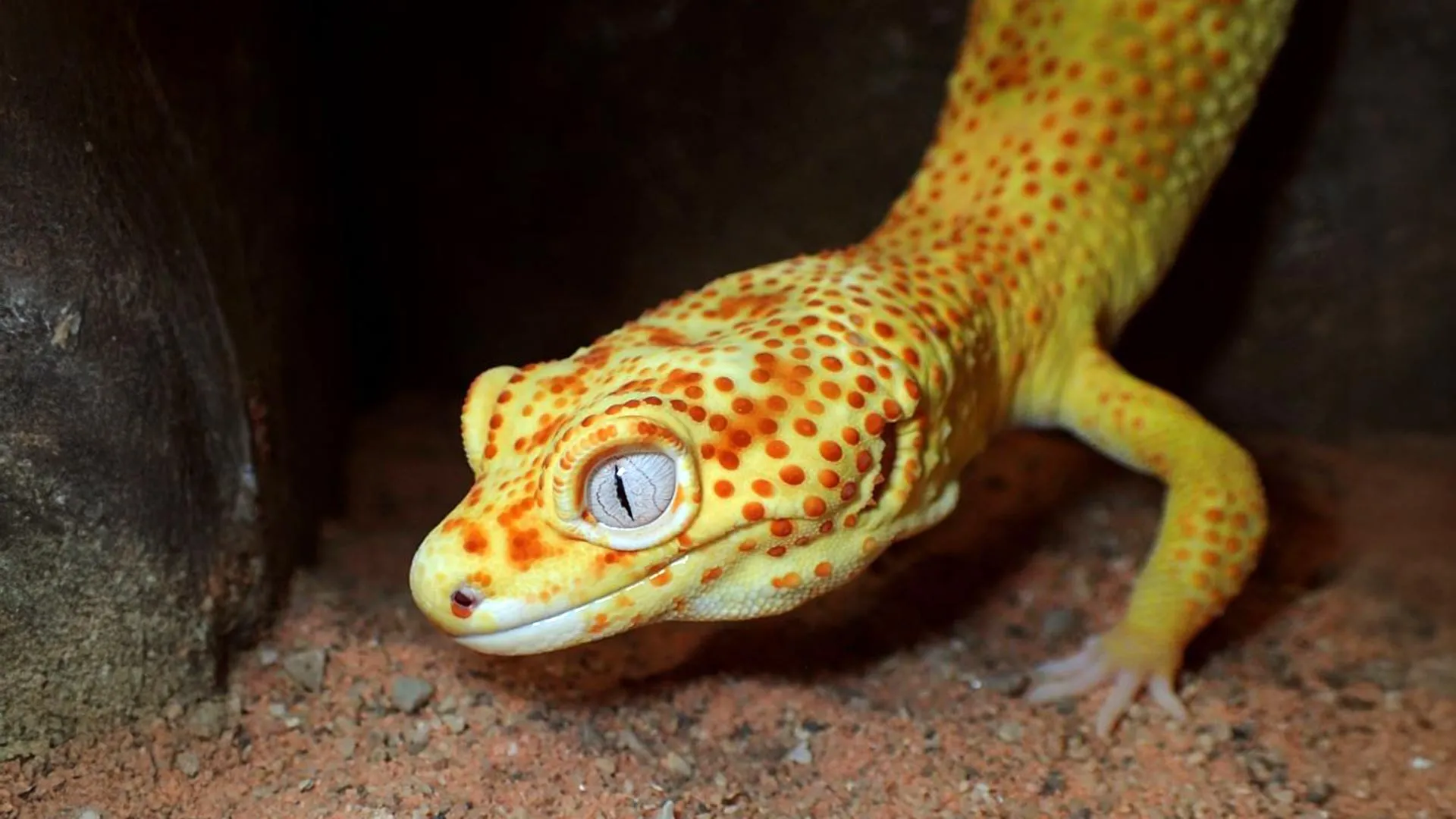
In the vast, complex theater of evolutionary biology, few creatures capture the imagination quite like the "lemon frost" leopard gecko. With its striking, high-contrast palette of white and yellow, this reptile became an instant sensation in the pet trade. Yet, beneath its vibrant exterior lies a biological tragedy that has inadvertently turned the animal into a frontier for medical science. Researchers have discovered that this specific morph is prone to aggressive, metastatic cancers at an alarming rate—a quirk of genetics that, paradoxically, may hold the key to unlocking new treatments for human oncology.
A landmark study led by the University of Nottingham and published in BMC Biology suggests that these geckos are not merely a curiosity of selective breeding; they are a sophisticated, natural model for tumor development. By analyzing the genetic architecture of these tumors, scientists are uncovering biological pathways that mirror those found in human cancer, potentially broadening the horizons of how we study, detect, and treat the disease.
The Origin of a Biological Mystery: Chronology and Context
The emergence of the lemon frost leopard gecko is a testament to the unintended consequences of selective breeding. The morph first appeared as a spontaneous genetic mutation within a large commercial colony. Enthusiasts were immediately drawn to its distinct coloration, and the variety was rapidly propagated through the pet trade.
However, the rapid spread of the mutation revealed a dark side. Breeders soon observed an unsettling pattern: a significant majority of these geckos were developing unsightly, aggressive growths. Clinical observations confirmed that approximately 80% of lemon frost individuals develop tumors, many of which are malignant and capable of spreading throughout the body.
A Departure from Laboratory Standards
For decades, cancer research has relied heavily on "forced" models—typically laboratory mice in which tumors are artificially induced through chemical, viral, or genetic intervention. While these models have provided foundational knowledge, they are often criticized for their lack of "ecological validity"—the idea that a tumor grown under artificial stress may not accurately replicate the nuances of a disease that arises naturally in a living, breathing organism.
The lemon frost gecko offers a rare alternative: a naturally occurring, spontaneous cancer model. Because these tumors develop early in the animal’s life and follow a progression that mimics metastatic disease, they provide a "real-world" laboratory. Researchers can now observe the genesis and evolution of cancer without the confounding variables introduced by artificial induction.
Genomic Insights: Unlocking the Shared Language of Cancer
To understand why the lemon frost morph is so uniquely susceptible to cancer, an international team of researchers—comprising experts from the University of Nottingham, the University of Birmingham, Marquette University, the University of Florida, and the University of Trieste—conducted a comprehensive whole-genome sequencing project.
Mapping the Genetic Landscape
The research team performed a meticulous comparative analysis, sequencing both tumor samples and healthy tissue taken from the same geckos. This approach allowed them to isolate the specific genetic mutations responsible for the "lemon frost" phenotype and its accompanying malignancy.
The results were striking. The team identified a recurring set of genetic alterations across the tumors. Crucially, many of these mutated genes and the biological pathways they regulate are evolutionarily conserved, meaning they function in much the same way in humans as they do in reptiles. This discovery is a significant validation for the field of comparative oncology. It suggests that the biological "machinery" of cancer—the ways in which cells bypass programmed death and begin to replicate uncontrollably—is a deeply rooted process that spans the tree of life.
By applying sophisticated genomic software—tools originally designed to decode human cancer datasets—the researchers successfully adapted their methodologies to analyze the gecko’s genome. This cross-species application of bioinformatics proves that the fundamental secrets of human disease may be hidden within the DNA of creatures we have historically overlooked.
Official Perspectives: Why Biodiversity Matters
The study, spearheaded by Dr. Ylenia Chiari of the University of Nottingham’s School of Life Sciences, underscores a growing movement in the scientific community: the realization that biodiversity is a vital repository of medical intelligence.
Dr. Ylenia Chiari on Natural Models
Dr. Chiari emphasizes the dual nature of the research. "By studying why some animals are so susceptible to cancer while others are remarkably resistant, we hope to uncover the different ways species have evolved to deal with cancer," she explains. "Specifically, this gecko could become an incredible model in cancer research because tumors appear naturally at a relatively early age. Together, these natural strategies could inspire new ways of preventing, detecting, and treating cancer in humans."
A Global Collaboration
The international scope of the research team reflects the gravity of the findings. PhD researcher Brandon Hastings, who worked closely with Dr. Chiari, notes the broader implications for the scientific method. "Overall, our paper demonstrates the importance of looking across the tree of life in search of answers that are needed to better understand diseases that can have a profound impact on human life," Hastings says. "Methodologically, it also highlights that the variety of genomic software programs developed to analyze human cancers can be adapted to provide meaningful insights in diverse organisms."
The Call for Conservation
Dr. Scott Glaberman of the University of Birmingham adds a philosophical and conservation-minded dimension to the findings. "We often look inward to solve human problems, but every species has something to teach us," Glaberman observes. "By studying both animals that are vulnerable to cancer and those that resist it, we have far greater power to understand the disease itself. This is one of the many reasons why protecting biodiversity is so important."
Implications for Future Medical Research
The inclusion of the lemon frost gecko into the lexicon of research models marks a paradigm shift in how we approach oncology.
Bridging the Gap Between Reptiles and Humans
While it may seem counterintuitive to look at a lizard to understand a human ailment, the conservation of genetic pathways makes this a highly logical endeavor. Many of the genes linked to tumor suppression and cell-cycle regulation are ancient. When a gecko develops a tumor due to a failure in these conserved pathways, the molecular "fault line" is often identical to that found in human patients.
Complementary Research Models
The lemon frost gecko is not expected to replace laboratory mice; rather, it will serve as a powerful complement. By utilizing a diversity of models, researchers can triangulate the truth about cancer. If a potential therapeutic drug or genetic intervention shows promise in both a murine (mouse) model and a reptilian model, the likelihood of it succeeding in clinical trials for humans increases significantly.
The Role of Comparative Oncology
This study is a hallmark of the growing field of comparative oncology, which posits that the best way to understand the "whys" of cancer is to observe how it behaves across various species. While some animals, like the naked mole-rat, are virtually immune to cancer, others, like the lemon frost gecko, represent the opposite end of the spectrum. By mapping these extremes, scientists can pinpoint the exact biological levers that control cancer progression.
Conclusion: A Future Shaped by Unexpected Discoveries
The lemon frost leopard gecko has transitioned from a decorative pet to a critical subject of medical inquiry. Its story serves as a poignant reminder that nature’s mistakes—such as the spontaneous mutation that led to the lemon frost morph—can provide profound insights into the mechanics of life and disease.
As the scientific community continues to unravel the genetic mysteries of this small reptile, the implications for human health are clear. Every genetic pathway identified, every tumor progression observed, and every molecular interaction documented in these geckos brings us one step closer to a more nuanced understanding of cancer. In the pursuit of medical breakthroughs, we are reminded that the answers to our most pressing human problems may not be found in a test tube, but in the diverse and complex biology of the natural world.
The lemon frost gecko, in all its colorful vulnerability, has become a beacon of hope—a tiny, scaly sentinel in the ongoing battle against one of humanity’s most persistent and formidable foes.