








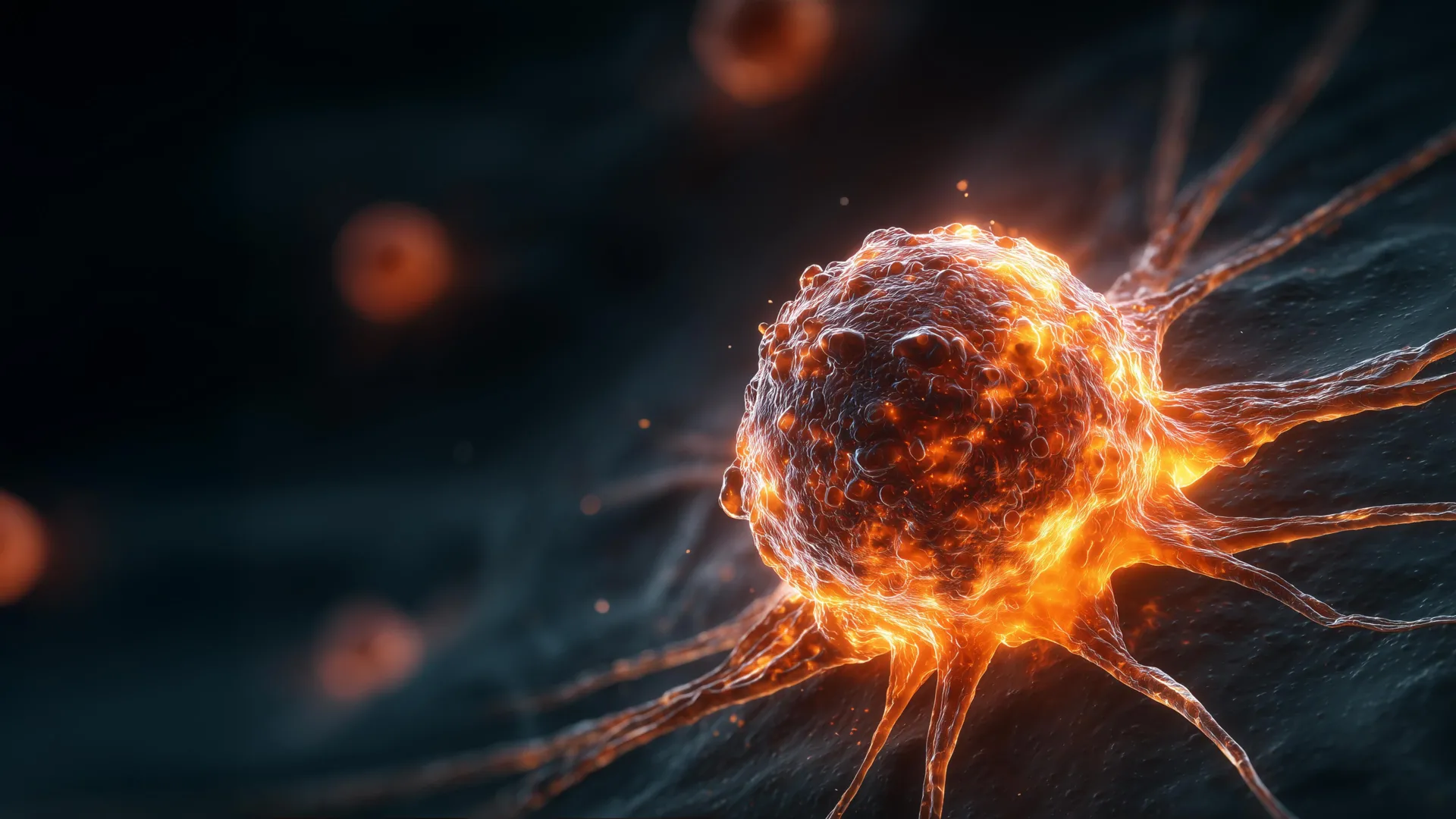
In the high-stakes world of oncology, the difference between a manageable tumor and an aggressive, treatment-resistant malignancy often comes down to the microscopic architecture of the cells themselves. For decades, scientists have understood that tumors are not merely collections of identical rogue cells; they are complex, evolving ecosystems. Now, a groundbreaking body of research from Virginia Tech is providing a clearer picture of how these ecosystems thrive, identifying two critical, previously overlooked factors: the strategic recruitment of healthy tissue and the paradoxical danger posed by smaller-than-expected cancer cells.
These findings, recently published in the Proceedings of the National Academy of Sciences and Cancer Research, represent a significant leap in our understanding of tumor biology. By shifting the focus from simple genetic mutations to the physical behavior and environmental manipulation of abnormal cells, the Virginia Tech team is opening new doors for prognostic modeling and, potentially, future therapeutic interventions.
The Laboratory Frontline: The Art of Observation
The journey to these discoveries was paved with years of meticulous, labor-intensive laboratory work. At the heart of this research is a team led by cell biologist Daniela Cimini, alongside graduate researchers Megan Sweet and Mat Bloomfield. The work is defined by a blend of high-level scientific rigor and the steady, rhythmic patience of traditional histology.
In the lab, Megan Sweet spends hours in a refrigerated chamber, carefully maneuvering tumor samples roughly the size of a pinkie fingernail. Using a precision blade, she slices these tumors into sections so thin that light can pass through them—a necessity for microscopic analysis.
"It’s all about fine-tuning and making sure it’s going to be an even slice," Sweet explains. While the process is repetitive—involving cycles of cutting, staining, and rigorous microscopic examination—it is this very precision that has allowed the team to uncover structural truths that automated high-throughput screening might miss. This "meditative" labor is the foundation upon which the team’s recent peer-reviewed breakthroughs were built, proving that even in an era of big data and AI, the human eye remains an indispensable tool in cancer research.
Chronology of a Discovery: From Tetraploidy to Tumor Progression
To understand the team’s findings, one must first understand the fundamental instability of cancer. Healthy human cells are "diploid," meaning they contain two complete sets of chromosomes. During cell division, these sets are perfectly replicated. However, cancer cells often suffer from errors in this process, leading to "aneuploidy" or, in more extreme cases, "tetraploidy"—a state where a cell contains four complete sets of chromosomes.
The Five-Year Trajectory
For the past five years, the Virginia Tech team has investigated the consequences of these chromosomal abnormalities. The chronology of their research unfolded in distinct phases:
- Inducing Tetraploidy: The researchers first manipulated diploid cancer cells to duplicate their chromosomes without completing cell division, effectively creating a population of tetraploid cells to serve as a model for tumor behavior.
- The Recruitment Hypothesis: The team observed that while tetraploid cells are inherently more tumorigenic, their contribution to a growing tumor was not as straightforward as once thought. By comparing tumors derived from diploid cells against those from tetraploid cells, they discovered a "recruitment effect."
- The Size Paradox: Parallel to the recruitment study, Mat Bloomfield began analyzing the physical dimensions of these cells. The assumption was that a cell with twice the DNA would be twice the size. The data, however, told a different story.
- Clinical Validation: Finally, the researchers cross-referenced their laboratory findings with the Cancer Genome Atlas, confirming that their observations in mouse models mirrored clinical realities in human patients.
How Cancer Hijacks the Body: The Recruitment Mechanism
One of the most profound revelations from the study is the way cancer cells act as "architects" of their own microenvironment. Scientists have long known that tetraploid cells make tumors more aggressive, but the mechanism behind this remained elusive.
When Sweet and Bloomfield observed the growth of tetraploid-driven tumors in mice, they noticed a peculiar phenomenon: the proportion of tetraploid cells within the tumor actually decreased over time. Yet, despite this numerical decline, the tumors expanded more rapidly than those composed purely of diploid cells.
The answer lay in the "stromal cells"—the non-cancerous connective tissue cells that provide structural support to organs. The team discovered that the tetraploid cells were chemically signaling these healthy stromal cells to migrate into the tumor mass.
"The presence of even a small fraction of these tetraploid cells can promote the recruitment of extra non-cancerous cells that support further tumor progression," Sweet noted. Essentially, the cancer cells were outsourcing their growth support to healthy tissue, effectively turning the body’s own infrastructure into a scaffold for the tumor’s expansion. This explains how even a small, minority population of abnormal cells can dictate the behavior of an entire tumor.
The Size Paradox: Smaller Cells, Greater Danger
Perhaps the most counterintuitive finding to emerge from the Virginia Tech laboratory concerns cell size. In the natural progression of biology, one would expect a tetraploid cell (with double the chromosomal material) to be significantly larger than a standard diploid cell.
Mat Bloomfield, however, observed that not all tetraploid cells followed this rule. In the colonies he established, some cells were 25 to 30 percent smaller than the expected size. When the team tested these smaller clones, the results were startling. These smaller, tetraploid cells were consistently more aggressive than their larger counterparts.
They displayed three distinct traits of high-risk malignancy:
- Rapid Proliferation: They reproduced at a higher rate than larger cells.
- Increased Invasiveness: They demonstrated a greater capacity to infiltrate surrounding tissues.
- Drug Resistance: They showed a heightened tolerance to standard chemotherapy and stress-inducing agents.
This pattern held true across multiple cancer types, including breast and colorectal cancers, suggesting that cell size is a universal, albeit previously ignored, biomarker for tumor aggression.
Official Perspectives and Clinical Implications
The implications of this research are substantial. By analyzing data from the Cancer Genome Atlas, the team confirmed that smaller tetraploid cells are indeed correlated with worse prognoses and lower survival rates in human patients.
"We already knew that tetraploidy can make cells more tumorigenic, but now we know that if you incorporate the size of the cells, it can be more predictive of tumorigenic potential," said Dr. Daniela Cimini.
For the clinical community, this provides a new diagnostic tool. If pathologists can quantify the distribution of cell sizes within a biopsy, they may be able to better categorize tumors as "high-risk" or "low-risk," allowing for more personalized treatment plans.
Future Directions
The Virginia Tech team is not resting on these findings. The next phase of their research involves diving deeper into the biological mechanisms that allow smaller cells to be more resistant to drugs. They aim to identify the specific signaling pathways that govern this "smaller-is-deadlier" phenomenon.
As the team continues to analyze human cancer data and refine their laboratory models, the goal remains clear: to translate these microscopic observations into tangible clinical benefits. For students like Megan Sweet and Mat Bloomfield, the path forward is marked by continued dedication to the lab bench—a testament to the fact that, even in the age of advanced oncology, some of the most critical answers are still found by looking through a microscope at a tissue sample, one thin slice at a time.
This research serves as a poignant reminder that cancer is a master of adaptation. By learning how these cells recruit healthy neighbors and how they manipulate their own physical size to survive, the scientific community is slowly stripping away the advantages that make cancer so formidable. As we better understand the mechanics of tumor growth, we move one step closer to developing therapies that can target these mechanisms, potentially turning the tide against the most aggressive forms of the disease.