










In the halls of clinical practice, the mandate for a physician is clear: primum non nocere—first, do no harm. However, for those on the front lines of American pediatrics, a new, man-made threat is emerging from the highest office in the land. On August 10, the administration took an unprecedented step into the realm of clinical practice, issuing an executive order that mandates a sweeping reorganization of the nation’s childhood immunization schedule.
The directive, which tasks the Department of Health and Human Services (HHS) with decoupling the measles, mumps, and rubella (MMR) vaccines and encouraging separate appointments for childhood immunizations, marks a seismic shift in public health policy. By sidelining decades of peer-reviewed clinical research in favor of unsubstantiated theories, the administration has placed the American medical community in a precarious position: forced to choose between political compliance and the established standards of evidence-based care.
The Anatomy of the Executive Order: A Departure from Science
The executive order is predicated on a premise that has been thoroughly dismantled by the scientific community: the assertion that childhood vaccines, particularly the MMR combination, are linked to autism. Despite the fact that millions of children have been studied across dozens of longitudinal, international peer-reviewed studies, no credible link between vaccines and autism has ever been established.
Dr. Annie Andrews, a pediatrician and Democratic nominee for the U.S. Senate, describes the order not as a medical advancement, but as a "dangerous experiment on our children." The order directs HHS to prioritize research into "alternative" immunization schedules and suggests that the existing protocols—developed by the American Academy of Pediatrics (AAP) and the Centers for Disease Control and Prevention (CDC)—are either insufficient or compromised.
The Problem with Decoupling MMR
From a logistical and medical standpoint, the proposal to split the MMR vaccine is, at best, impractical and, at worst, medically counterproductive. Currently, there are no licensed single-antigen vaccines for measles, mumps, or rubella in the United States. To implement this order, the government would have to oversee a massive, time-intensive manufacturing pivot for products that have not been shown to be superior to the current, highly effective combination.
Furthermore, the "separate appointment" mandate introduces significant friction into a system that relies on efficiency to maintain high coverage rates. Each additional visit creates a barrier for working parents, increases the administrative burden on already overextended pediatric practices, and creates "missed opportunities"—instances where a child remains unprotected because a second appointment was never made or kept.
A Chronology of Declining Immunity
To understand the stakes, one must look at the recent trajectory of public health in the United States. The 2026 data serves as a harrowing reminder of what happens when vaccine skepticism is elevated to federal policy.
- Early 2026: The United States records a steady uptick in vaccine hesitancy, fueled by national rhetoric questioning the "gold standard" of the current immunization schedule.
- Spring 2026: South Carolina experiences its most severe measles outbreak since the disease was declared eliminated in 2000. Spartanburg County becomes an epicenter, with 997 confirmed cases reported across the state.
- Mid-2026: National figures reveal that the U.S. has already surpassed its total measles case count for any year since 1991, with only six months of data collected.
- August 10, 2026: The executive order is signed, mandating a restructuring of vaccine administration protocols and calling for a federal "re-evaluation" of vaccine safety data.
This chronology is not merely a record of disease transmission; it is a timeline of the erosion of public trust. When the government signals that the "gold standard" of science is negotiable, the public is naturally inclined to question the necessity of the medical interventions themselves.
Supporting Data: The Reality of Preventable Disease
The skepticism surrounding vaccines often ignores the grim reality of the diseases they prevent. Pediatricians like Dr. Andrews have spent their careers treating the fallout of preventable illnesses.
The current immunization schedule is not an arbitrary list; it is a precisely calibrated timeline designed to protect children during their most vulnerable developmental windows. Vaccines generate the strongest immune response at specific ages, and the schedule is designed to ensure that maximum protection is reached before a child is exposed to common pathogens in school or daycare environments.
The Cost of Hesitancy
When vaccination rates drop, the "herd immunity" threshold—the percentage of the population that must be immune to prevent an outbreak—is breached. For highly contagious diseases like measles, which requires a 95% vaccination rate to maintain community immunity, even a slight dip can result in explosive outbreaks.
Clinical evidence shows that children who are unvaccinated or under-vaccinated are significantly more likely to suffer from severe complications, including:
- Encephalitis: Inflammation of the brain, a potential complication of measles.
- Apnea: Life-threatening pauses in breathing, common in infants with pertussis (whooping cough).
- Respiratory Failure: Often associated with severe RSV, which is exacerbated in children whose immune systems are struggling to combat multiple infections simultaneously.
Official Responses and Political Rhetoric
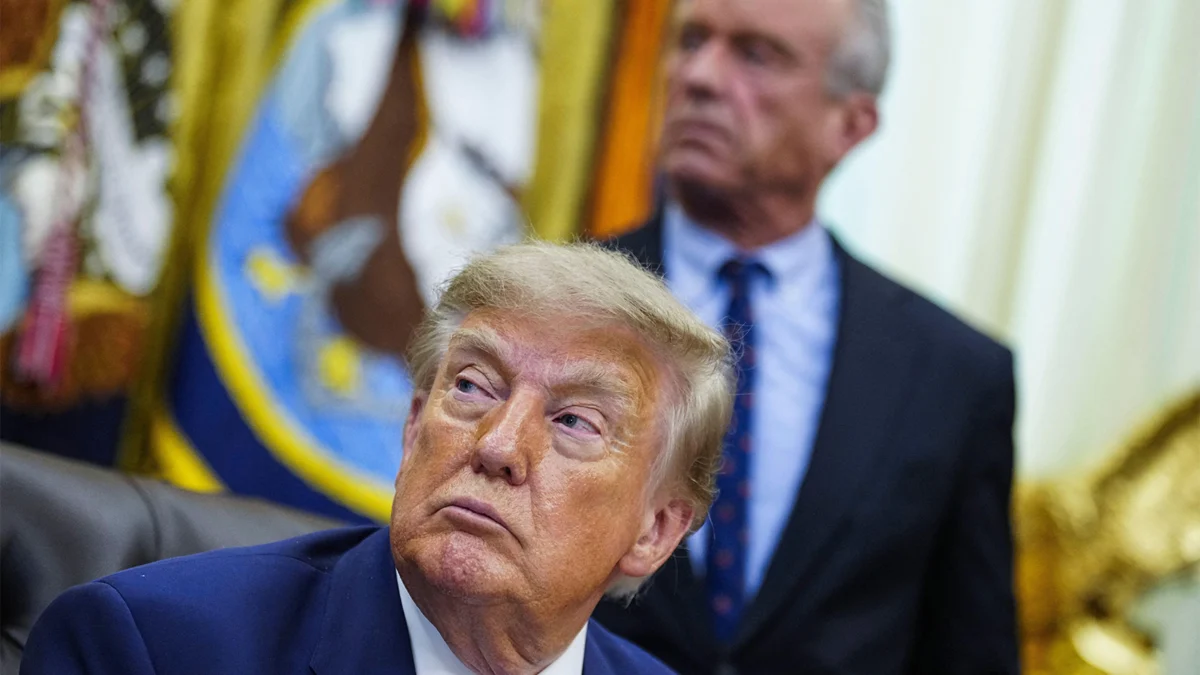
The administration has framed this directive as a triumph of "parental rights" and "constitutional freedom." In recent statements, President Trump and HHS Secretary Robert F. Kennedy Jr. have characterized the order as a necessary correction to a "bureaucratic" public health establishment.
"This is a major victory for parents’ rights, religious and constitutional rights, and for the gold standard science," the President remarked during the signing ceremony.
However, the medical establishment has reacted with alarm. Leading pediatric organizations and infectious disease experts have argued that the administration is confusing "parental rights" with the "public right to health." They contend that while parents have the right to make decisions for their children, those decisions have consequences that extend to the community at large. By creating policy based on feelings rather than empirical evidence, the administration is effectively weaponizing misinformation.
Implications: The Burden on the Healthcare System
The implications of this executive order extend far beyond the doctor’s office. They represent a fundamental shift in the relationship between the state and scientific expertise.
1. The Erosion of Physician Autonomy
When a politician dictates the clinical schedule for vaccinations, it undermines the professional autonomy of doctors. Physicians are trained to provide care based on the latest evidence; being forced to adhere to a schedule that contradicts that evidence puts them in an untenable ethical position.
2. The Practical Burden on Families
By requiring multiple, separate appointments, the policy disproportionately harms working-class families. Parents who cannot afford to take multiple days off work, or who lack reliable transportation, will be the most likely to fall behind on their children’s vaccinations. This creates a two-tiered system of health security, where access to preventative care becomes a privilege of the few rather than a standard for all.
3. A Precedent for Future Policy
If the government can ignore decades of research on vaccines, it sets a dangerous precedent for other areas of public health, from climate-related environmental regulations to nutritional guidelines. When political ideology is allowed to override medical consensus, the health of the entire nation becomes a variable in a political calculation.
Conclusion: The Call for Accountability
The debate over vaccines is often presented as a conflict of opinion, but in the clinical setting, it is a conflict between life and preventable tragedy. As a physician, one does not see "policy debates"; one sees the toddler in the emergency room with a spinal needle in their back, the infant struggling to breathe, and the exhausted parents facing a crisis that could have been avoided with a simple, evidence-based injection.
The current administration’s reliance on debunked theories is a form of malpractice at the federal level. Just as a physician’s license is tied to their adherence to established standards of care, elected officials must be held accountable for the health consequences of their policy decisions.
As we move through the latter half of 2026, the question is not just about how to manage the next measles outbreak, but about how to reclaim the public’s trust in science. If the nation fails to reconcile its political ambitions with the realities of medical evidence, it will be the children who pay the price—a cost that no political victory can ever justify.