









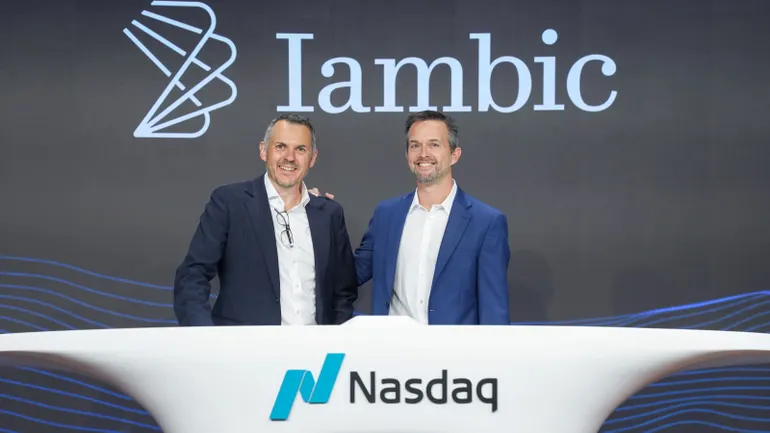
The intersection of artificial intelligence and pharmaceutical research has long been promised as the "Holy Grail" of modern medicine—a technological revolution capable of collapsing the decade-long, multi-billion-dollar drug discovery cycle into a streamlined, high-speed operation. Yet, for all the venture capital enthusiasm, the public stock market has remained profoundly skeptical. As several AI-native drug developers have stumbled, shedding market value and credibility, the recent entry of Iambic Therapeutics into the public arena has become a litmus test for the industry’s survival.
A Turbulent Landscape for AI-Driven Biotechs
The stock market’s relationship with AI-based drug discovery has been marked by a stark "show me, don’t tell me" attitude. While the broader market rallies behind AI infrastructure, drug developers—often dubbed "tech-bio" companies—have struggled to translate computational promise into clinical outcomes.
The cautionary tales are numerous and high-profile. Exscientia, once a darling of the AI-biotech scene, faced a precipitous decline, with its shares plummeting roughly 80% from their initial listing price before the company agreed to a merger with Recursion Pharmaceuticals in 2024. Recursion itself, despite its stature as a sector leader, has seen its own shares suffer, trading in the single digits after debuting at $18. These failures have created a narrative of "over-promise and under-deliver," leaving investors wary of companies that prioritize algorithm sophistication over tangible human clinical data.
Against this backdrop, Iambic Therapeutics has emerged with a strategy designed to decouple its fate from its struggling peers. After securing nearly half a billion dollars in private funding from heavy hitters like Nexus, Abingworth, and Catalio Capital Management, the company raised $150 million in its recent IPO. By mid-Friday following its debut, the share price had climbed more than 50% to roughly $24.50. While this is a promising start, the company faces the daunting task of sustaining this momentum in an environment where "megarounds" for private firms often dwarf the capital raised by public entrants.
Chronology of a Tech-Bio Disruptor
Founded in 2019, Iambic Therapeutics was built on a premise that differentiates it from the "platform-only" companies of the previous decade. While many competitors marketed their proprietary AI models as the end-product, Iambic’s leadership insisted that the technology was merely the engine, not the destination.
- 2019: Iambic is founded with a focus on integrating machine learning with traditional medicinal chemistry.
- 2021-2023: The company establishes a consistent cadence of partnership activity, signing deals with industry titans like Takeda, AbbVie, and Bayer.
- 2024: Iambic achieves a critical milestone: its lead candidate, IAM1363, reaches the clinic in under two years.
- October 2026: Iambic secures $150 million through an IPO, positioning itself as a hybrid model between a tech firm’s agility and a biotech’s clinical maturity.
This rapid progression from laboratory concept to clinical testing—specifically for their highly selective HER2 inhibitor, IAM1363—is the centerpiece of Iambic’s pitch to Wall Street. By having 100-plus patients worth of data ready for analysis, Iambic is positioning itself to initiate registrational trials by 2027, a timeline that is significantly more aggressive than traditional drug development models.
The Strategy: Bridging the "Tech-Bio" Divide
In an exclusive interview with BioPharma Dive, Iambic CEO and co-founder Tom Miller addressed the central tension facing his firm: how to satisfy two very different classes of investors.
"If you have a pure life science thesis, this is a company that excites you because of the medicines," Miller explained. "If you have a pure tech thesis, this is a company that excites you because of the underlying technologies. Making sure that we build a company that can connect those dots is an important part of our journey."
This dual-pronged strategy is reflected in Iambic’s approach to the IPO. Rather than aiming for the massive, speculative valuations seen in recent private funding rounds—such as the $40 billion valuation rumored for Google’s Isomorphic Labs—Iambic priced its IPO with a focus on bringing in a syndicate of investors who possess both technical fluency and clinical expertise.
"We sized the IPO and priced it with an eye towards bringing in a broad syndicate of investors who not only have an understanding of what it takes to build great technology, but also have a deep understanding on the life science side of what it takes to build great medicines," Miller noted.
Data, Partnerships, and Clinical Validation
A recurring critique of AI-driven drug discovery is the reliance on "hype cycles." To avoid this, Iambic has leaned heavily on third-party validation through strategic collaborations. By partnering with companies like Takeda, AbbVie, and Bayer, Iambic has not only bolstered its cash reserves but has also subjected its platform to the rigorous scrutiny of Big Pharma’s internal experts.
"Takeda gained a lot of conviction around our ability to execute," Miller said, emphasizing that these deals are not merely for marketing. "We bring in additional staff onto our side that has expertise on those programs. It makes us stronger in a lot of ways. It benefits the partner and it benefits us."
This collaborative model has allowed Iambic to expand its footprint beyond its initial focus on oncology. While the lead pipeline remains heavily concentrated on cancer, the company is quietly applying its platform to metabolic disease, endocrinology, and neurology. This diversification is critical for long-term sustainability, as it reduces reliance on the high-risk, high-reward nature of oncology drug development.
Implications: The Future of AI in Medicine
The broader implications of Iambic’s public entry extend beyond its own share price. The company is essentially trying to prove that the "AI-in-Pharma" thesis is not dead—it simply required a shift in strategy.
Critics often point to the grandiose claims of industry figures—such as the assertion that AI could cure all diseases within a decade—as a reason for the public market’s skepticism. Miller, however, advocates for a more grounded approach. "If we keep our eye on the patient, if we keep our eye on the development of better medicines that have a genuine and urgent unmet need, then I think we are going to keep our eye on what really matters," he said.
As the industry moves forward, the divide between companies that treat AI as a "black box" and those that integrate it into a disciplined, data-driven drug discovery process will likely widen. Iambic’s ability to maintain its trajectory will depend on whether it can continue to hit clinical milestones on time. If the company succeeds in bringing its current pipeline to market, it could serve as a blueprint for the next generation of biotech firms.
Ultimately, the lesson for investors is clear: technology is a powerful accelerant, but in the life sciences, the molecule is still the measure of all things. Iambic’s IPO represents a critical juncture where the "tech-bio" sector must move from the experimental phase to the delivery phase. Whether the market continues its "warmer embrace" of Iambic will be decided not in the code of their algorithms, but in the outcomes of their patients.