








In the landscape of modern wellness, the distinction between a "fitness professional" and a "life architect" is often blurred. For Rosie, a veteran of the U.S. Army and a cornerstone of the IDEA Health & Fitness Association for over 30 years, that distinction has never mattered—because she has spent her career embodying both. From the rigorous, disciplined PT grounds of 1980s Germany to the mindful, restorative practices of contemporary yoga and Pilates, Rosie’s journey is a testament to a single, enduring mantra: “Motion is the lotion.”
The Genesis of a Movement Philosophy
The story of Rosie’s career did not begin in a high-end health club or a private studio, but in the structured, demanding environment of the U.S. Army. Stationed in Germany in 1988, Rosie was a military leader tasked with the physical conditioning of her soldiers. While she possessed the leadership skills required for command, she sought a more nuanced approach to training.
Her enrollment in an aerobics certification course through the International School of Aerobic Training was born of professional curiosity. At the time, military physical training (PT) was largely standardized and often monotonous. Rosie saw an opportunity to integrate aerobic conditioning, functional movement, and strength training into the daily regimen of her troops.
The results were immediate and transformative. By introducing variety—push-ups, sit-ups, and rhythmic aerobic movements—she turned grueling sessions into engaging, effective workouts. Her unconventional success was such that it earned her a feature in a military newspaper, marking the first time she realized that the science of movement was not just a tool for soldiering, but a mechanism for profound human development.
Chronology: A Career Built on Continuous Adaptation
Rosie’s professional timeline is a reflection of the evolving fitness industry itself:
- 1988: Enrolls in aerobics certification while serving in the U.S. Army in Germany; introduces innovative PT methods to military personnel.
- 1989–1998: Transitions from military service into civilian fitness, embracing the burgeoning aerobics boom while expanding her repertoire into strength training and group fitness.
- 1998–2008: Enters the world of massage therapy. This decade marks a critical shift toward "bodywork," where she learns the mechanics of recovery and the necessity of addressing tissue tension and chronic discomfort.
- 2008–2018: Deepens her expertise in low-impact, high-awareness disciplines. She integrates Yoga and Pilates into her practice, focusing on mobility, breathwork, and the kinetic chain.
- 2018–Present: Solidifies her role as an advocate for "aging well." She pivots her focus toward the intersection of strength, longevity, and community-building, while maintaining her long-standing volunteer status with the IDEA community.
Throughout these decades, Rosie has remained an endurance athlete, completing marathons, ultramarathons, and triathlons. These experiences provided her with a "living laboratory," allowing her to test the limits of the human body and, more importantly, the necessity of recovery.
The Science of Longevity: "Motion Is the Lotion"
At the heart of Rosie’s philosophy is the concept that the human body is designed for fluid, consistent movement. The phrase "motion is the lotion" serves as a metaphor for the lubrication of joints, the activation of the lymphatic system, and the maintenance of cognitive sharpness through physical engagement.
From a physiological perspective, Rosie’s approach aligns with current gerontological research. As we age, the body naturally undergoes sarcopenia (muscle loss) and decreased bone density. While many in the aging demographic are advised to "take it easy," Rosie challenges this paradigm. She advocates for resistance training as a non-negotiable pillar of health.
The Multi-Disciplinary Puzzle
Rosie views fitness not as a siloed activity but as a holistic puzzle:
- Strength Training: Provides the structural foundation, bone density, and metabolic rate required for independence.
- Massage Therapy: Acts as the recovery agent, mitigating the wear and tear of life and training.
- Yoga and Pilates: Address the "internal" needs of the body—posture, breathing, core stability, and nervous system regulation.
By integrating these disparate disciplines, Rosie empowers her clients to move efficiently. "I want clients to not only become stronger," she explains, "but also move efficiently, recover properly, and enjoy their daily activities without pain or limitations."
Implications: Challenging the Aging Narrative
One of the most significant implications of Rosie’s work is the disruption of the "age-decline" narrative. Society often encourages older adults to retreat from physical challenges. Rosie argues that this retreat is a self-fulfilling prophecy.
"Aging does not mean we stop moving," she asserts. "In many ways, we age better because we continue moving." Her perspective is backed by her own evolution from a performance-obsessed endurance athlete to a mindful movement specialist. Early in her career, she admits, the goal was "doing more." Today, her emphasis is on "doing what is appropriate."
This shift toward intentionality is a crucial takeaway for the modern fitness professional. In an industry often obsessed with PRs (personal records) and high-intensity output, Rosie champions the "long game." She teaches that less is often more—provided the "less" is focused, balanced, and sustainable.
The Human Element: Results Beyond the Scoreboard
Perhaps the most compelling aspect of Rosie’s career is her focus on the emotional and social outcomes of fitness. When asked about her greatest successes, she ignores physical metrics like body fat percentage or max-lift numbers. Instead, she highlights the people who returned to her classes.
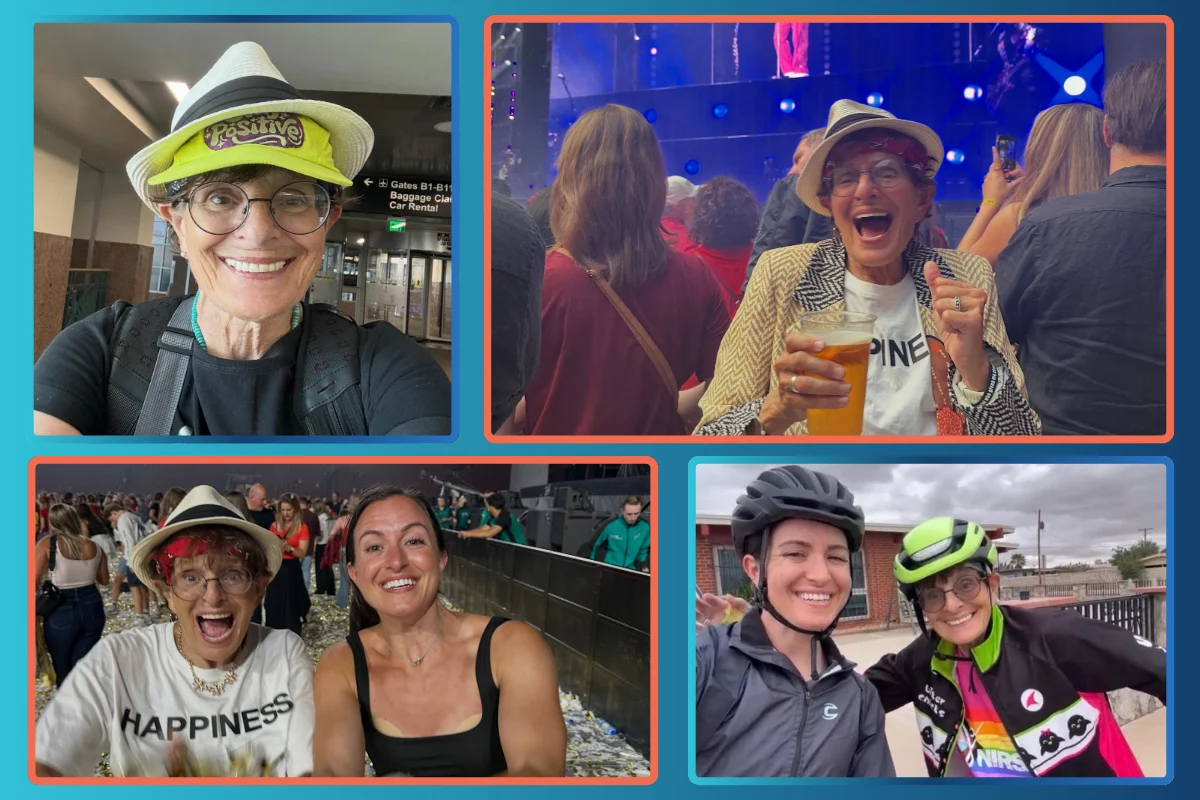
She realized early on that a fitness studio or gym floor is often the only space where people feel truly seen and supported. By curating an environment of positivity—often marked by her signature inspirational apparel—she facilitates a sense of belonging. This underscores a vital implication for the industry: the most effective trainer is not necessarily the one with the most certifications, but the one who best understands the human need for connection.
"People may forget what you taught, but they will never forget how you made them feel," Rosie notes. This sentiment serves as a cornerstone for her practice, bridging the gap between clinical instruction and empathetic coaching.
Institutional Impact: The IDEA Legacy
Rosie’s 30-year involvement with the IDEA Health & Fitness Association highlights the importance of professional community. For Rosie, the organization was more than a certification body; it was a professional home.
She credits the IDEA conferences for providing the research and networking opportunities that kept her relevant in a rapidly changing field. Beyond the education, however, she emphasizes the relationships formed with mentors like Lawrence Biscontini and Petra Kolber. Her role as a volunteer at these conferences allowed her to give back to the industry that fostered her growth, proving that the most successful professionals are those who remain lifelong students.
A Roadmap for the Future
As Rosie continues her work, her advice remains remarkably consistent: find activities you enjoy, remain consistent, and listen to the wisdom of your body.
Her life motto, “Echa Pa’lante y No Para Atrás” (Keep moving forward and don’t look back), serves as a blueprint for anyone—client or professional—seeking to thrive in a changing world. It is a philosophy that transcends fitness, touching on the resilience required to navigate life’s inevitable physical and emotional challenges.
Ultimately, Rosie’s career offers a profound lesson: that the most extraordinary results are not the result of a single, monumental effort, but the cumulative effect of small, intentional actions performed with consistency over time. As she continues to teach, learn, and inspire, she reminds us all that as long as we keep moving, we keep living. Whether through the rhythm of a yoga flow or the steady weight of a resistance band, the path forward is always in motion.